

Top 10 Types of Sheet Metal Roof Panels for Buyers?
Choosing a roof panel is not just a style decision. The right sheet metal roof panels can affect weather protection, installation time, maintenance, and long-term cost. Yet product names can be confusing. Similar-looking profiles may differ in seam design, metal thickness, coating, and installation requirements.
This guide introduces ten common types, from corrugated and ribbed panels to standing seam and metal shingles. Each has practical strengths and trade-offs. A broad, exposed fastener panel may suit a simple outbuilding, while concealed fasteners can create a cleaner roof surface. Details matter. A small difference in panel width or seam height can change how a roof handles water, wind, and thermal movement.
Buyers should compare more than appearance. Check the base metal, gauge, finish, warranty terms, and compatibility with the roof’s slope and structure. Ask how panels are joined and whether routine fastener inspections are expected. Local climate matters, too; coastal moisture, heavy snow, and intense sun place different demands on roofing materials. Product specifications are useful, but they do not replace advice from a qualified roofer familiar with the project. Not always. Even a well-made panel can perform poorly when the substrate or installation is unsuitable. Manufacturer terminology also varies, so compare measurable specifications rather than relying on labels alone. The sections ahead offer a practical starting point, not a universal ranking.
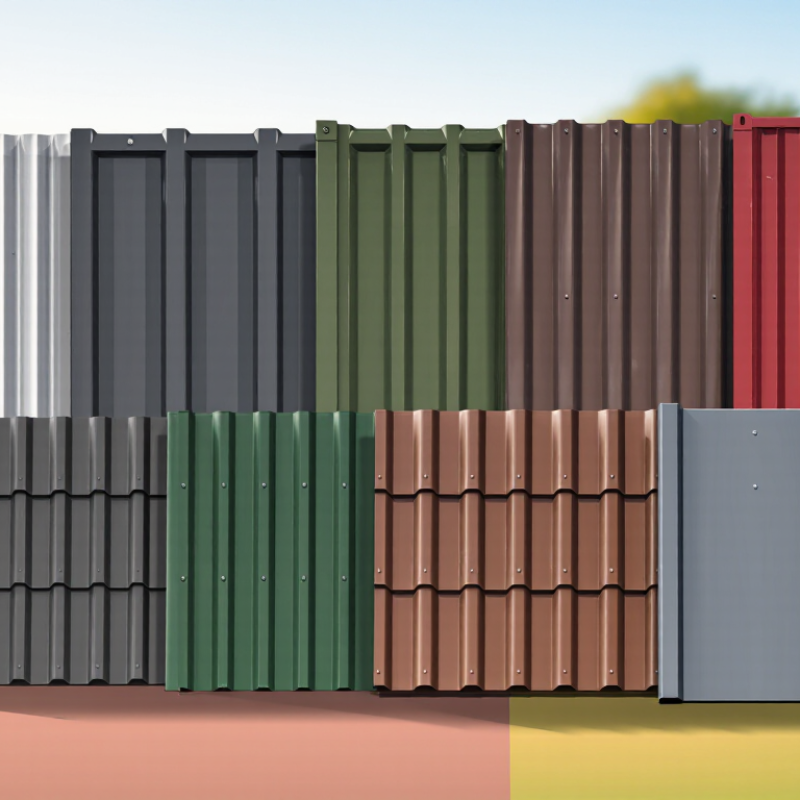
How Sheet Metal Roof Panels Are Classified by Material and Profile
Sheet-metal roof panels are classified by both base metal and profile. These categories overlap; they are not ten entirely separate types. Steel panels may be galvanized or coated with an aluminum-zinc alloy. Aluminum is lighter and commonly considered for coastal exposure. Copper and zinc form natural patinas, while stainless steel suits projects where extra corrosion resistance warrants its cost. The U.S. Geological Survey’s Mineral Commodity Summaries 2024 reports that recycled aluminum accounted for about 35% of U.S. apparent aluminum consumption in 2023. That figure describes the market, not the recycled content of a particular roof panel. Important distinction.
Profile describes the panel’s shape and joining method. Standing-seam panels conceal fasteners beneath raised seams; corrugated and ribbed panels usually have exposed fasteners. Other options include flat-lock and tile-look profiles. Each shape affects drainage, appearance, and installation details. Fit matters. The International Aluminium Institute estimates that about 75% of all aluminum ever produced remains in use, but this broad statistic does not predict a roof’s lifespan. Buyers should compare metal thickness, coating, seam design, and fixing details alongside the profile name. A sample can look sturdy on a desk, yet poorly matched flashing or fasteners may undermine the finished roof. No category tells the whole story.
Top 10 Types of Sheet Metal Roof Panels for Buyers? - How Sheet Metal Roof Panels Are Classified by Material and Profile
| No. | Panel Type | Primary Material | Typical Profile | Typical Fastening | Key Characteristics | Common Buyer Considerations |
|---|---|---|---|---|---|---|
| 1 | Corrugated galvanized steel | Steel with a zinc coating | Repeating rounded waves or corrugations | Exposed fasteners through panel faces | The corrugations add rigidity, while the zinc coating helps protect the steel from corrosion. | Check coating specification, panel thickness, fastener compatibility, and maintenance requirements for the local environment. |
| 2 | Ribbed galvanized steel | Steel with a zinc coating | Trapezoidal or angular raised ribs | Usually exposed fasteners | The raised ribs provide stiffness and create a structured appearance; profiles vary by manufacturer and application. | Confirm the roof slope and support spacing meet the panel system’s installation requirements. |
| 3 | Galvanized steel standing seam | Steel with a zinc coating | Long panels with raised, interlocking seams | Concealed clips or concealed fasteners | Concealed attachment leaves fewer exposed fasteners on the roof surface. Seams may be mechanically seamed or snap together, depending on the system. | Compare seam design, clip movement allowance, substrate requirements, and installer experience. |
| 4 | Galvalume steel standing seam | Steel coated with an aluminum-zinc alloy | Raised standing seams | Typically concealed clips | The metallic coating combines aluminum and zinc; the finished panel may also have a paint or other protective finish. | Review the product’s coating and finish specifications, and check compatibility with nearby materials and the project environment. |
| 5 | Galvalume exposed-fastener panels | Steel coated with an aluminum-zinc alloy | Corrugated or trapezoidal ribbed profile | Exposed screws with sealing washers | A practical panel format for many utility and agricultural buildings; fasteners and washers are part of the weathering system. | Plan for correct screw placement and periodic inspection of exposed fasteners and seals. |
| 6 | Aluminum standing seam | Aluminum | Raised interlocking seams | Concealed clips or fasteners | Aluminum is lightweight and naturally forms a protective oxide layer. It can be supplied with painted or other finishes. | Consider panel movement, wind design, finish selection, and contact with dissimilar metals. |
| 7 | Corrugated aluminum | Aluminum | Wave-shaped corrugations | Commonly exposed fasteners | Its low weight can reduce roof dead load; the corrugated shape increases panel stiffness compared with a flat sheet. | Check the panel gauge, support spacing, fastening details, and suitability for the site’s wind and weather conditions. |
| 8 | Copper standing seam | Copper | Raised seams, usually in long panels | Concealed clips or attachment details | Copper develops a changing surface patina through natural weathering. It is often selected for appearance and long-term material performance. | Account for material cost, runoff staining, expansion and contraction, and contact with other metals. |
| 9 | Zinc standing seam | Architectural zinc sheet | Interlocking raised seams | Concealed clips or system-specific attachments | Zinc develops a protective patina as it weathers. Panel design must accommodate thermal movement and appropriate drainage. | Verify the system is suitable for the roof configuration and climate, and avoid incompatible substrates or runoff paths. |
| 10 | Stainless steel standing seam | Stainless steel | Raised interlocking seams | Concealed clips or fasteners | Stainless steel offers corrosion resistance that depends on its alloy and finish; it is used where durability or a particular appearance is required. | Specify the appropriate alloy and finish for the exposure, and consider cost, detailing, and compatibility with adjacent materials. |
Buyer note: Performance depends on the complete roof assembly, including panel thickness, coatings, underlayment, slope, flashing, clips, fasteners, and installation quality. Confirm project-specific requirements with the panel supplier and local building code.
Related Posts
-
How to Choose Metal Roof Panels for Your Project?
-
2026 How to Choose the Best Roof Sheet for Your Home?
-
China Top Sheet Metal Roofing Manufacturers?
-
Why Choose Metal Roofing for Your Building?
-
How to Choose Architectural Sheet Metal Suppliers in 2026?
-

How to Choose the Best Sheet Metal Roof Panels for Maximum Durability and Energy Efficiency