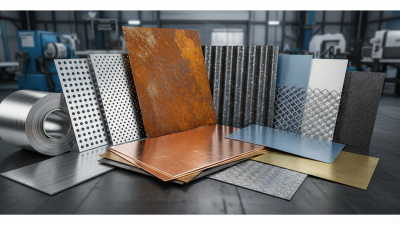
How to Choose Architectural Sheet Metal Suppliers in 2026?
Choosing architectural sheet metal suppliers in 2026 requires more than comparing attractive prices. Building envelopes now face tighter energy goals, severe weather, complex geometry, and demanding visual standards. A supplier must understand how design decisions behave on a real project site.
Look for documented experience with similar façades, roofs, soffits, trims, and custom profiles. Ask for project references, material samples, coating data, fabrication tolerances, and installation guidance. A reliable supplier should explain alloy selection, thickness, corrosion resistance, recycled content, and expected service conditions clearly. They should also provide traceable quality records and practical lead-time information. Certifications can support credibility, but they do not replace factory visits, sample inspections, or conversations with previous customers.
Details matter.
A strong evaluation also examines digital coordination. Can the supplier support BIM files, shop drawings, nesting plans, and revision control? Can production teams respond when a reveal changes by three millimeters? These small moments often reveal real expertise. Check whether independent test reports, warranty terms, and technical support remain available after delivery. A polished website is not proof of dependable performance. Neither is the lowest quotation.
No supplier is flawless. My own assessment can miss hidden risks when information is incomplete or overly optimistic. That uncertainty deserves attention. Compare at least several qualified companies, record assumptions, and challenge vague promises. The best architectural sheet metal partner combines proven craftsmanship, transparent communication, responsible sourcing, and consistent quality control. In 2026, that balance may protect both the building’s appearance and the project’s long-term value.

Define Sheet Metal Requirements: Alloy, Gauge, Loads, Finish, and Tolerances
Choosing an architectural sheet metal supplier in 2026 should begin with a written requirement sheet. State the alloy, thickness, design loads, finish, and allowable tolerances. Alloy selection affects corrosion resistance, formability, weld response, and cost. Common options include 3003 for forming and 5052 for stronger exterior panels. Use 6061 only when its strength justifies more difficult forming. A supplier should explain this trade-off, not simply quote a part number.
Gauge alone is not engineering. Convert gauge to millimetres, then check wind pressure, panel span, fastener spacing, vibration, snow, and thermal movement. The 2024 International Aluminium Institute data reports global primary aluminium production at roughly 72.6 million tonnes. It also notes that recycled aluminium requires about 5% of primary-metal energy. Ask for recycled content, source documentation, and mill test certificates. Sustainability claims without batch evidence are weak.
Define the finish precisely. Include the coating system, gloss range, colour tolerance, exposed-face protection, and repair method. ASTM references can help, but the project specification must define acceptance. Tolerances need numbers: thickness, flatness, hole position, bend angle, and visual distance. A two-metre viewing rule may reveal waviness hidden by a factory sample. I would leave room for revision. Early assumptions are often wrong. Before approval, inspect a full-size mock-up and compare measured results.
Verify ASTM, AAMA, ANSI/SPRI, and ICC-ES Compliance Before Shortlisting
Choosing an architectural sheet metal supplier in 2026 requires more than comparing prices. Request a compliance package before shortlisting any company. Verify ASTM test methods for corrosion resistance, coating adhesion, water penetration, and structural performance. Confirm that AAMA documents match the specified finish, substrate, exposure class, and fabrication process.
Check ANSI/SPRI requirements for edge metal, coping, and perimeter systems. These details often fail when contractors accept generic certificates. Ask for the exact test standard, laboratory name, test date, product configuration, and limitations. For systems covered by ICC-ES, review the evaluation report number, approved materials, installation conditions, and expiration status. A certificate without scope is weak evidence.
Durability deserves financial attention. The 2024 UNEP Global Status Report for Buildings and Construction states that buildings consumed 32% of global energy and produced 34% of global carbon emissions in 2022. Longer-lasting metal assemblies can reduce replacement work, transport, and waste, but only when installation matches tested conditions. On real projects, a polished submittal can still hide missing fastener data or incompatible coatings. That is an uncomfortable lesson. Ask suppliers to explain one failed installation scenario and its corrective action. Their answer may reveal more than a sales presentation. Keep signed test reports, lot information, shop drawings, and inspection records together. Supplier confidence should come from traceable evidence, not attractive samples.
Compare Supplier Capacity Using ISO 9001 Quality Controls and Lead-Time Data
How to Choose Architectural Sheet Metal Suppliers in 2026?
Supplier capacity should be compared with evidence, not impressive equipment lists. The ISO Survey 2022 recorded 1,265,216 ISO 9001 certificates worldwide. Certification shows a controlled system, but it does not guarantee architectural accuracy. Ask for audit dates, nonconformance records, corrective-action examples, and calibration controls. Check whether each coil, finish, and formed panel remains traceable.
Lead-time data needs more detail than “two weeks.” Request twelve months of quoted lead time, actual ship date, and on-time delivery results. Separate engineering approval, material purchasing, fabrication, finishing, and packaging. The U.S. Census Bureau’s M3 report distinguishes new orders, shipments, and unfilled orders. Compare these categories with the supplier’s monthly backlog. ISM’s Manufacturing PMI uses 50 as the delivery benchmark; readings below 50 generally indicate faster supplier deliveries. Capacity can still tighten quickly.
Tips: Request a capacity table showing monthly tonnage, press-brake hours, coating capacity, and current utilization. Ask for peak-season results. Verify backup equipment and subcontractor controls. A spreadsheet may look precise while hiding rejected parts or overtime dependence. That is uncomfortable, but useful. I would also test one small production lot before approving a large package. ISO 9001 reduces process risk; it does not remove judgment.
Assess EPDs, Recycled Content, VOCs, and Energy Metrics for Sustainability
When choosing architectural sheet metal suppliers in 2026, request current, product-specific Environmental Product Declarations (EPDs). Prefer third-party verified EPDs aligned with ISO 14025 and EN 15804. Check the declared unit carefully. A square metre of coated steel cannot be compared fairly with a kilogram of aluminium. Review life-cycle modules, including manufacturing, transport, installation, replacement, and end-of-life impacts. The UNEP 2024 Global Status Report states that buildings and construction consume 32% of global energy and create 34% of global carbon emissions. Small material decisions matter.
Ask for recycled-content evidence, not vague percentages. Separate pre-consumer and post-consumer content, then verify whether the figure applies to the sheet, coating, or packaging. Request the energy source and manufacturing energy intensity in megajoules per declared unit. Also compare global-warming potential in kilograms of CO2e. An EPD is useful, but it does not automatically prove a product is sustainable. It may expose high transport impacts or energy-heavy alloy production. That is easy to miss.
VOCs deserve a separate review. Bare metal generally emits little, but primers, sealants, backers, and field-applied coatings can change indoor-air results. Ask for test reports using recognized methods, such as California Section 01350 or equivalent standards. Confirm curing conditions and whether testing covers the complete assembly. I would also inspect a sample panel for coating damage and odor after installation. The spreadsheet may look precise. It can still be incomplete. Suppliers should disclose assumptions, recycled-content certificates, EPD validity dates, and energy boundaries before pricing is compared.