
China Top Sheet Metal Roofing Manufacturers?
Choosing among China’s top sheet metal roofing manufacturers requires more than comparing catalog prices. Product consistency, coating quality, factory experience, and after-sales support can strongly affect a building’s service life. A reliable supplier should explain its steel grade, thickness tolerance, coating system, profile design, and available testing documents.
Details matter.
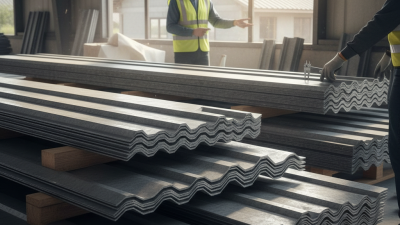
In practical projects, experienced buyers inspect production lines, sample edges, roll-forming accuracy, and packaging methods. A well-made panel should maintain clean ribs, stable dimensions, and secure overlaps during installation. Galvanized steel, galvalume steel, and painted finishes may perform differently in coastal, industrial, or high-temperature environments. Manufacturers with export experience usually understand container loading, project documentation, and regional building requirements. However, export history alone does not prove current quality.
A responsible comparison should include factory audits, third-party inspection options, warranty terms, and references from similar projects. Ask how the manufacturer handles color variation, scratched coatings, delayed batches, and replacement claims. These questions may feel inconvenient, but they reveal operational reliability. Product brochures are useful, not conclusive. Some suppliers present impressive technical numbers that are difficult to verify without certificates or physical samples.
This guide examines leading Chinese manufacturers through practical criteria, including production capacity, material control, customization, certifications, delivery performance, and communication. It does not treat one company as universally best. Climate, roof design, budget, and installation skill can change the right choice. Even a strong supplier may have weaknesses. Careful verification remains essential before signing a long-term supply agreement.
What Defines a Leading Sheet Metal Roofing Manufacturer in China
What defines a leading sheet metal roofing manufacturer in China?
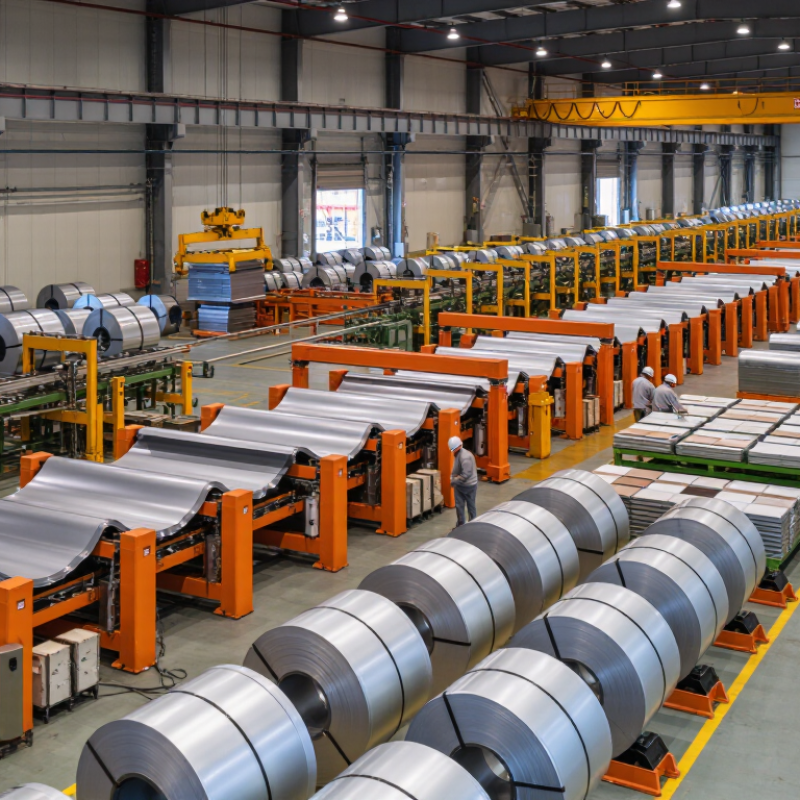
Scale alone is not enough. World Steel in Figures 2024 reports that China produced 1.019 billion tonnes of crude steel in 2023, about 54% of global output. That capacity matters, but roofing quality depends on controlled conversion, not furnace volume. A serious producer tracks coil chemistry, coating mass, thickness tolerance, and roll-forming accuracy.
Look for evidence at the production line. Operators should record incoming-coil certificates, coating results, paint thickness, and profile dimensions. Independent testing should cover adhesion, bending, salt-spray resistance, and fastener compatibility.
ISO 9001 can support traceability, yet certification cannot replace batch records or physical samples. EN 10346 and ASTM A792 references help buyers compare substrate and coating requirements.
The IEA’s 2023 buildings report states that buildings and construction represented about 30% of global final energy use and 26% of energy-related emissions in 2022.
Therefore, a leading supplier should discuss recycled content, service life, insulation interfaces, and recyclability. Ask for measured data, not broad green claims.
No factory is perfect. Small color variation or edge waviness may appear across long production runs. What matters is disclosure, corrective action, and stable performance under rain, heat, and coastal air.
China’s Main Sheet Metal Roofing Product Categories
China’s sheet metal roofing market covers several practical product categories. Corrugated galvanized steel remains common for warehouses, workshops, and agricultural buildings. Its zinc coating helps resist moisture, while its light weight simplifies installation. Galvalume steel uses an aluminum-zinc coating and often performs better in humid or coastal environments. Coating thickness still matters. A thin layer can reduce service life.
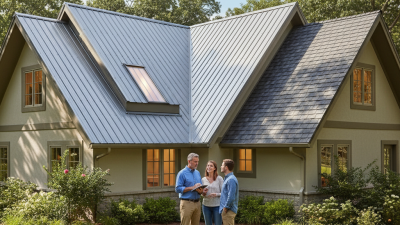
Standing seam panels create clean, continuous lines with concealed fasteners. They suit modern houses, commercial buildings, and projects needing better water control. Some factories also produce aluminum roofing sheets for lightweight structures. Aluminum resists corrosion, but it costs more and can dent under strong impact. Stainless steel appears in demanding applications, although its price limits wider use. Product choice should match climate, roof slope, and maintenance access.
Insulated sandwich roof panels combine metal skins with a core material. They improve thermal performance and reduce construction time. Stone-coated metal tiles offer a tile-like appearance with a steel base. Their surface needs careful inspection for uneven granules or exposed edges. Factory quality checks should include coating thickness, panel dimensions, bending strength, and fastener compatibility. A category label can mislead. Two panels may look identical but perform differently after years of sunlight, wind, and temperature changes. Sample testing is wise, though it cannot replace a full project specification.
China Top Sheet Metal Roofing Manufacturers? - China’s Main Sheet Metal Roofing Product Categories
| Product Category | Common Base Materials | Typical Profiles or Forms | Typical Thickness Range | Typical Applications | Main Advantages | Important Selection Factors |
|---|---|---|---|---|---|---|
| Pre-Painted Steel Roofing Sheets | Galvanized steel or zinc-aluminum-coated steel | Corrugated, trapezoidal, or tile-effect panels | Approximately 0.30–0.80 mm | Residential, commercial, agricultural, and light industrial buildings | Wide color selection, efficient installation, and relatively low structural weight | Paint system, coating mass, corrosion environment, panel thickness, and fixing method |
| Galvanized Steel Roofing Sheets | Hot-dip zinc-coated carbon steel | Corrugated and trapezoidal profiles | Approximately 0.35–1.20 mm | Warehouses, workshops, agricultural buildings, partitions, and temporary structures | Good basic corrosion resistance, affordability, and easy forming | Zinc coating mass, cut-edge protection, drainage design, and local humidity or salinity |
| Aluminum-Zinc Coated Steel Roofing | Steel coated with an aluminum-zinc alloy | Corrugated, trapezoidal, standing-seam, and tile profiles | Approximately 0.35–0.80 mm | Industrial roofs, warehouses, agricultural buildings, and low-maintenance roofing projects | Reflective surface, improved atmospheric corrosion resistance, and good heat performance | Alloy coating mass, service environment, installation damage, and compatibility with other metals |
| Standing Seam Metal Roofing | Galvanized steel, aluminum-zinc-coated steel, or aluminum | Concealed-fixing panels with vertical seams | Approximately 0.45–0.90 mm | Commercial buildings, high-end residential roofs, airports, and large industrial facilities | Low exposed fastener count, strong weather resistance, and clean architectural appearance | Seam design, roof slope, thermal movement allowance, substrate alignment, and installer experience |
| Corrugated Metal Roofing | Galvanized steel, pre-painted steel, aluminum, or stainless steel | Sinusoidal or wave-shaped corrugations | Approximately 0.30–0.80 mm | Agricultural buildings, garages, workshops, sheds, and façade cladding | Simple installation, efficient drainage, and broad availability | Wave depth, overlap requirements, purlin spacing, fastener sealing, and wind exposure |
| Trapezoidal Metal Roofing Sheets | Pre-painted steel, galvanized steel, or aluminum-zinc-coated steel | Ribbed trapezoidal panels with varying rib heights | Approximately 0.40–1.00 mm | Factories, logistics centers, warehouses, commercial roofs, and wall systems | Higher structural stiffness than flat sheet and suitability for longer spans | Profile depth, load span tables, purlin spacing, deflection limits, and drainage capacity |
| Tile-Effect Metal Roofing | Pre-painted galvanized or aluminum-zinc-coated steel | Pressed or roll-formed profiles resembling traditional tiles | Approximately 0.35–0.75 mm | Residential buildings, villas, public buildings, and renovation projects | Decorative appearance, lower weight than many traditional tiles, and relatively fast installation | Minimum roof pitch, protective coating, acoustic treatment, snow or wind loads, and color retention |
| Insulated Metal Roof Panels | Pre-painted steel facings with a rigid insulation core | Factory-bonded sandwich panels with concealed or exposed fixing | Metal skin commonly 0.35–0.75 mm; total panel thickness often 40–200 mm | Cold storage, industrial buildings, workshops, offices, and energy-conscious construction | Thermal insulation, rapid enclosure, and reduced need for separate roof layers | Core type, thermal conductivity, fire classification, joint performance, and condensation control |
| Aluminum Roofing Sheets | Aluminum alloy sheet, either mill-finished or coated | Corrugated, standing-seam, flat-lock, and custom profiles | Approximately 0.50–1.20 mm | Coastal buildings, lightweight structures, commercial roofs, and architectural projects | Low density, natural corrosion resistance, and good formability | Alloy and temper, thermal expansion, galvanic corrosion, roof movement, and surface finish |
| Stainless Steel Roofing Sheets | Corrosion-resistant stainless steel sheet | Standing seam, flat-lock, corrugated, and custom-fabricated panels | Approximately 0.40–1.00 mm | Coastal facilities, chemical environments, public buildings, and premium architectural roofs | High corrosion resistance, long service potential, and strong aesthetic performance | Steel grade, surface finish, chloride exposure, fabrication quality, and dissimilar-metal contact |
Note: Thickness ranges are indicative market ranges. Final specifications should be selected according to structural calculations, local building codes, environmental exposure, wind and snow loads, roof pitch, and the manufacturer’s technical data.
Key Manufacturing Standards and Quality Control Practices
China Top Sheet Metal Roofing Manufacturers: Key Manufacturing Standards and Quality Control Practices
Reliable sheet metal roofing starts with controlled raw materials, not attractive catalog photographs. Manufacturers should verify steel grade, thickness, yield strength, and coating mass before production. Mill certificates need matching heat numbers and traceable inspection records. A micrometer check across several coil points can reveal uneven thickness. Small deviations matter during roll forming.
Production should follow recognized standards such as ASTM, EN, or equivalent national specifications. The selected standard must match the project’s climate and structural requirements. Quality teams commonly inspect panel width, rib height, cut length, and hole position. They also test coating adhesion, surface appearance, and color consistency. Edges should remain clean, without burrs or exposed steel. Simple checks often prevent expensive installation problems.
Factory audits should examine calibration records, operator training, and corrective-action reports. Not every defect is visible under bright warehouse lighting. Salt-spray testing can support evaluation, but it cannot replace field judgment. Packaging also deserves attention; crushed corners may begin as careless stacking. A strong manufacturer photographs inspections and links results to each shipment. Still, perfect paperwork is not proof of perfect roofing. Inspectors should question inconsistent data, repeat doubtful measurements, and request samples from current production. That extra step can feel slow. It is often worthwhile.
How to Evaluate Chinese Sheet Metal Roofing Manufacturers
China’s large steel capacity does not automatically guarantee roofing quality. The World Steel Association reported that China produced about 1,019 million tonnes of crude steel in 2023. That scale creates choices, but also uneven supplier performance. Evaluate the manufacturer, not only the quotation. Request factory records, product samples, and recent project references. Check whether the supplier controls roll forming, coating inspection, packaging, and export documentation internally.
For each sample, measure thickness at several points. Confirm yield strength, coating mass, paint system, and dimensional tolerance against the agreed specification. Relevant standards may include GB/T 12754, ASTM A792, or EN 10346, depending on the destination market. Ask for mill test certificates linked to batch numbers. Independent laboratory testing is valuable. It catches problems that photographs cannot show. A glossy surface proves little.
Sustainability also deserves scrutiny. The International Energy Agency estimates that steelmaking produces roughly 7% to 9% of global energy-related emissions. Ask for recycled-content data, energy records, and coating compliance evidence. Do not accept vague environmental claims. Audit production capacity during peak periods, because promised lead times often look better in quiet months. Inspect corner protection and moisture barriers; a damaged edge can rust before installation. Price remains important, but the cheapest offer may hide thinner steel or weaker traceability. I would still leave room for doubt. A professional audit can miss inconsistent batches. Use staged orders, clearly defined inspections, and written remedies before committing to long-term volume.
Major Factors Affecting Pricing, Delivery, and Export Support
China’s sheet metal roofing manufacturers compete on more than factory price. Steel coil is the largest cost driver, while coating type, thickness, profile depth, and order volume also matter. World Steel Association data recorded China’s crude steel output at roughly 1.005 billion tonnes in 2024. That scale supports competitive sourcing, but it does not guarantee stable quotations. Exporters should request mill certificates, coating weights, thickness tolerances, and a clear validity period for each offer.
Delivery depends on production scheduling and port conditions. The OECD’s 2024 steel market analysis highlighted continuing global overcapacity and uneven demand, which can create aggressive prices but uncertain lead times. UNCTAD’s Review of Maritime Transport 2024 also described longer routes and rising shipping disruption risks. A practical buyer should separate manufacturing time from booking time. For example, a roofing order may need seven to fifteen production days, followed by several weeks at sea. Confirm the loading port, carton protection, pallet design, and spare-piece policy in writing.
Export support deserves equal attention. Experienced suppliers usually provide drawings, installation guidance, packing photos, inspection records, and responsive document handling. Yet paperwork is often overlooked. My own purchasing reviews have found small errors in dimensions or customs descriptions causing avoidable delays. That remains a weakness. Ask for pre-shipment inspection, sample approval, and traceable batch numbers. Pricing alone is not a reliable measure of value.
Related Posts
-
2026 How to Choose the Best Roof Sheet for Your Home?
-

Top 10 Metal Roof Panels for Global Buyers in 2026?
-
2026 Best Metal Roof Panels for Your Next Project?
-
What Are the Top Types of Metal Panels?
-

How to Choose the Best Sheet Metal Roof Panels for Your Home in 2025
-
Ultimate Tips for Choosing Sheet Metal Roof Panels?