
How to Choose Stainless Steel Wall Panels?
Choosing stainless steel wall panels is not simply a matter of selecting a polished finish. The decision affects hygiene, durability, installation time, fire performance, and long-term maintenance. The International Stainless Steel Forum’s Stainless Steel in Figures 2024 reported global crude stainless steel production of approximately 62 million tonnes in 2023. This scale reflects strong demand across construction, food processing, healthcare, and transport. Yet high demand does not make every panel suitable for every wall.
Material grade matters. Type 304 stainless steel commonly serves interior commercial spaces, while Type 316 offers stronger resistance in coastal or chemically aggressive environments. The correct choice also depends on thickness, surface finish, core material, joint design, and fixing method. ISO 9223 corrosion classifications can help professionals assess environmental exposure before specifying a product. Small details matter. Salt residue near a seaside entrance can stain an unsuitable surface within months.
Hygiene requires more than a shiny appearance. The European Commission’s Best Available Techniques guidance for food, drink, and dairy production emphasizes cleanable, corrosion-resistant surfaces and controlled joints. That principle also applies to hospitals and commercial kitchens. Choose carefully. No panel is maintenance-free. Even stainless steel can collect fingerprints, chloride deposits, and construction dust. The British Stainless Steel Association recommends suitable cleaning methods and avoiding carbon-steel contamination during fabrication and installation.
This guide compares the practical criteria behind stainless steel wall panels, including grades, finishes, thicknesses, fire considerations, lifecycle costs, and installation conditions. Some recommendations may need adjustment. Local climate, building codes, cleaning chemicals, and project budgets can change the answer. A reliable specification should therefore combine supplier documentation, site experience, and independent technical advice rather than relying on appearance alone.
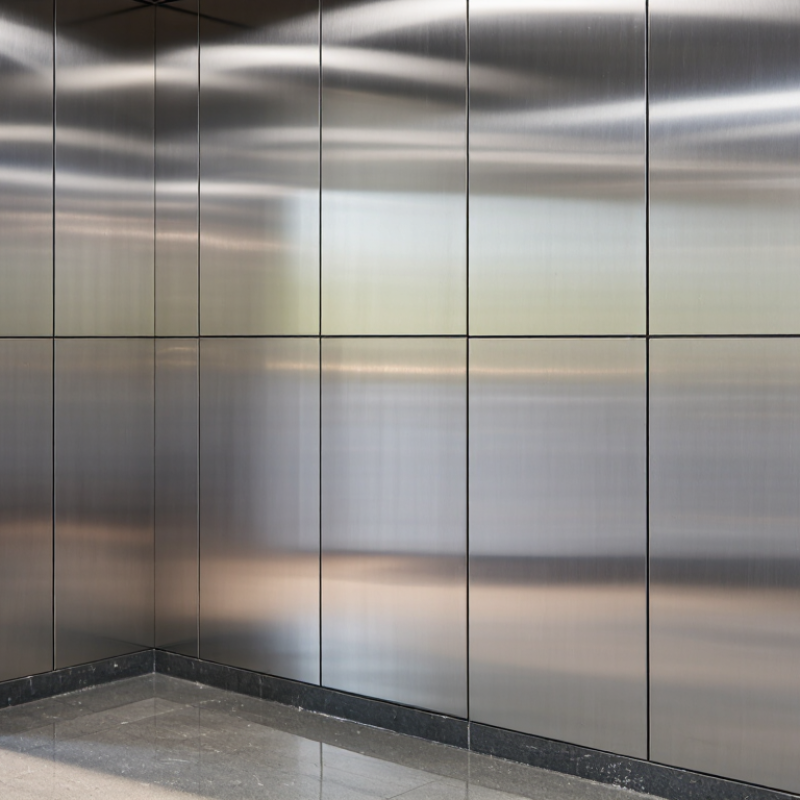
Define Project Requirements for Stainless Steel Wall Panels
How to Choose Stainless Steel Wall Panels?
Define Project Requirements for Stainless Steel Wall Panels
Start with the room, not the panel. A commercial kitchen needs resistance to grease, moisture, heat, and frequent cleaning. A hospital corridor may require smooth joints, limited dirt traps, and easy disinfection. A workshop needs stronger impact resistance. Each use changes the specification.
Measure the wall height, width, openings, corners, and existing substrate. Record pipes, electrical outlets, doors, and uneven surfaces. A small measurement error can create visible gaps at the final seam. It happens more often than expected.
Select the steel grade according to exposure, not appearance alone. Moisture, salt, chemicals, and temperature changes can affect long-term performance. Choose the thickness after considering impact, span, fixing method, and support spacing.
Specify the surface finish carefully. Brushed surfaces can hide minor marks, while polished finishes reveal fingerprints and installation defects. Review seam locations before ordering. Fewer joints may improve hygiene, but larger panels can complicate transport and handling.
Ask for a physical sample under the project’s actual lighting. Digital colors can mislead. Confirm cleaning products, fire requirements, edge details, and maintenance access with the project team.
A qualified installer should check substrate flatness and allow for thermal movement. Do not treat installation as an afterthought. That assumption can become an expensive correction.
Compare Stainless Steel Grades, Finishes, and Surface Textures
How to Choose Stainless Steel Wall Panels?
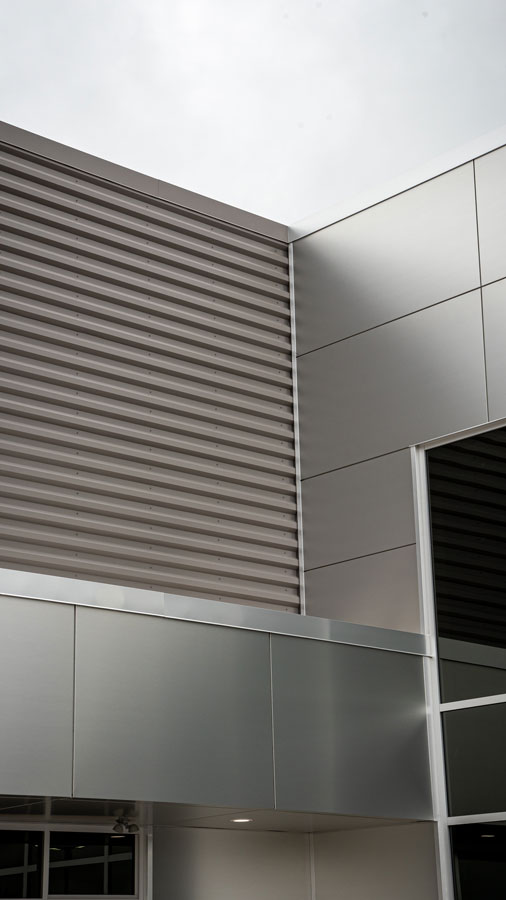
Stainless steel grade affects corrosion resistance, appearance, and maintenance. Grade 304 suits most kitchens, corridors, and indoor commercial walls. Grade 316 contains molybdenum, so it performs better near salt spray, pools, and coastal air. Grade 430 costs less, but it needs greater care in damp environments. Do not choose by price alone.
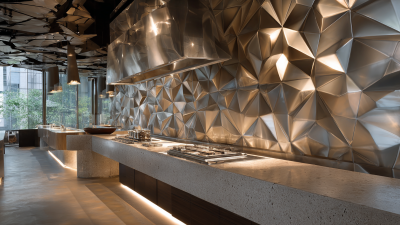
Finish changes how a wall looks under real lighting. A 2B finish is smooth and practical, although it can reveal fingerprints. Brushed finishes hide small marks through their directional grain. Mirror finishes reflect light strongly and make spaces feel larger, but cleaning becomes demanding. I often inspect panels beside windows before approval. Bright lights expose uneven polishing quickly.
Surface texture also affects touch, cleaning, and visual depth. Fine hairline patterns create a calm, architectural effect. Embossed textures can disguise dents, yet their grooves may hold dust or grease. Bead-blasted surfaces feel softer visually, but rougher surfaces may require careful wiping. Think about traffic, cleaning tools, and nearby materials. A textured panel is not automatically easier to maintain. I once underestimated fingerprints on a dark, satin surface. That mistake changed the final selection. Always request a physical sample, check its grain direction, and test the intended cleaner. Fresh samples can look perfect. Real site conditions are less forgiving.
Select Panel Dimensions, Profiles, and Installation Systems
Choosing stainless steel wall panels starts with accurate dimensions.
Measure wall height, width, openings, corners, and service zones before ordering. Measure twice. Small errors can create visible joints or force unattractive field cuts.
Panel width affects handling, joint frequency, and visual rhythm. Narrow panels suit columns, curved walls, and areas with many penetrations. Wider panels create a cleaner appearance but demand flatter substrates and more careful lifting.
Common thicknesses range from light decorative sheets to heavier impact-resistant panels. The correct choice depends on traffic, moisture, cleaning methods, and support spacing.
I once specified panels that looked efficient on paper, but their weight slowed installation. That decision needed more practical review.
Profiles control how panels meet at corners, ceilings, and floor lines.
Use outside corners for exposed edges and inside corners for cleaner transitions. J-trims can finish open ends, while shadow gaps may create a deliberate architectural line.
Avoid relying on sealant to hide poor alignment. It rarely works. Installation systems should match the wall condition.
Adhesive systems suit smooth, stable substrates, while mechanical clips or concealed fasteners support heavier panels and easier replacement. Allow movement at long runs and around dissimilar materials.
Follow tested installation instructions and local fire, hygiene, and building requirements. A level, dry, properly prepared substrate remains essential. Even premium steel cannot correct a twisted wall.
Evaluate Performance, Compliance, Cost, and Maintenance Needs
How to Choose Stainless Steel Wall Panels?
Evaluate performance before comparing prices. Select the grade by exposure, not appearance. Type 304 suits many dry interiors. Type 316 offers better resistance near salt, chlorides, and frequent washing. The NACE IMPACT study estimates corrosion costs the global economy about 3.4% of GDP, or $2.5 trillion annually. Small specification errors can become expensive repairs.
Compliance requires more than a material certificate. Request the grade, thickness, finish, weld treatment, and fire-test data for the complete panel system. ASTM A240 and EN 10088 help verify stainless material requirements. Food areas may require NSF/ANSI 51 compliance. Healthcare projects need documented cleaning compatibility and infection-control review. A noncombustible metal face does not make a combustible core safe. Check the full assembly.
Cost should include delivery, installation, replacement, and cleaning labor. ISO 15686-5 supports this life-cycle cost approach. RICS life-cycle guidance also separates capital cost from operating cost. A cheaper quote can become expensive. That assumption needs checking. World Stainless identifies stainless steel as fully recyclable at end of life, but recycling value depends on clean separation and local recovery systems. Maintenance still matters. Specify smooth, accessible joints and avoid ledges that collect dust. Use approved cleaners, rinse chloride residues, and inspect welds after installation. A polished finish is not automatically the easiest finish.
How to Choose Stainless Steel Wall Panels?
Indicative selection scores for common stainless steel grades, based on corrosion resistance, cleaning performance, relative material cost, and suitability for compliance-focused projects.
Scores use a 1–5 scale. Grade 316 generally performs best in chloride-rich or highly corrosive environments, Grade 304 provides a balanced solution for many interior applications, and Grade 430 offers lower material cost where corrosion exposure is limited. Final selection should confirm panel thickness, finish, fire classification, hygiene requirements, and local building standards.
Verify Suppliers, Samples, Fabrication, and Long-Term Support
How to Choose Stainless Steel Wall Panels?
Choosing stainless steel wall panels starts with verifying the supplier, not comparing prices alone. Ask for documented material grades, thickness records, surface-finish details, and quality inspection procedures. A dependable supplier should explain tolerances clearly and provide traceable production information. Request physical samples before approving a large order. Check the color, grain direction, edge quality, and protective film. View the sample under both warm and cool lighting. Small differences can become obvious across a large wall.
Fabrication deserves equal attention. Confirm whether the supplier can manage cutting, bending, corner details, openings, and installation drawings. Ask for drawings with measured dimensions, fixing points, and joint allowances. On site, I have seen attractive panels fail because corners were not planned properly. I once trusted a sample more than the fabrication schedule. That was a mistake. Production capacity, packaging methods, and delivery checks should be discussed early. Long-term support also matters. Choose a supplier willing to provide replacement panels, maintenance guidance, and responsive technical answers after installation.
Tips: Compare at least three samples. Keep one approved sample on site. Confirm the stainless steel grade in writing. Check how panels are packed for transport. Ask who handles defects. Do not ignore minor scratches during inspection. They may become expensive later. A clear agreement is safer than a confident promise.
How to Choose Stainless Steel Wall Panels? - Verify Suppliers, Samples, Fabrication, and Long-Term Support
| Evaluation Area | What to Verify | Practical Benchmark or Requirement | Recommended Evidence | Common Risk |
|---|---|---|---|---|
| Supplier identity and capability | Confirm legal business details, production location, years of relevant experience, and actual fabrication capacity. | The supplier should clearly identify the facility responsible for forming, welding, finishing, inspection, packing, and after-sales service. | Business registration details, facility photographs or video, project references, process-flow description, and production-capacity statement. | Trading-only supply with unclear responsibility for quality or corrective action. |
| Material grade | Check whether the proposed stainless steel grade matches the environment, cleaning chemicals, humidity, and chloride exposure. | Grade 304 is commonly used for general interior applications. Grade 316 or 316L is generally more suitable for marine, coastal, or chloride-prone conditions. Grade 430 is magnetic and is normally selected for less corrosive interior use. | Material test certificate, heat number, grade designation, chemical composition, and mechanical-property results. | A quotation states only “stainless steel” without grade, thickness, or traceability. |
| Thickness and flatness | Verify base-metal thickness, finished thickness, panel size, allowable tolerance, and resistance to oil-canning or distortion. | The purchase specification should state nominal thickness, dimensional tolerances, panel length and width, edge conditions, and acceptable visual flatness. | Approved shop drawings, inspection records, calibrated measuring tools, and a defined sample-inspection plan. | Panels meet the overall size but vary in thickness, edge alignment, or visible flatness. |
| Surface finish | Confirm finish type, reflectivity, direction, color consistency, protective film, and repair procedure. | Common finishes include 2B, brushed finishes such as No. 4, and mirror-polished finishes. The agreed sample should define grain direction, gloss, visible weld treatment, and acceptable shade variation. | Signed finish sample, lighting-condition photographs, surface-inspection criteria, and packaging specification. | A polished image is approved without a physical control sample or inspection lighting requirements. |
| Sample approval | Review a representative sample including the actual substrate, finish, edge detail, joint, corner, and mounting method. | Approve one signed reference sample before mass production. The sample should represent the proposed production process rather than a separately prepared display piece. | Dated and signed sample record, dimensional checklist, finish code, approved drawings, and documented change-control procedure. | The production material, finish, or joint detail differs from the approved sample. |
| Fabrication and joining | Assess laser cutting, bending, welding, corner fabrication, stiffeners, returns, holes, and fixing details. | Drawings should define bend radii, tolerances, weld appearance, corner geometry, backing structure, fastener locations, and access for installation. | Fabrication drawings, weld procedure information where applicable, first-article inspection, and dimensional inspection report. | Visible distortion, sharp edges, inconsistent seams, heat discoloration, or inaccessible fixings. |
| Weld cleaning and corrosion control | Check whether heat tint, iron contamination, burrs, and surface damage are removed without reducing the required finish. | Welded areas should be cleaned and finished according to the specified appearance and service environment. Carbon-steel tools should not be used where they can contaminate stainless surfaces. | Cleaning method statement, inspection photographs, surface-contamination controls, and agreed acceptance criteria. | Rust staining or persistent heat marks appear shortly after installation or cleaning. |
| Performance and compliance | Identify required fire, hygiene, impact, acoustic, moisture, and cleaning performance for the project. | Use project-specific standards and local building requirements. Where fire performance is required, request a test report for the complete panel system, including any core, coating, adhesive, or backing. | Current third-party test reports, declarations, installation instructions, and product data linked to the quoted construction. | A certificate applies only to a different thickness, core, finish, or assembly. |
| Packaging and delivery | Verify protection against scratching, moisture, edge impact, contamination, and mix-ups during transport and storage. | Each panel or bundle should be identifiable by drawing reference, quantity, finish, orientation, and installation zone. Packaging should keep surfaces dry and separated. | Packing list, labeled bundles, loading photographs, storage instructions, and delivery inspection procedure. | Protective film residue, wet packaging, damaged corners, or unmarked panels that delay installation. |
| Quality control | Confirm inspection stages, sampling frequency, nonconformance handling, and release approval before shipment. | A documented inspection plan should cover incoming material, cutting, forming, welding, finishing, dimensions, appearance, packaging, and final release. | Inspection and test plan, inspection reports, calibration records, nonconformance reports, and corrective-action records. | Quality is checked only after delivery, when replacement or rework is expensive. |
| Installation support | Check substrate requirements, joint layout, fixing sequence, movement allowance, corner treatment, and cleaning instructions. | Installation documents should show tolerances, recommended tools, compatible sealants and fasteners, panel numbering, and procedures for replacing damaged panels. | Installation manual, coordinated shop drawings, method statement, training or site assistance plan, and maintenance instructions. | Panels are technically acceptable but cannot be installed efficiently because joints and fixings were not coordinated. |
| Warranty and long-term support | Clarify warranty scope, exclusions, response time, spare-panel availability, and responsibility for defects. | The contract should define coverage for material defects, finish defects, dimensional nonconformity, replacement or repair obligations, claim documentation, and response milestones. | Signed warranty terms, service contact, spare-part policy, complaint workflow, maintenance schedule, and record-retention commitment. | Warranty language is general, excludes installation-related issues without clear definitions, or provides no replacement plan. |
Related Posts
-
Top 5 Benefits of Using Stainless Steel Wall Panels for Modern Interiors
-
What is Stainless Steel Wall Panels and Their Benefits?
-

What are the Top Sheet Metal Manufacturers in China?
-

How to Choose the Right Wall Sheet for Your Home Decor?
-

2026 Best Metal Manufacturing Techniques and Innovations?
-
Top 10 Roof Sheet Types for Global Buyers