



China Top Sheet Metal Manufacturers How to Choose?
Choosing among China’s top sheet metal manufacturers requires more than comparing quoted prices. The right partner must prove capability, consistency, and practical understanding. A polished website is not enough.
Review the factory’s equipment list closely. Laser cutters, CNC press brakes, welding stations, and powder-coating lines should match your drawings. Ask for recent samples with visible bends, clean welds, smooth edges, and accurate hole positions. A small test order can reveal more than a long sales presentation.
Metalworking educator Ron Covell has offered a useful principle: “Let the metal tell you what it wants to do.” That idea matters when assessing a supplier. Experienced manufacturers understand springback, material grain, bend radius, and distortion before production begins. They do not simply follow a file blindly.
Check how the manufacturer handles material certificates, first-article inspections, and dimensional reports. Ask who approves engineering changes. Confirm whether quality staff use calibrated tools, not visual guesses alone. Communication also matters. A reliable team explains risks before they become expensive problems.
Still, no supplier is perfect. Even a strong factory may struggle with unusual alloys, tight tolerances, or sudden design changes. This is where careful questioning becomes valuable. Request production photos, process records, and customer references when possible. Clarify packaging, lead times, inspection standards, and responsibility for defects.
The cheapest quote may hide thin material, rushed welding, or weak quality control. A better decision balances price, engineering support, repeatability, and accountability. China offers impressive sheet metal capacity, but capacity alone does not guarantee dependable results. Your selection process must test what the brochure cannot show.
What Defines a Leading Sheet Metal Manufacturer in China
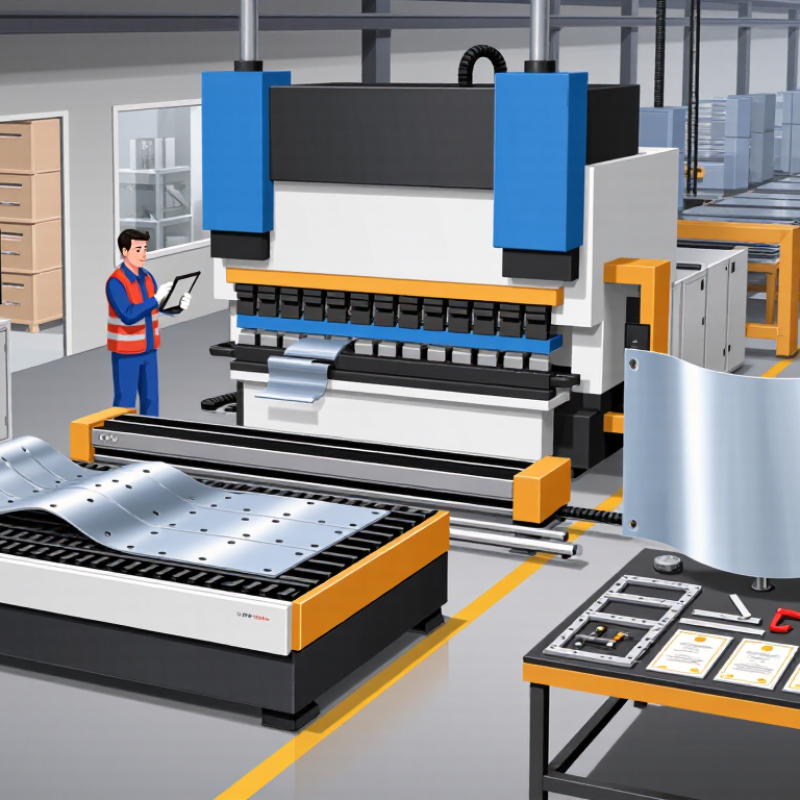
A leading sheet metal manufacturer is defined by control, not impressive machinery alone. Experienced engineers should review drawings, tolerances, bend allowances, and material grades before production begins. They should also suggest practical design changes when a part is difficult or unnecessarily expensive to make. Good advice matters.
Walk through the factory if possible. Observe laser cutting, press brake setup, welding stations, and surface treatment areas. Operators should follow clear work instructions, while inspectors should use calibrated gauges and coordinate measuring equipment. Reliable manufacturers keep material certificates, inspection reports, and batch records available. Traceability should not disappear after delivery.
Ask for a sample before approving large production. Check hole positions, edge conditions, weld appearance, coating thickness, and assembly fit. A polished sample proves little if process controls are weak. Communication is another useful test. Can the team explain delays honestly? Can they respond with measurable corrective actions? No supplier is perfect. Even strong factories may miss a tolerance or underestimate packaging risks. What matters is whether they identify the cause, document the correction, and prevent repetition. A factory that admits a weakness may be more dependable than one offering effortless promises. Looking beyond price often reveals the real difference.
Key Factors for Evaluating Chinese Sheet Metal Suppliers
Choosing among China’s top sheet metal manufacturers requires more than comparing unit prices. Evaluate their engineering depth, material control, and production discipline. Ask for drawings, tolerance ranges, surface requirements, and inspection plans before requesting a quotation. A capable supplier should explain bending springback, weld distortion, laser kerf, and finishing risks in practical terms.
Review evidence, not promises. Request sample parts, material certificates, dimensional reports, and photographs of actual production areas. Check whether quality staff use calibrated gauges and maintain traceable records. Confirm equipment capacity, tooling ownership, packaging methods, and realistic lead times. Communication also matters. Clear replies, marked-up drawings, and prompt handling of design changes often reveal operational maturity. A low quote can hide manual rework, weak packaging, or inconsistent finishing.
Tips: Start with a small trial order. Measure flatness, hole position, edge quality, coating adhesion, and assembly fit. Speak with the technical contact, not only a sales representative. Ask how they manage nonconforming parts and corrective actions. Do not rely on certificates alone; verify their scope and current validity. I have seen supplier evaluations focus heavily on machinery, while ignoring production planning. That is a mistake. A modern laser cannot fix unclear responsibilities or unstable scheduling. Compare total cost, including tooling, freight, inspection, revisions, and possible delays. Keep written approvals for every drawing and sample change.
How to Verify Quality, Certifications, and Production Capabilities
China Top Sheet Metal Manufacturers: How to Choose?
A reliable supplier should prove quality, not merely describe it. Ask for current certificates and verify them with the issuing organization. Check the certificate scope, factory address, expiry date, and covered processes. An ISO 9001 certificate helps, but it does not guarantee perfect parts. Ask for material certificates, inspection reports, and production traceability. Do not guess.
Request a sample made from the same material and process as your project. Measure hole positions, bend angles, surface finish, and coating thickness. For complex parts, review tolerance data from coordinate measuring equipment. Visit the facility if possible. Observe laser cutting, press brakes, welding stations, and final inspection areas. A clean workshop matters, but controlled records matter more.
Production capability must match your real needs. Confirm machine sizes, maximum sheet thickness, welding methods, tooling, and monthly capacity. Ask how the factory manages urgent orders and equipment maintenance. A supplier may produce one excellent sample yet struggle with repeat batches. That warning deserves attention. Discuss packaging, inspection stages, rejected parts, and corrective actions before signing an agreement. Request references for similar projects, while remembering that references can be selective. My own review experience suggests that clear evidence often reveals more than polished presentations. Suppliers may also provide incomplete information, sometimes because their systems are still developing. Record every promise, specification, and approval in writing.
China Top Sheet Metal Manufacturers How to Choose? - How to Verify Quality, Certifications, and Production Capabilities
| Evaluation Dimension | What to Verify | Practical Reference or Acceptance Point | Recommended Evidence | Risk if Not Verified |
|---|---|---|---|---|
| Quality Management System | Confirm whether the factory operates a documented quality management system covering incoming materials, production, inspection, nonconforming products, and corrective actions. | ISO 9001 certification is a useful baseline, but certification does not replace product-specific inspection. | Current certificate, certification scope, issuing certification body, validity dates, and audit status. | Inconsistent inspection records, weak traceability, and repeated quality problems. |
| Material Traceability | Check whether sheet grade, thickness, heat or batch number, and supplier documentation can be linked to the finished parts. | Material certificates should identify the material specification and measured chemical or mechanical properties where applicable. | Mill test certificate, incoming inspection report, material labels, and batch-tracking records. | Wrong material grade, premature failure, or inability to investigate defects. |
| Dimensional Control | Review how the manufacturer controls dimensions, hole locations, bend angles, flatness, and assembly fit. | Acceptance tolerances must follow the approved drawing, including general tolerances when individual tolerances are not specified. | Inspection plan, calibrated measuring equipment, first-article inspection report, and sampling records. | Parts may require rework or fail during final assembly. |
| Calibration System | Verify that calipers, micrometers, height gauges, coating gauges, torque tools, and other inspection equipment are controlled. | Equipment should have identification, calibration status, due dates, and records traceable to recognized standards. | Calibration certificates, equipment register, and sample inspection records. | Measurements may be unreliable even when reports appear complete. |
| Laser Cutting and Punching | Assess the available cutting or punching process, maximum workable sheet size, material range, edge quality, and burr-control procedure. | Capability must be checked against the actual drawing, material, thickness, tolerances, and required production volume. | Machine list, equipment specifications, sample parts, process parameters, and capacity plan. | Excessive burrs, heat distortion, inaccurate holes, or production bottlenecks. |
| Press Brake Bending | Confirm press-brake tonnage, bending length, tooling, angle control, springback compensation, and operator experience. | The selected machine and tooling must support the material thickness, bend length, inside radius, and tolerance requirements. | Bending capability chart, tooling list, sample measurements, and first-article approval. | Incorrect bend angles, cracking, deformation, or poor assembly fit. |
| Welding Capability | Review welding processes, qualified personnel, joint preparation, fixture control, weld inspection, and distortion management. | Requirements should define weld size, appearance, penetration, allowable defects, and inspection method. | Welding procedure documents, welder qualifications, visual inspection records, and test reports when required. | Weak joints, excessive spatter, distortion, leaks, or structural failure. |
| Surface Treatment | Verify pretreatment, coating or plating process, color control, coating thickness, adhesion, corrosion resistance, and masking requirements. | Acceptance criteria should specify coating system, color reference, thickness range, appearance, and applicable test method. | Coating supplier data, thickness readings, adhesion results, appearance samples, and process records. | Peeling, corrosion, color variation, poor electrical contact, or premature surface damage. |
| Certification Compliance | Select certifications according to product risk and market requirements rather than accepting certificates without checking their scope. | ISO 14001 relates to environmental management; ISO 45001 relates to occupational health and safety; IATF 16949 is specific to automotive quality management. | Certificate database verification, scope statement, audit date, site address, and applicable production process. | A certificate may be valid but irrelevant to the purchased product or manufacturing site. |
| Prototype and First Article | Determine whether the supplier can produce prototypes, review manufacturability, and submit a first-article package before mass production. | The first article should be measured against the approved drawing and include material, process, and inspection results. | Approved sample, dimensional report, deviation list, corrective-action record, and customer sign-off. | Design or manufacturing issues may remain hidden until full production. |
| Production Capacity | Check available machine hours, staffing, subcontracting arrangements, maintenance planning, and capacity during peak periods. | Capacity should be demonstrated for the required monthly volume, delivery schedule, part mix, and quality level. | Capacity plan, production schedule, bottleneck analysis, equipment utilization data, and site audit. | Late delivery, rushed production, unauthorized outsourcing, or declining quality. |
| Quality Performance | Ask for historical performance data for comparable products, including defects, rework, returns, on-time delivery, and corrective actions. | Use agreed indicators and review trends over time instead of relying on a single reported percentage. | Anonymized KPI reports, customer complaint records, corrective-action reports, and delivery history. | Supplier selection may be based on unverified claims rather than measurable performance. |
| Supply Chain Control | Identify which operations are performed internally and which are subcontracted, especially welding, plating, powder coating, heat treatment, and assembly. | Subcontracted processes should have approved suppliers, documented specifications, incoming verification, and traceability. | Approved supplier list, process flow chart, subcontractor audit records, and incoming inspection results. | Uncontrolled process changes, inconsistent finishing, and unclear responsibility for defects. |
| Final Verification Before Purchase | Combine document review, factory or remote audit, sample approval, commercial review, and a written quality agreement. | Supplier approval should be based on verified evidence covering quality, compliance, capability, cost, lead time, and communication. | Completed supplier questionnaire, audit report, approved drawings, inspection standard, and signed quality agreement. | Disputes over specifications, unexpected costs, delivery delays, and difficult warranty claims. |
Comparing Costs, Lead Times, and Customization Options
China Top Sheet Metal Manufacturers: How to Choose
Price is only the first number to examine. A low quote may exclude tooling, surface treatment, packaging, or ocean freight. Request a line-by-line cost sheet before comparing suppliers. Check material grade, thickness, tolerance, quantity, and inspection fees. A cheaper part can become expensive after repeated corrections.
Lead time needs practical detail. Ask for sample time, production time, and shipping time separately. Confirm the factory’s monthly capacity during peak seasons. A clear schedule should include drawing approval and material purchasing. Build a small buffer. Delays happen, even with careful planning. One useful lesson is that promised dates often assume instant feedback from the buyer.
Customization shows a manufacturer’s real capability. Send a complete drawing with dimensions, bend angles, hole locations, finish requirements, and tolerance notes. Ask for a sample before mass production. Review its edges, flatness, weld marks, and coating consistency under good light. The supplier should explain design limits, not simply accept every request. Confirm equipment, quality records, and corrective-action procedures. Video inspections can help, but they do not replace independent checks for critical parts. Be careful with very low minimum order quantities; they may hide higher setup costs or inconsistent production.
How to Select the Right Manufacturer for Your Project
Choosing the right sheet metal manufacturer requires more than comparing unit prices. The World Steel Association forecast global steel demand at about 1.75 billion tonnes in 2024. Material availability matters, but purchasing decisions should focus on project fit. Check cutting accuracy, bending capacity, welding quality, surface treatment, and production volume. Ask for inspection records, material certificates, and traceability documents. A low quotation can hide rework, packaging damage, or delayed delivery.
Request a sample made from your actual drawing. Measure critical holes, bend angles, flatness, and coating thickness. Confirm the tolerance standard before production begins. Review the factory’s equipment list and quality process, not only its product photos. ISO 9001 certification supports process control, but it does not guarantee perfect parts. That distinction is easy to miss. A factory audit, video inspection, or independent pre-shipment inspection can reveal practical problems. I would also compare total landed cost, including tooling, freight, duties, rejects, and corrective work.
Tips: Send complete 2D drawings, 3D files, material grades, tolerances, quantities, and delivery targets. Ask how the manufacturer handles engineering changes. Require a written quality agreement for important parts. Test a small batch before scaling production. One overlooked bend allowance can change the final assembly. The best supplier is not always the cheapest; it is the one that communicates clearly, documents decisions, and proves repeatable results. Expect some uncertainty, and build review time into the schedule.
Related Posts
-
Top 10 Sheet Metal Types and Their Unique Applications for Your Projects
-

Top 10 Applications of Sheet Metal in Modern Industry?
-
Top Tips for Sourcing Quality Sheet Metal Efficiently?
-

2025 Top Trends in Sheet Metal Fabrication Technology and Applications
-

How to Choose Architectural Sheet Metal Suppliers in 2026?
-

What are the Top Sheet Metal Manufacturers in China?