



Who Are the Best Sheet Metal Manufacturers in China?
Choosing the best sheet metal manufacturers in China is not simply a matter of comparing prices. A supplier may offer laser cutting, CNC bending, welding, and powder coating under one roof. The real test is whether those processes hold consistent tolerances across repeat orders. Small details matter: cleanly deburred edges, legible inspection records, and parts that fit the assembly without rework.
Grand View Research estimated the global sheet metal market at USD 300.1 billion in 2023 and forecast a 4.1% compound annual growth rate from 2024 to 2030. This figure describes a worldwide market, not China’s share or the quality of any individual factory. Still, it shows why supplier selection deserves care. Manufacturing scholar Jeffrey Liker’s principle is useful here: “The right process will produce the right results.” For buyers, that means checking process controls, material traceability, sample quality, and delivery performance—not just a polished website. Details count.
This guide compares Chinese manufacturers through practical signals, including equipment, production scope, quality systems, communication, and export experience. A factory visit or a carefully inspected first article can reveal more than a sales brochure. Yet even these checks have limits. A strong sample does not guarantee every batch will match. And a market statistic cannot verify a factory’s claims. The comparison is a starting point, not a verdict. It aims to help buyers ask sharper questions before committing to a supplier.
What Defines a Leading Sheet Metal Manufacturer in China?
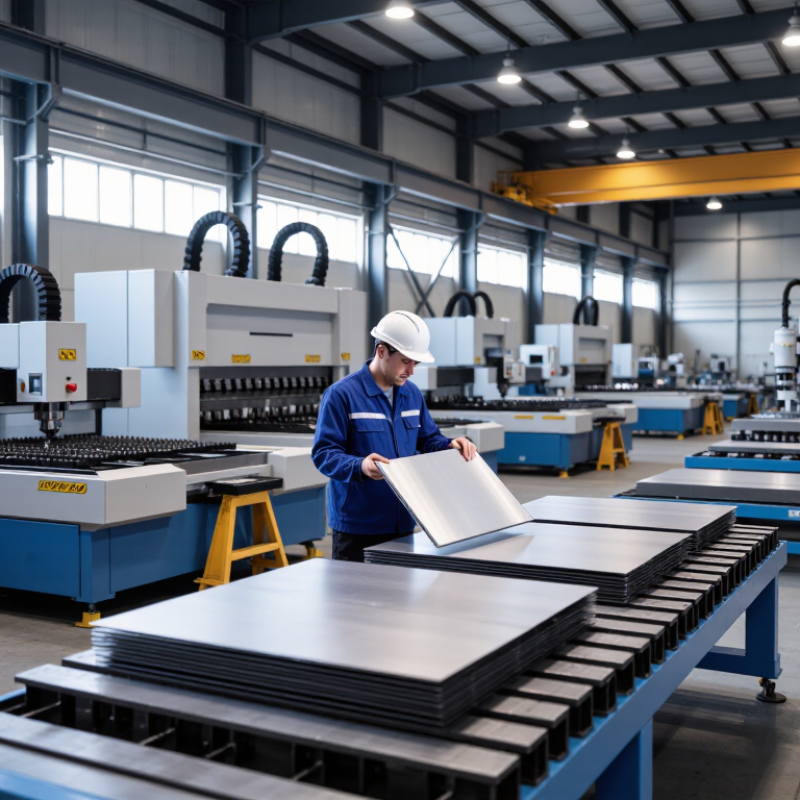
A leading sheet metal manufacturer in China should demonstrate control from drawing review to final inspection. Quality starts with practical questions: Are bend allowances checked before production? How are material thickness and surface defects verified? Ask to see sample parts, inspection records, and documented procedures for handling out-of-tolerance results. Details matter.
Equipment alone is not enough. Laser cutters, press brakes, and measuring tools need suitable maintenance and calibration. A capable team can explain how it holds critical dimensions across a batch, not just on one polished sample. Its engineers should flag unclear drawings and discuss workable changes before cutting begins. Clear answers are useful; vague promises are not.
Production planning also defines a reliable supplier. Confirm how it tracks orders, manages material availability, and reports delays. A factory visit can reveal practical details, such as labeled work-in-progress and clean separation between finished parts and raw sheets. But a tidy floor does not prove consistent quality. No checklist captures everything. That deserves thought. Compare records, sample results, and communication over time before judging a manufacturer.
Who Are the Best Sheet Metal Manufacturers in China? What Defines a Leading Sheet Metal Manufacturer in China?
| Evaluation Dimension | What a Leading Manufacturer Demonstrates | Evidence to Check | Why It Matters |
|---|---|---|---|
| Process capability | Suitable equipment and documented processes for the required operations, such as laser cutting, punching, bending, welding, and finishing. | Process list, equipment details, sample parts, and confirmation that the factory performs the required work in-house or identifies subcontracted steps. | Matching the process to the part helps control quality, lead time, and production cost. |
| Material control | Clear identification and traceability of sheet materials, including commonly used carbon steel, stainless steel, and aluminum alloys. | Material specifications, incoming inspection records, certificates where required, and part or batch traceability procedures. | Material grade and condition can affect strength, corrosion resistance, formability, and downstream performance. |
| Quality management | A documented quality management system with defined inspection, nonconformance handling, corrective action, and record-keeping procedures. | A current certificate and scope where certification is claimed, plus examples of inspection plans and corrective-action records. | Consistent procedures help make quality repeatable across orders. Certification should be verified for its scope and validity. |
| Dimensional control | Inspection methods appropriate to the drawing, material, geometry, and specified tolerances rather than a single tolerance claim for every part. | Inspection reports, calibrated measuring equipment, first-article checks, and agreement on critical dimensions before production. | Sheet thickness, bend geometry, tooling, and fabrication methods all influence achievable dimensions. |
| Welding capability | Qualified personnel and controlled welding procedures for assemblies that require welding. | Welding procedure documentation, welder qualification records where applicable, and inspection criteria agreed for the product. | Weld quality can affect structural performance, appearance, and the amount of rework required. |
| Finishing and corrosion protection | Finishing options selected to suit the part’s material, environment, appearance, and functional requirements. | Finish specifications, approved samples, process controls, and confirmation of any outsourced coating or plating steps. | Surface preparation and finish selection influence appearance, durability, and corrosion performance. |
| Engineering support | Ability to review drawings and raise practical questions about manufacturability, tolerances, bend allowances, and assembly requirements. | Drawing review notes, clarification records, and a documented approval process for revisions and production changes. | Early technical review can identify production risks before tooling or full production begins. |
| Production planning | Capacity and scheduling that fit the order’s volume, complexity, and delivery requirements. | Production plan, realistic lead-time commitment, capacity confirmation, and progress updates tied to order milestones. | Available capacity and workload affect whether delivery commitments can be met consistently. |
| Packaging and export readiness | Packaging designed to protect parts from movement, scratching, moisture, and handling damage during shipment. | Packaging specification, shipment photos where appropriate, carton or pallet details, and agreed export documentation. | Effective packaging helps preserve product condition through storage and international transport. |
| Supplier verification | Transparent answers about factory location, production scope, subcontractors, quality responsibilities, and communication channels. | Factory audit or remote assessment, business and certification checks, sample-order results, and references where available. | Independent checks help buyers assess whether the supplier’s stated capabilities match actual production practices. |
How China’s Sheet Metal Manufacturing Industry Is Structured
China’s sheet metal industry is a network, not a single tier of factories. Upstream, steel and aluminum suppliers provide coils and plate; service centers cut them into workable blanks. Specialist shops then use laser cutters, presses, stamping lines, and welding cells to make parts or assemblies. Some factories handle only one process. Others manage design, finishing, and final assembly.
The scale is substantial. World Steel Association data put China’s crude steel production at 1,019.1 million tonnes in 2023, about 54% of the global total. That figure signals material capacity, not sheet metal output; the two should not be confused. The National Bureau of Statistics reported that manufacturing contributed 26.2% of China’s GDP in 2023. Within that broad base, sheet metal suppliers serve machinery, construction, transport, electronics, and energy equipment makers. Some work as contract manufacturers; others supply components directly to larger factories.
For buyers, the practical difference is process control. A laser-cut edge may look clean, yet poor bend compensation can shift hole positions by several millimeters. Suppliers with tooling, welding, and inspection in-house can shorten handoffs, though they may not be best for every job. Smaller specialists can be nimble. Sometimes too nimble. Capacity claims are difficult to compare without checking equipment, shift schedules, and recent inspection records. These distinctions matter more than a “best” label.
Which Manufacturers Stand Out by Expertise and Production Capacity?
China’s sheet metal manufacturers stand out when engineering depth matches repeatable production capacity. Look beyond factory size. Ask how teams manage laser cutting, bending, welding, and finishing across one order. A capable supplier can explain material grades, tolerances, tooling limits, and inspection points with specific examples. Request a sample part and its dimensional inspection record. A polished sample is useful, but it cannot prove consistent output across a full batch.
Industry data offers context, not a supplier ranking. The International Federation of Robotics reported that China installed 276,288 industrial robots in 2023, equal to 51% of global installations. This signals a large automation base, though not every factory uses automation well. The World Steel Association reported Chinese crude steel production of about 1.019 billion tonnes in 2023. That scale supports a broad materials ecosystem, but it does not guarantee sheet quality or delivery reliability. Still, scale can mislead. Buyers should verify machine capacity, shift schedules, scrap control, and actual lead times. Ask how the factory handles a change in drawing revision. The answer may reveal more than its equipment list.
Who Are the Best Sheet Metal Manufacturers in China?
China’s annual crude steel output provides context for the scale of the country’s metal manufacturing supply chain. It is an industry-wide indicator, not a measure of any individual manufacturer’s capacity or expertise.
Source: World Steel Association, annual crude steel production data. Figures are in million tonnes.
How to Compare Suppliers on Quality, Processes, and Scale
Comparing sheet metal manufacturers takes more than checking quoted prices. Ask how they verify material grades, thickness, and incoming sheets. A reliable supplier should be able to show inspection records and explain what happens when a measurement falls outside tolerance. Ask for proof. A sample inspection report can reveal more than a polished capability sheet.
Look closely at the processes behind the finished part. Laser cutting, punching, bending, welding, and finishing each introduce different risks. For a bent enclosure, request details about bend testing, fixture control, and dimensional checks. Then compare those controls with your drawing and tolerance requirements. A factory tour can help, but one visit may not show how every shift works. That matters.
Scale is not just floor space or machine count. Check whether the supplier can handle your expected batch size, repeat orders, and changing schedules without weakening inspection. Ask for examples of similar materials and part complexity, while respecting customer confidentiality. Review lead-time assumptions, rework handling, and communication during production. A low-volume shop may provide close attention, yet struggle with a sudden demand increase. Large capacity can also mean less flexibility. I would compare a pilot run with the promised process, then record any gaps before committing to larger orders.
How to Choose the Right Chinese Sheet Metal Manufacturer
Choosing a Chinese sheet metal manufacturer starts with the part, not the quoted price. Share a clear drawing with material grade, thickness, finish, tolerances, and expected volume. Ask how the factory handles laser cutting, bending, welding, and inspection. A capable supplier should explain process limits plainly, including where a tight bend radius may cause cracking or variation. Request sample parts made using the intended process. Check hole positions, edge quality, and fit against your assembly. Photos help, but they cannot replace measurements.
Tips: Compare quotes using the same specification. Ask for inspection records and details about tooling ownership. Confirm who pays for packaging, freight, and sample revisions. A low unit price can hide setup costs. Keep agreements in writing.
Before committing, review communication and change control. Send one drawing revision at a time and check that the supplier confirms the updated file. Ask what happens when a batch fails inspection, and how corrective actions are recorded. If possible, arrange a production-area walkthrough or independent audit. Do not assume every factory performs equally well on prototypes and large runs; equipment, staffing, and workload can affect results. A neat sample can create false confidence. Recheck the first-article report, since small gaps may appear only during assembly.
Related Posts
-
Top 10 Sheet Metal Types and Their Unique Applications for Your Projects
-

What are the Top Sheet Metal Manufacturers in China?
-

2025 Top Trends in Sheet Metal Fabrication Technology and Applications
-
Top Tips for Sourcing Quality Sheet Metal Efficiently?
-
China Top Sheet Metal Manufacturers How to Choose?
-

Top 10 Applications of Sheet Metal in Modern Industry?