
2026 Top Wall Panel Types What Should Global Buyers Choose?

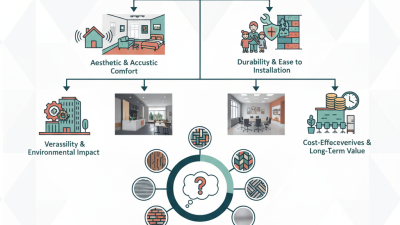
Global demand for wall panels is moving beyond basic decoration. Buyers now compare fire performance, moisture resistance, acoustic comfort, installation speed, and verified environmental claims. Fortune Business Insights estimates the global wall panels market at approximately US$17 billion in 2024, with projected growth toward about US$25 billion by 2032. That expansion reflects stronger construction activity, renovation demand, and interest in lightweight interior systems.

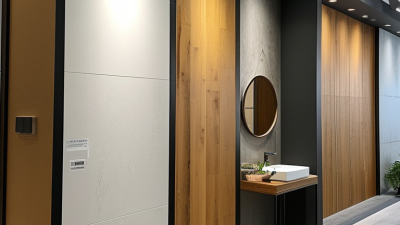
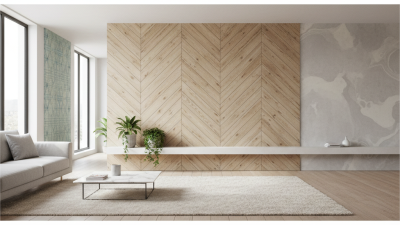
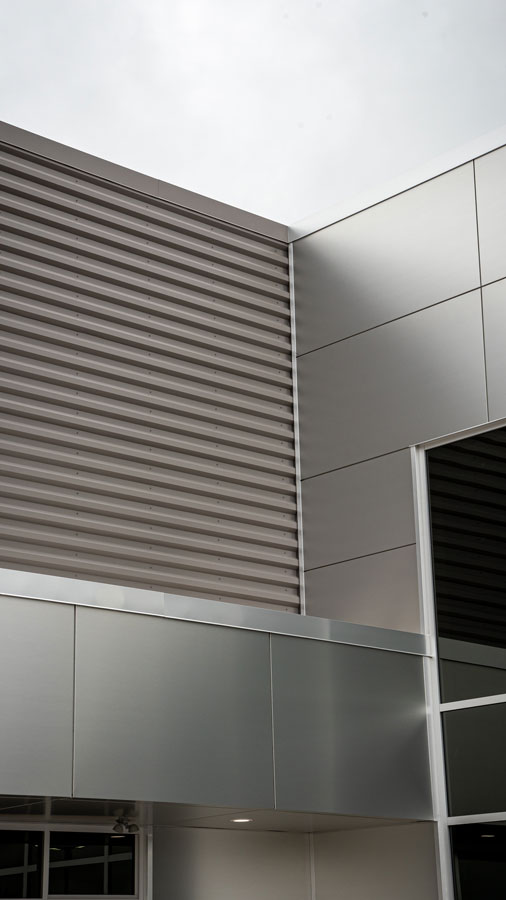
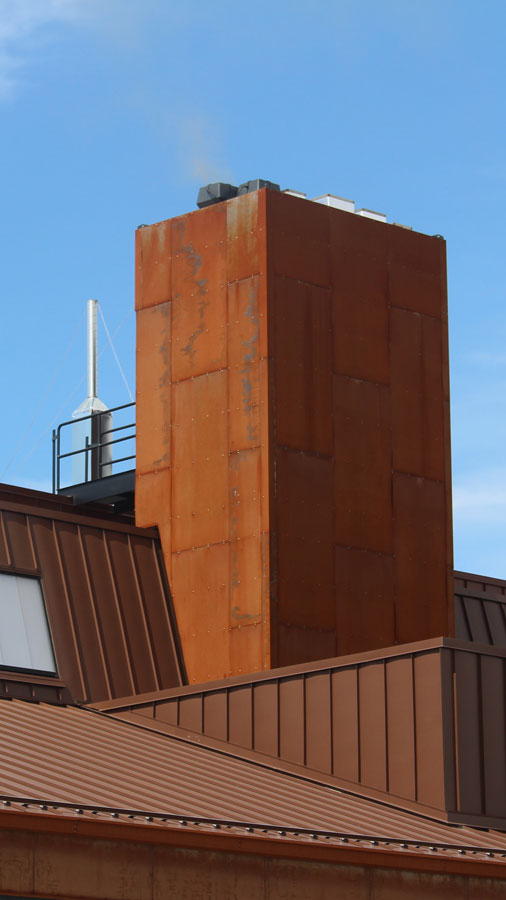
The choice is rarely universal. PVC panels suit humid bathrooms and cost-sensitive projects, while WPC panels offer a warmer appearance with improved moisture tolerance. MDF and solid wood can create refined hotel interiors, but buyers must check formaldehyde emissions, sealing quality, and supply stability. Stone veneer provides visual weight, although its installation can increase labor and structural requirements. Metal panels remain useful in commercial and industrial spaces where durability matters. Acoustic panels deserve closer attention in offices, restaurants, and education buildings.

The details matter.

Grand View Research identifies commercial construction and renovation as important demand drivers, while reports from MarketsandMarkets continue to highlight sustainability, modular installation, and material performance. However, market reports often group very different products together. This can make direct comparisons misleading. A low-cost panel may look attractive on a quotation sheet, yet fail under humidity, impact, or repeated cleaning. Global buyers should request test reports, warranty terms, installation guidance, and consistent product samples before placing large orders. Certification requirements also vary by destination, so one supplier’s compliance claim may not satisfy every market. In 2026, the best wall panels will not simply be the cheapest or most fashionable. They will match the building’s climate, use, maintenance plan, and verified performance. Even this approach has limits; local labor quality can change the final result.
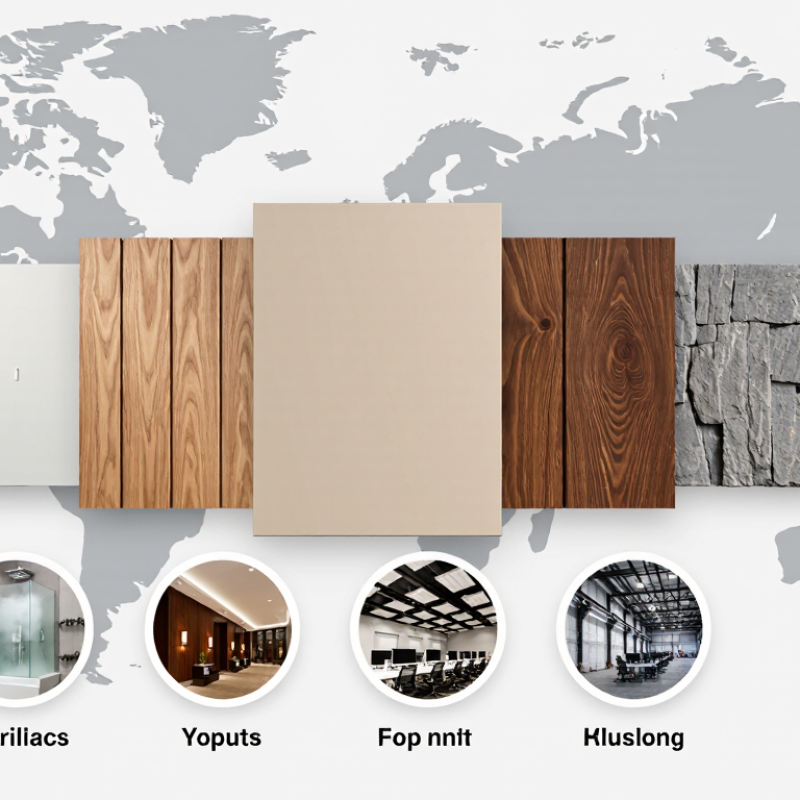
2026 Top Wall Panel Types What Should Global Buyers Choose?

What Are Wall Panels and Why Are They Important in 2026?

Wall panels are factory-made boards or systems fixed to interior or exterior walls. They may use gypsum, wood fiber, PVC, mineral fiber, metal, or composite cores. Their value goes beyond appearance. They can control sound, heat, moisture, impact, and installation time. In 2026, this matters because the UNEP Global Status Report for Buildings and Construction 2024 states that buildings consume about 32% of global energy and produce around 34% of global carbon emissions. Better wall performance can reduce operational demand, though panels alone cannot solve inefficient buildings.

Market evidence also supports careful selection. Grand View Research reports that the global wall panels market was valued at approximately USD 13 billion in 2023, with continued growth expected through the decade. Buyers should not treat every panel as interchangeable. Mineral and gypsum panels can support fire performance. PVC and WPC panels suit moisture-prone rooms, but recyclability and heat stability need review. Acoustic panels help offices and hospitality spaces, yet decorative texture does not guarantee tested sound absorption. Site experience shows that poor substrate preparation often causes more failures than the panel itself. That point is easy to overlook.

Tips: Request fire, moisture, acoustic, and formaldehyde test reports before purchasing. Check the full system, including joints and adhesives. Compare EPD data, cleaning needs, replacement access, and local code approval. A lower purchase price may create higher maintenance costs. Also question vague “green” claims; they need evidence.

Key Wall Panel Types and Their Main Characteristics

2026 Top Wall Panel Types: What Should Global Buyers Choose?

Wall panels now serve thermal, acoustic, decorative, and structural needs. Insulated sandwich panels reduce heat transfer and suit warehouses, cold rooms, and fast-built facilities. Their metal skins offer durability, but damaged joints can weaken moisture control. Fiber-cement panels resist rain, impact, and insects. They look practical, not luxurious. PVC and WPC panels provide quick installation, light weight, and many surface finishes. However, heat and fire performance require careful specification. Acoustic panels use mineral fiber, polyester, or wood-based cores. They improve sound absorption in offices, hotels, and public interiors.

Energy performance deserves serious attention. The 2023 Global Status Report for Buildings and Construction, published by UNEP, states that buildings consume about 34% of global energy and produce around 37% of energy and process-related carbon emissions. This supports stronger demand for insulated systems. Market research from Grand View Research also identifies rising renovation and energy-efficiency demand as key wall-panel market drivers. Still, one panel cannot solve every building problem.

Tips: Match the panel to climate, fire rating, humidity, cleaning needs, and installation skill. Ask for tested thermal conductivity, water absorption, acoustic performance, and reaction-to-fire data. Check the full wall assembly, not only the panel core. A cheaper panel may create higher costs through repairs, waste, or poor indoor comfort. Global buyers should also review local standards and transport conditions. Product choices often look simple. They are not.

How to Compare Wall Panels by Material, Performance, and Cost

2026 Top Wall Panel Types: What Should Global Buyers Choose?

Global buyers should compare wall panels by material, performance, and total cost, not appearance alone. In real projects, moisture resistance often matters more than a glossy surface. PVC panels suit wet rooms because they resist water and clean easily. Fiber cement panels offer stronger impact resistance and better dimensional stability. Wood-based panels create warmth, but they need careful sealing in humid climates.

Performance should match the building’s actual conditions. Check fire classification, formaldehyde emissions, acoustic ratings, thermal behavior, and surface durability. Ask for independent test reports, installation instructions, and batch quality records. A panel may perform well in a laboratory but fail after poor cutting or weak fastening. That detail is easy to underestimate.

Cost needs a wider calculation. Include panel prices, shipping volume, accessories, labor, waste, repairs, and future cleaning. A cheaper panel can become expensive when edges chip during installation. Measure sample rooms before ordering large quantities. I have seen projects lose money through incorrect thickness selection and unavailable replacement parts. It is also wise to confirm local building rules before purchase. No material wins every project. Climate, labor skills, and maintenance habits can change the decision. A practical comparison may reveal that the “best” panel is simply the safest fit for one building, not every market.

Which Wall Panels Suit Different Buildings and Climate Conditions?

Choosing wall panels depends less on appearance and more on the building’s climate, structure, and daily use. In cold regions, insulated sandwich panels can reduce heat loss across warehouses, factories, and distribution centers. Their core thickness must match local energy requirements. Thin panels may look economical, yet they can create cold surfaces and higher heating costs.

Warm, humid buildings need panels that resist moisture, mold, and corrosion. Fiber-cement panels suit schools, offices, and coastal housing when joints are sealed correctly. In rainy climates, a ventilated façade can help walls dry after heavy showers. This detail is often ignored. It should not be. PVC-based panels work well in clean interior areas, but their performance depends on fire ratings and installation quality.

Dry, sunny regions require stronger protection from ultraviolet exposure and large temperature changes. Metal panels with durable coatings can serve commercial buildings, but expansion joints need careful planning. Otherwise, panels may buckle or loosen over time. High-wind areas also demand tested fixings, suitable subframes, and professional installation. In earthquake-prone locations, flexible connections may perform better than rigid assemblies.

I have seen projects select panels from a catalog without checking the wall structure. That approach can fail. Global buyers should review local building codes, fire classifications, wind loads, humidity levels, and maintenance access. A panel suitable for a cold warehouse may be unsuitable for a tropical clinic. Performance data matters more than surface texture. Even experienced teams should verify assumptions on site.

2026 Top Wall Panel Types: What Should Global Buyers Choose?
Which Wall Panels Suit Different Buildings and Climate Conditions?
Wall Panel Type Typical Construction Typical Thermal Conductivity
(W/m·K)
Moisture and Weather Performance Fire Performance Suitable Building Applications Best-Fit Climate Conditions Main Buyer Consideration
Mineral Wool Sandwich Panel Metal facings bonded to a mineral wool core; commonly supplied as insulated exterior or partition panels. Approximately 0.034–0.045 Good dimensional stability and sound absorption. Requires properly sealed joints and protected edges to prevent water entry. Mineral wool is non-combustible; the complete panel system must still be tested for its required fire rating. Factories Warehouses Cold stores Public buildings Cold, temperate, humid, coastal, and high fire-risk environments when correctly detailed. Higher weight than polymer-core panels; verify structural support and fixing design.
PIR Insulated Sandwich Panel Metal facings with a polyisocyanurate foam core, designed for high thermal resistance at relatively low thickness. Approximately 0.020–0.028 Closed-cell foam offers low water absorption, but joints, penetrations, and vapor-control details remain critical. Better fire performance than many conventional foam cores, but PIR is not automatically non-combustible. Use tested assemblies. Logistics centers Food facilities Industrial buildings Commercial buildings Cold and hot climates where a high insulation level is needed with limited wall thickness. Check fire certification, smoke performance, joint design, and compatibility with local codes.
EPS Insulated Sandwich Panel Metal facings with expanded polystyrene foam; widely used as a lightweight economical insulated panel. Approximately 0.032–0.040 Low water absorption in the foam, but exposed cuts and poorly sealed joints can reduce long-term performance. Combustible insulation core; fire resistance depends strongly on the complete tested system and installation details. Agricultural buildings Workshops Storage buildings Temporary facilities Dry and temperate climates; usable in humid areas only with suitable detailing and code approval. Usually cost-effective, but fire regulations may limit use in certain occupancies and building heights.
AAC Wall Panel Factory-produced autoclaved aerated concrete panels made from cementitious materials, sand, lime, and an aerating agent. Approximately 0.09–0.18 Mineral-based and vapor-permeable. Needs protection from prolonged wetting and carefully designed exterior finishes. Generally non-combustible and capable of providing substantial fire resistance, subject to thickness and tested construction. Apartments Schools Hospitals Low-rise buildings Hot, cold, dry, and temperate climates; suitable where masonry-like durability is required. Requires careful handling because panels can be brittle; joints and surface coatings need proper detailing.
Fiber Cement Panel Cement-based panel reinforced with cellulose or mineral fibers; used for façades, rainscreens, partitions, and soffits. Approximately 0.30–0.60 Good resistance to rain, ultraviolet exposure, insects, and rot when installed as a ventilated or drained system. Often offers limited-combustibility or non-combustible characteristics, depending on composition and certification. Residential façades Schools Renovation projects Ventilated façades Humid, rainy, coastal, hot, and temperate climates; suitable for exposed exterior façades. Not normally a high-performance insulation layer by itself; pair with a properly designed insulation system.
MgO Panel Magnesium-oxide-based board used for interior partitions, sheathing, ceilings, and selected façade applications. Approximately 0.30–0.50 Resistant to mold and moisture in suitable formulations, but quality, chloride content, edge sealing, and site exposure must be verified. Many products are non-combustible or highly fire resistant, but certification must be checked for the specific product and assembly. Interior partitions Modular buildings Fire-rated enclosures Renovation Dry, humid, and temperate climates when the selected product is approved for the exposure level. Demand independent testing for dimensional stability, moisture behavior, fastener corrosion, and emissions.
Gypsum Fiber or Gypsum Board Panel Gypsum core reinforced with paper or cellulose fibers; primarily used for interior walls, ceilings, and drylining systems. Approximately 0.16–0.25 Suitable for normal indoor humidity. Moisture-resistant grades are available, but standard boards are not intended for continuous wet exposure. Non-combustible gypsum content can contribute to fire-rated assemblies; performance depends on board layers and framing system. Offices Homes Hotels Healthcare interiors Controlled indoor environments; moisture-resistant versions may suit bathrooms and moderately humid interiors. Not a substitute for exterior cladding or structural weatherproofing without a complete tested system.
HPL Compact Laminate Panel High-pressure decorative laminate made from resin-impregnated paper layers, commonly used in façades and interior partitions. Approximately 0.20–0.30 Low water absorption and good surface durability; exterior-grade products require UV-resistant finishes and ventilated installation. Fire behavior varies widely by resin, thickness, and formulation; verify the required classification for the complete façade system. Commercial façades Retail buildings Schools Interior partitions Humid, coastal, hot, and temperate climates when exterior-grade material and drainage details are used. Confirm UV stability, thermal movement, fixing method, and façade fire requirements before purchase.
Rock or Stone Veneer Panel Natural stone, engineered stone, or lightweight stone-faced panel installed over a structural wall or backing system. Approximately 1.00–3.50 Highly durable against rain and ultraviolet exposure when joints, flashings, and drainage cavities are correctly designed. Natural stone and many mineral-based products are non-combustible; adhesives and backing layers must also be assessed. Premium façades Civic buildings Hotels Landmark projects Cold, hot, humid, coastal, and high-exposure climates with appropriate anchoring and movement joints. High mass and limited insulation value; structural load, transport, anchoring, and seismic design are important.
Technical note: Thermal-conductivity values are typical product-range estimates at approximately room temperature and can vary with density, moisture content, thickness, aging, and test method. Fire, wind, water, seismic, acoustic, and energy performance must be verified for the complete wall assembly under the destination country's building regulations.

How Global Buyers Can Choose Reliable Wall Panel Suppliers

2026 Top Wall Panel Types: What Should Global Buyers Choose?

Global buyers can choose PVC, aluminum, wood-plastic composite, or mineral wall panels. The right option depends on moisture, fire requirements, installation speed, and project location. A reliable supplier should explain these differences clearly, not push one product for every building. Ask for technical data, production photos, test reports, and installation guidance. Documents matter, but practical evidence matters more.

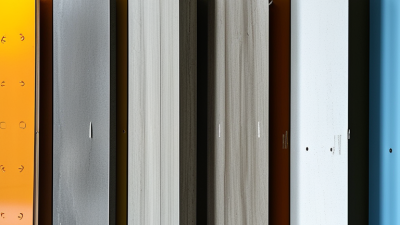
Request physical samples before placing a large order. Check the panel surface under strong light. Look for uneven coating, weak edges, color variation, or hidden warping. Discuss packaging, container loading, lead times, replacement procedures, and export experience in writing. A factory audit or live video inspection can reveal storage conditions and quality controls. Still, no inspection is perfect. I once underestimated packaging risks, and several corners arrived damaged. That mistake changed how I review suppliers.

Tips: Compare at least three suppliers. Verify certificates with the issuing laboratory. Ask whether test results match the exact panel model. Confirm thickness, dimensions, fire rating, and moisture resistance before payment. Use a small trial order first. Reliable communication is valuable, but consistent quality is the real test.