

What Are the Top Folding Gazebos for Global Buyers?
A Folding Gazebo can turn a sunny market stall, garden gathering, or campsite into a shaded, organized space. Yet the best choice depends on more than price or appearance. Buyers should compare frame stability, canopy fabric, packed size, setup time, and replacement-part availability. A model that opens quickly may still feel flimsy when its legs shift on uneven ground. Small details matter.
“Check the frame, fabric, and repair options before judging a gazebo by its low price,” says fictional outdoor-shelter specialist Daniel Mercer. This illustrative comment is not a verified quotation from a real expert. It reflects a practical buying principle: assess the product against its intended setting and expected use. A family seeking occasional garden shade may value simple setup, while a frequent vendor may need stronger fittings and easier maintenance.
This guide compares folding gazebos for global buyers, including features that can be checked across product listings and specifications. Look for clear dimensions, stated materials, warranty terms, and realistic setup guidance. Ask how the shelter performs in light rain and wind; no portable canopy should be assumed safe in severe weather. There is no universal winner. The right pick balances portability, durability, support, and budget—and sometimes the best-looking option is not the best-built one.
What Is a Folding Gazebo and How Does It Work?
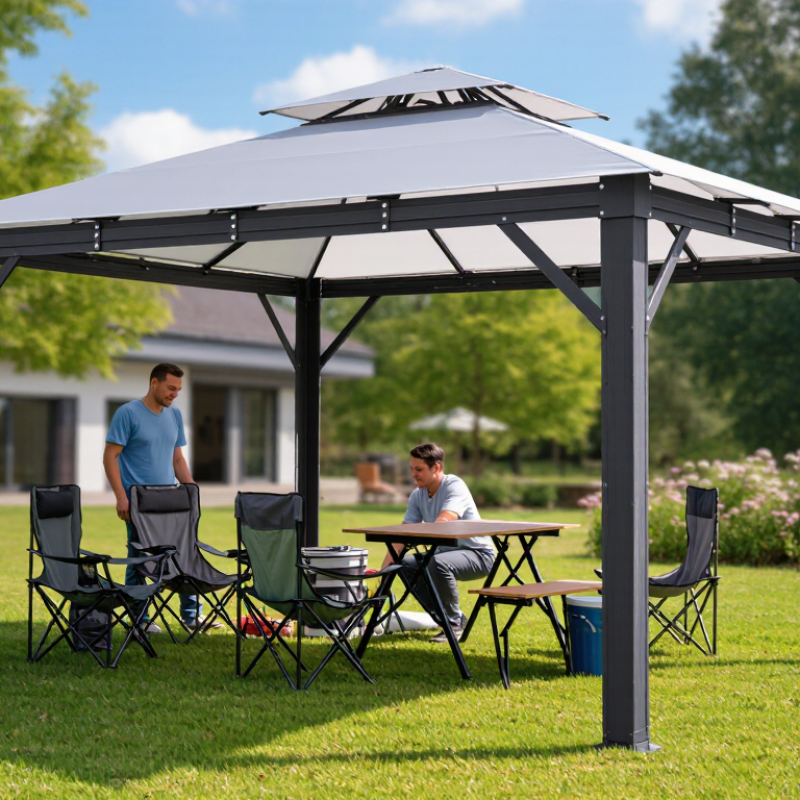
A folding gazebo is a portable shelter with a collapsible frame and a fabric roof. Most models use linked metal struts that expand when the frame is pulled outward. Sliding corner joints lock the structure open, while push-button releases help fold it down. The roof usually attaches to the frame with pockets, straps, or hook-and-loop fasteners. Setup is simple, but one person may struggle to keep the frame aligned in a breeze.
The frame carries the roof’s weight and transfers force toward the feet. Cross-bracing helps limit sideways movement, while stakes or weighted feet reduce the risk of the shelter shifting. The U.S. National Weather Service’s Beaufort wind scale describes gale-force winds as 28–33 knots. That is far beyond a light breeze, and an open-sided gazebo can catch wind like a sail. Secure it carefully, and lower or remove the canopy when conditions become gusty.
For buyers, check frame joints, fabric seams, leg locks, and packed dimensions—not just the advertised roof size. A powder-coated steel frame can feel sturdy, but it is heavier to carry than aluminum. Polyester roofs are common because they fold easily; however, fabric coatings and seam construction affect water resistance. Small detail, big difference. Specifications vary, so verify the stated wind and water limits with the seller before relying on a gazebo for exposed sites.
What Are the Top Folding Gazebos for Global Buyers? - What Is a Folding Gazebo and How Does It Work?
A practical comparison of common folding-gazebo configurations and how their frames, canopies, and anchoring systems work.
| Configuration | Typical Size | Frame and Folding Mechanism | Canopy and Weather Protection | Best-Fit Uses | Key Considerations |
|---|---|---|---|---|---|
| Compact pop-up | About 2 × 2 m | Folding scissor-link frame; usually carried as a compact package when closed. | Fabric roof provides shade; water resistance varies by fabric and seam construction. | Small market stalls, garden use, and portable shade for a few people. | Limited covered area; secure each leg and follow the maker’s wind guidance. |
| General-purpose square pop-up | About 3 × 3 m | Most commonly uses a center hub and linked folding struts that open and close with the frame. | A single-piece roof is common; coatings may improve water resistance and UV protection. | Outdoor events, garden gatherings, and temporary vendor spaces. | Check assembled dimensions, packed size, frame material, and anchoring options. |
| Large event pop-up | About 3 × 6 m | Longer frame with additional supports; generally needs more people and space to erect safely. | Broad roof covers a larger footprint; sidewalls may be available separately. | Food service, exhibitions, team areas, and larger temporary gatherings. | Greater surface area can catch more wind; use suitable ballast or ground anchors. |
| Lightweight aluminum-frame model | Commonly 2 × 2 to 3 × 3 m | Aluminum members help reduce carrying weight; joints and wall thickness affect rigidity. | Canopy performance depends on fabric, coating, stitching, and roof design rather than frame material alone. | Travel, frequent transport, and users prioritizing easier handling. | Compare frame specifications and replacement-part availability; lightweight does not mean windproof. |
| Steel-frame model | Commonly 2 × 2 to 3 × 6 m | Steel frame is often heavier; protective finishes can help reduce corrosion. | Roof materials and weather performance vary by specification; inspect seams and care instructions. | Users who can transport a heavier unit and want a sturdy-feeling temporary structure. | Weight and finish durability matter, particularly for coastal or humid storage conditions. |
| Commercial-use pop-up | Often 3 × 3 or 3 × 6 m | Designed for repeated assembly; reinforced joints and replaceable components may be specified. | May offer heavier canopy fabric, printed panels, or optional sidewalls; verify stated ratings. | Regular markets, promotions, and recurring outdoor events. | Confirm warranty, spare parts, packed dimensions, and whether local event rules apply. |
How a folding gazebo works: The canopy is attached to a collapsible frame made of linked roof struts and legs. To open it, users spread the legs, extend the frame until its joints and center hub reach their operating positions, then set the roof height. To close it, they release the frame locks and draw the legs together. Follow the specific product instructions and avoid forcing joints.
Buyer note: Dimensions and features shown are typical category examples, not specifications for a particular product. Folding gazebos are temporary shelters, not substitutes for permanent structures. Secure them appropriately, take them down in unsafe weather, and check local requirements for public or commercial use.