



China Top 10 Kitchen Pendant Light Manufacturers
Choosing the right Kitchen Pendants can change how a kitchen feels and functions. A warm glow above an island makes meal preparation easier and gives the room a natural gathering point. Yet a stylish photograph cannot show everything. Buyers also need to consider materials, finish quality, light distribution, customization, and how clearly a supplier communicates.
This guide introduces ten Chinese manufacturers of kitchen pendant lighting and explains what buyers may want to examine when comparing them. The focus is practical: product range, design flexibility, manufacturing capabilities, quality processes, and experience serving overseas customers. Details can vary by model and order, so specifications should be confirmed directly with each manufacturer. Ask about dimensions, compatible bulbs, finish samples, packaging, and inspection procedures before making a decision. Small details matter.
A low-hanging fixture may look striking but obstruct sightlines. A broad shade can cast useful light, though it may create shadows across a work surface. These trade-offs deserve attention. The guide is not a substitute for checking samples, references, and current product documentation. Manufacturer rankings can also depend on a buyer’s priorities; there is no single supplier that fits every project. Some information may be incomplete or change over time. That is worth acknowledging. With careful comparison, readers can build a clearer shortlist and discuss their requirements with greater confidence.
Kitchen Pendant Lights: Core Types, Components, and Applications
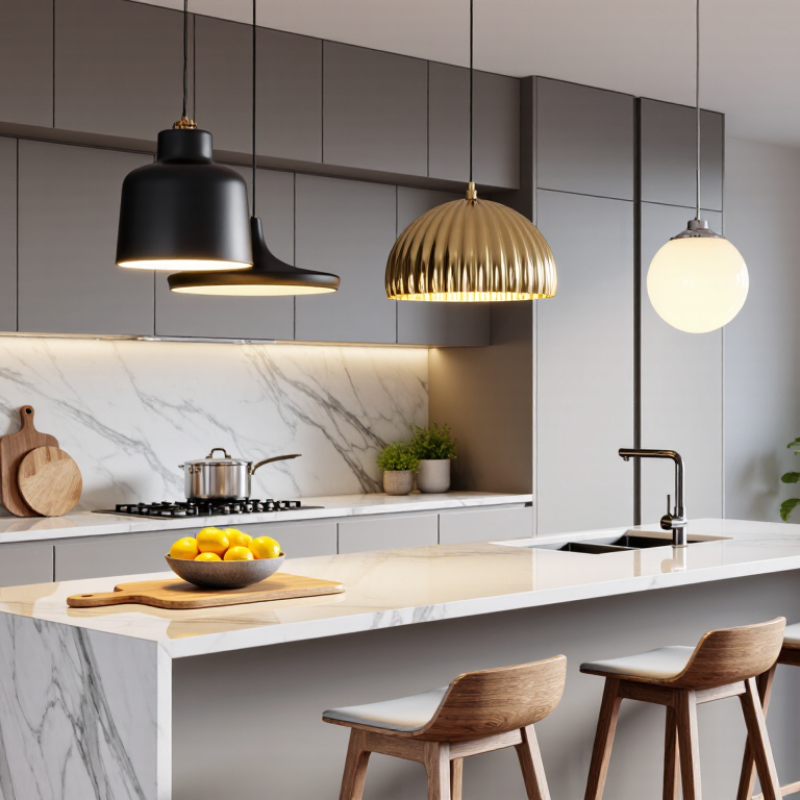
Kitchen pendant lights generally take three forms: single drops, linear bars, and clustered fixtures. Single drops suit compact islands; bars spread light across longer counters, while clusters create a softer visual rhythm. A typical fixture includes a ceiling canopy, suspension, socket or LED module, driver, and shade or diffuser. Open metal shades direct light onto work surfaces. Opal glass softens glare. Small details matter. Check that shades are easy to clean and that LED modules or drivers can be serviced.
For food preparation, position pendants above work zones without obstructing seated sightlines. A dimmable source with high color rendering helps reveal the colors of ingredients and finishes. The International Energy Agency’s lighting overview estimates that lighting accounts for about 15% of global electricity use and 5% of greenhouse-gas emissions. This broad estimate is not specific to kitchens, but it supports choosing efficient LEDs and useful controls. Still, pendant placement cannot solve every shadow; dark counters may need under-cabinet task lighting.
China Top 10 Kitchen Pendant Light Manufacturers - Kitchen Pendant Lights: Core Types, Components, and Applications
| Pendant light type | Typical construction and components | Light distribution | Common kitchen applications | Key selection considerations |
|---|---|---|---|---|
| Dome pendant | Downward-facing metal or glass shade, lampholder or LED module, suspension cord or stem, ceiling canopy. | Mostly downward-directed light, with some reflected light depending on the shade interior. | Focused lighting over an island, peninsula, or breakfast bar. | Check shade diameter, hanging height, glare control, and whether the light source is replaceable. |
| Mini pendant | Compact shade or exposed lamp, socket or integrated LED, short canopy, and adjustable suspension hardware. | Localized task or accent lighting; coverage depends on lumen output and beam spread. | Installed individually in small kitchens or in a spaced row above an island or counter. | For multiple fixtures, plan even spacing and coordinate their scale with the island dimensions. |
| Linear multi-light pendant | A linear canopy or bar supporting several lamp holders or LED heads, with wiring and suspension points. | Distributed light along a horizontal line. | Long kitchen islands and dining counters where a single centered fixture is preferred. | Match fixture length to the surface and confirm the ceiling junction-box position and mounting method. |
| Glass globe pendant | Spherical clear, opal, or tinted glass shade with a socket or LED module, suspension, and canopy. | Opal glass diffuses light; clear glass exposes the lamp and generally provides less diffusion. | Island groupings, breakfast nooks, and decorative kitchen zones. | Consider cleaning access, visible-lamp glare, and the effect of glass tint on light output. |
| Cone or task pendant | Tapered shade, lamp holder or LED source, internal reflector in some models, and adjustable suspension. | Concentrated downward illumination, often with limited upward spill. | Food-preparation counters, islands, or work areas needing localized light. | Review the beam spread and shade depth to balance useful task light against glare. |
| Drum pendant | Cylindrical fabric, metal, or glass shade; diffuser may be fitted at the bottom; includes a light source and suspension. | A diffuser can soften direct light, while the shade may also direct light downward or upward. | Kitchen dining areas and larger spaces where softer ambient light is desired. | Check shade material, diffuser availability, and how easily the fixture can be cleaned. |
| Lantern pendant | Open or framed metal structure with glass panels in some designs, plus a socket or LED source and hanging hardware. | Light can pass through open sides; distribution depends on the frame, glass, and lamp position. | Decorative focal points over an island, dining table, or kitchen entry area. | Check overall clearance, exposed-lamp glare, and whether the frame allows convenient bulb replacement. |
| Adjustable-arm pendant | Pivoting arm or articulated joints, shade, wiring, mounting point, and a socket or integrated LED module. | Direction can be changed to suit the task area, subject to the fixture's movement range. | Flexible task lighting over counters or work zones where the target area may vary. | Confirm arm reach, joint stability, mounting strength, and clearance from cabinets and walkways. |
| Cluster pendant | Several separate shade-and-light assemblies grouped on one canopy or arranged as a coordinated set. | Multiple light points create a broader or layered effect, depending on spacing and output. | Kitchen islands, open-plan kitchens, and high ceilings needing a decorative group arrangement. | Check canopy size, ceiling support, cord adjustment, and the total fixture width and drop. |
| Integrated LED pendant | Built-in LED board or module, driver, heat-management structure, diffuser or lens, suspension, and canopy. | Designed distribution varies by lens and fixture geometry; dimming depends on driver compatibility. | General, task, or decorative lighting over islands and counters, depending on output and optics. | Verify rated lumens, color temperature, color rendering information, dimmer compatibility, and service options. |
Note: The table describes common kitchen pendant-light categories and components; it does not rank or identify manufacturers. Actual performance varies by product design, light source, installation, and applicable electrical requirements.