




7 Tips for Choosing Carbon Steel Plate Manufacturers?
Choosing among Carbon Steel Plate Manufacturers is not a simple price comparison. The decision affects structural safety, fabrication efficiency, delivery schedules, and long-term maintenance. A low quotation may hide weak traceability, inconsistent thickness, or incomplete inspection records. Look closer.
Experienced buyers examine more than a polished website. They review production capacity, steel grades, heat-treatment procedures, testing equipment, and export experience. ASTM A36, ASTM A572, and EN 10025 plates may look similar, yet their chemistry and mechanical performance differ. Ask for recent mill test certificates, heat numbers, dimensional reports, and ultrasonic testing records. A reliable manufacturer should explain these documents clearly, not avoid technical questions.
Metallurgist George Krauss wrote, “The microstructure of steel is the key to understanding its properties.” That principle remains practical on a busy fabrication floor. Grain structure, carbon content, rolling history, and cooling control can influence welding, bending, and impact performance. The best Carbon Steel Plate Manufacturers connect laboratory data with real production results. They can discuss edge quality, flatness, surface scale, cutting tolerances, packaging, and shipment protection.
Still, no supplier is perfect. Even a respected mill may face production delays, communication gaps, or occasional surface defects. That is why this guide examines seven practical selection tips, including certification, quality control, capacity, customization, pricing, logistics, and after-sales support. Request samples when possible. Compare evidence, not promises. A careful choice may cost slightly more, but it can prevent rejected plates, halted fabrication, and expensive rework later.
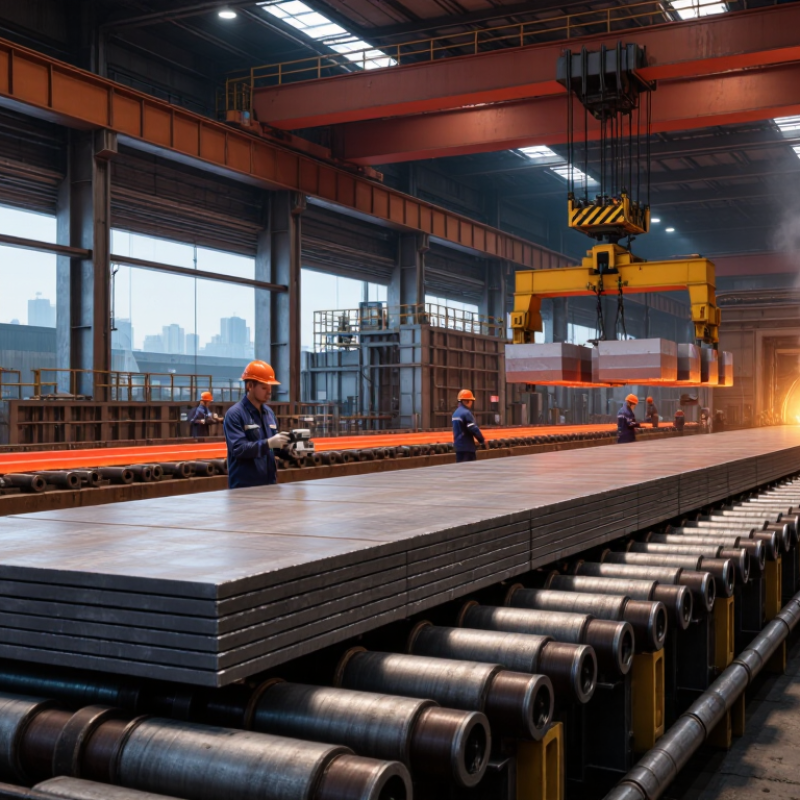
Define Required Grades, Thicknesses, and Standards such as ASTM A36
Before comparing carbon steel plate manufacturers, define the material precisely. List the required grade, thickness, plate dimensions, and delivery condition. ASTM A36 is widely used for structural applications, but it may not suit every load, temperature, or welding environment. Ask an engineer to confirm the grade before requesting quotations.
Thickness deserves careful attention. A six-millimeter plate and a twenty-millimeter plate can require different rolling controls, testing, and dimensional tolerances. State the permitted thickness variation, flatness, cut-size tolerance, and edge condition. Include the required standard, such as ASTM A36, and clarify whether supplementary tests are necessary. Charpy impact testing may matter for low-temperature service.
Request traceable documentation from each manufacturer. A reliable supplier should provide mill test certificates, heat numbers, chemical analysis, mechanical results, and inspection records. Check that the certificate matches the plate markings and purchase specification. Small details matter. Compare production capacity, inspection procedures, packaging, and delivery experience with similar plate sizes.
A practical mistake is choosing the lowest price before confirming the specification. That decision can create welding delays, rejected plates, or expensive rework. I would also review sample documents, not only sales claims. Some requirements may remain unclear, especially when project drawings use older standards. Clarify them in writing before production begins.
Verify Strength Data: A36 Plates Typically Offer 36 ksi Yield Strength
Choosing Carbon Steel Plate Manufacturers: Verify Strength Data
A reliable manufacturer should prove, not merely claim, that its A36 plate meets specification. ASTM A36/A36M requires a minimum yield strength of 36 ksi for common plate thicknesses up to 8 inches. The same specification lists a tensile strength range of 58–80 ksi. The AISC Steel Construction Manual uses these values in structural design references. Ask for the mill test certificate before approving any shipment.
Check the certificate against the plate itself. The heat number should match the tag, stencil, and inspection records. Confirm thickness, chemical composition, yield strength, tensile strength, elongation, and test direction. ASTM A6/A6M also defines general requirements for dimensions, tolerances, and testing.
Small mismatches matter. A missing heat number is not a small issue.
Request an independent laboratory review for critical projects. A proper tensile test uses a documented method, calibrated equipment, and traceable results. In practice, I have seen paperwork look complete while thickness measurements revealed unexpected variation. That experience is worth remembering.
Do not accept “A36 equivalent” without clear evidence of compliance. Ask how the manufacturer controls rolling temperature, plate cooling, sampling, and certificate revisions. Cheap documentation can become expensive rework.
Assess Mill Quality Systems, Including ISO 9001 Certification and Traceability
Choosing a carbon steel plate manufacturer starts with its quality system, not its sales presentation. ISO 9001 certification is useful, but it is only a framework. Ask whether procedures control purchasing, rolling, heat treatment, inspection, and shipment. Request the certificate number, scope, issuing body, and current validity date. A certificate proves little. Visit the mill when possible.
Traceability should follow each plate from raw material to final delivery. Look for heat numbers stamped on plates, linked to production records and material test certificates. Test reports should match the actual grade, thickness, dimensions, and delivery batch.
Check whether inspectors record chemical composition, tensile strength, impact results, and surface defects. Ask how the mill handles nonconforming plates. Small gaps matter.
Experienced buyers also examine equipment and staff competence. Calibration labels should be current on testing machines, thermometers, and measuring tools. Nonconformance records can reveal whether the quality system works under pressure.
Do not expect every document to look perfect. In practice, paperwork may appear complete while a batch code is unclear. That is a warning, not an automatic rejection. Ask for clarification, corrected records, and evidence of corrective action. A reliable manufacturer should answer directly and preserve traceability after the plates leave the mill.
Compare Testing, Tolerances, and Compliance with ASTM A6 Requirements
Choosing a carbon steel plate manufacturer requires more than comparing price and delivery dates. ASTM A6/A6M compliance should guide the evaluation. Ask for the exact standard edition, material grade, heat number, and inspection records. A credible supplier should provide traceable mill test reports, not a generic certificate copied between orders.
Check how the manufacturer verifies thickness, width, length, flatness, and camber. Request the actual measurement method and sampling frequency. A plate can look uniform under warehouse lights yet fail at the edges. Confirm whether thickness measurements follow ASTM A6 locations and tolerances. Review tensile strength, yield strength, elongation, and chemistry results against the applicable grade standard. Independent testing may be useful for critical structures.
Do not treat ultrasonic testing as automatically included. Confirm it in the purchase specification, along with acceptance criteria and reporting format. Ask whether an inspector witnessed testing or reviewed raw laboratory data. In practice, traceability often breaks during cutting, repainting, or relabeling. That detail is easy to miss. I would also compare previous nonconformance records, even when they feel uncomfortable. A supplier that explains one uneven result may be more reliable than one offering flawless paperwork every time.imuhamed
Review Capacity, Lead Times, Pricing, and After-Sales Technical Support
7 Tips for Choosing Carbon Steel Plate Manufacturers
Tip 1: Check real production capacity, not only website figures. Ask about monthly output, rolling equipment, plate thickness, and maximum width. A factory may handle thin plates well but struggle with heavy sections.
Tip 2: Request recent delivery records for similar orders. Confirm whether the material is stocked or made to order. Lead times should include rolling, testing, packing, and inland transport. Add a small buffer. Delays happen.
Tip 3: Compare complete pricing, not just the price per ton. Review steel grade, dimensions, testing fees, edge treatment, packaging, taxes, and delivery terms. A cheaper quote may exclude important services. Ask how long the price remains valid.
Tip 4: Examine quality evidence carefully. Reliable manufacturers should provide mill certificates, heat numbers, chemical analysis, and mechanical test results. Traceability matters when plates enter bridges, pressure equipment, or heavy machinery.
Tip 5: Test technical support before placing a large order. Ask whether engineers can advise on welding, forming, cutting, and surface protection. Clear answers usually indicate practical experience. Vague replies deserve more questions.
Tip 6: Review after-sales procedures in writing. Check response times, inspection methods, replacement rules, and document correction processes. Take photos during unloading and record plate markings. This simple habit can prevent disputes.
Tip 7: Speak with a technical contact, not only a salesperson. Discuss tolerances, inspection standards, and realistic production limits. No manufacturer is perfect, and every project has risks. The best choice is often the supplier that explains weaknesses honestly and offers workable controls.
7 Tips for Choosing Carbon Steel Plate Manufacturers: Capacity, Lead Times, Pricing, and After-Sales Technical Support
| No. | Selection Dimension | What to Review | Useful Benchmark | Documents or Evidence to Request | Recommended Weight |
|---|---|---|---|---|---|
| 1 | Confirm Production Capacity | Check monthly output, rolling capacity, plate thickness range, maximum plate dimensions, and whether the mill relies on outside processing. | Capacity should cover the planned order volume with approximately 15–20% reserve capacity for schedule changes or repeat orders. | Production capacity statement, equipment list, recent production schedule, and a factory or virtual audit report. | 20% |
| 2 | Verify Product Standards and Quality | Review steel grade, chemical composition, mechanical properties, thickness tolerance, flatness, surface condition, and heat-treatment requirements. | The supplier should consistently meet the selected specification, such as ASTM, EN, JIS, or another contractually defined standard, with traceable heat numbers. | Mill test certificates, inspection and test plans, calibration records, sample inspection reports, and nonconformity records. | 20% |
| 3 | Compare Lead Times | Separate production time from approval time, testing time, packaging, inland transport, port handling, and international shipping. | Standard sizes commonly require about 3–8 weeks after order confirmation; custom grades, special testing, or non-standard dimensions may require 6–12 weeks. | Written production schedule, historical on-time delivery data, order milestones, and escalation procedures for delays. | 15% |
| 4 | Evaluate Pricing Transparently | Compare the material price together with cutting, testing, inspection, packaging, documentation, inland freight, export charges, and payment terms. | Request comparable quotations using the same grade, dimensions, quantity, delivery term, inspection level, and validity period. A low price without equivalent scope is not a reliable saving. | Itemized quotation, cost inclusions and exclusions, price-validity period, payment schedule, and written change-order policy. | 15% |
| 5 | Check Traceability and Inspection Control | Confirm that each plate can be linked to its heat number, test results, production batch, inspection status, and shipping documents. | Traceability should remain intact from raw material receipt through rolling, heat treatment, inspection, marking, and delivery. | Heat-number records, quality-control flow chart, inspection release note, dimensional inspection report, and photographic records before shipment. | 10% |
| 6 | Assess Customization and Logistics | Review cutting tolerance, edge treatment, surface preparation, marking, packaging, moisture protection, loading method, and export documentation. | Packaging should protect plates from impact, contamination, and moisture during storage and transport; all dimensions and markings should match the purchase order. | Packaging specification, loading photographs, packing list template, shipping marks, and damage-claim procedure. | 10% |
| 7 | Review After-Sales Technical Support | Evaluate support for welding, forming, machining, storage, installation, nonconformance handling, replacement material, and technical questions. | A dependable supplier should acknowledge quality issues within 1–2 business days and provide a documented corrective-action plan within an agreed period. | Warranty terms, technical contact details, response-time policy, corrective-action sample, replacement policy, and customer-support workflow. | 10% |
| Total Evaluation Weight | 100% | ||||
Note: Lead-time ranges are general purchasing benchmarks. Actual delivery depends on grade, dimensions, quantity, inspection requirements, production load, shipping route, and agreed delivery terms.


