How to Choose the Right Pallet Box for Global Shipping?
Choosing the right Pallet Box is a logistics decision, not merely a packaging purchase. The box must survive handling, stacking, humidity, vibration, and temperature changes. It must also fit warehouse equipment and container dimensions. Small design errors can create large costs.
UNCTAD’s Review of Maritime Transport 2023 states that more than 80% of global merchandise trade moves by sea. That statistic matters because ocean transport exposes packaging to long dwell times, condensation, and repeated transfers. The World Bank’s Logistics Performance Index 2023 also shows major differences in infrastructure quality, shipment reliability, and delivery timeliness between markets. A strong Pallet Box therefore needs more than impressive load capacity. It needs predictable performance across uncertain routes. Dr. Jay Singh, a packaging specialist at California Polytechnic State University, puts the principle clearly: “Packaging performance must be measured in the distribution environment.”
That advice sounds simple. It is not always followed. A recyclable Pallet Box may reduce material impact, yet fail when moisture weakens its structure. A heavy-duty model may protect goods, but increase handling weight and transport emissions. Smithers’ sustainable packaging research highlights the industry’s continuing shift toward material efficiency, reuse, and measurable environmental performance. Buyers should compare internal dimensions, dynamic load ratings, stacking safety, closure design, repair options, and end-of-life routes. Test the box before committing to a global program. Real warehouse trials often reveal problems that specifications miss. The best choice is rarely the cheapest unit. It is the one that protects products consistently, supports efficient handling, and remains practical after repeated international journeys.
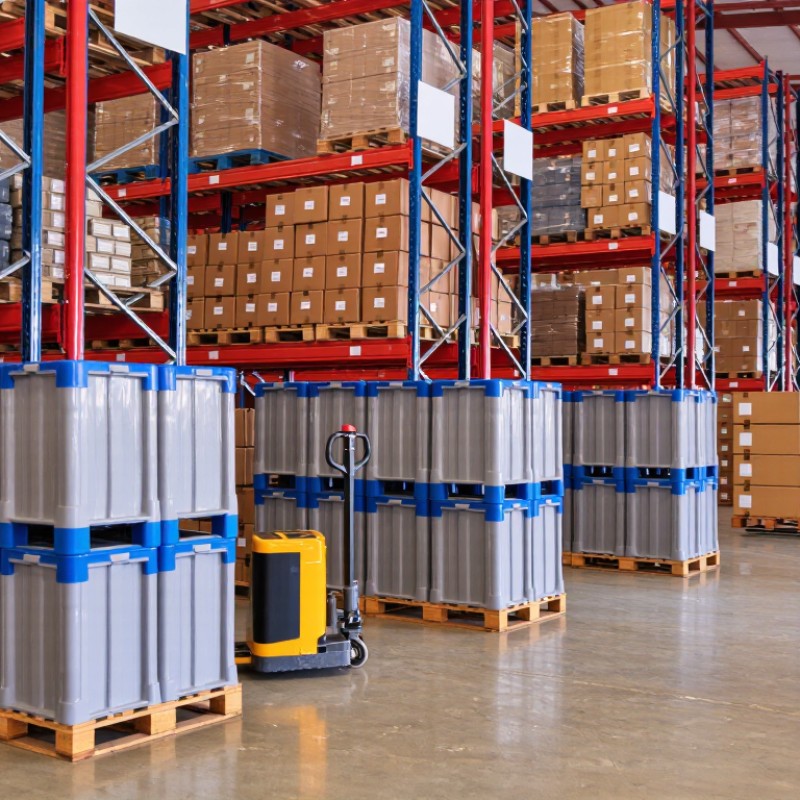
Define Shipping Requirements and Pallet Box Performance Needs
Choosing a pallet box starts with the route, not the container’s appearance. Define load weight, dimensions, stack height, and handling equipment. A 1,000-kilogram load needs different wall strength than light spare parts. Record whether forklifts, pallet jacks, cranes, or conveyors will move it. Measure doorways and truck interiors. Small clearance errors can delay loading.
Moisture exposure matters. Sea transport, outdoor staging, and temperature changes can weaken some materials. Specify whether the box needs drainage, a sealed lid, or ventilation. Confirm the cargo’s sensitivity to dust, condensation, impact, and vibration. Do not rely on a generic “heavy-duty” label. Ask for test data, rated capacity, and stacking limits. Performance requirements should reflect the full journey. Check compression strength when boxes are stacked, including uneven floors and shifting loads. Review corner strength, lid security, base rigidity, and empty-box handling. Reusable units may reduce waste, but return logistics can erase that advantage. That part is easy to underestimate.
Run a practical trial before approving a large order. Fill one box with the real product, secure it as planned, and move it through normal handling points. Inspect scuffs, lid movement, deformation, and moisture afterward. Document results with photos and measured weights. Requirements can change after one rough shipment. I would leave a safety margin, though excessive strength adds cost and unused material. Confirm packaging rules, wood-treatment needs, labeling, and import requirements for each destination with qualified local sources.
Compare Pallet Box Materials, Designs, and Load Capacities
Choosing a pallet box starts with the load, not the material. Corrugated fiberboard suits dry, lightweight goods and short, controlled routes. The U.S. Environmental Protection Agency reported a 96.5% recovery rate for corrugated boxes in 2018. That figure supports recycling access, but it does not guarantee box strength after rain or repeated handling.
Plastic pallet boxes perform better in humid warehouses, chilled transport, and returnable distribution loops. They resist moisture, impact, and repeated washing. However, their higher purchase weight can increase transport emissions when boxes return empty. Steel designs offer excellent rigidity for dense machinery, but they add weight and may damage floors without suitable feet. Check the working load, not only the advertised maximum. A box rated for 1,000 kilograms may carry less when stacked unevenly or moved across rough concrete.
Design details influence global shipping performance. Nestable boxes reduce empty volume, while stackable walls protect products during container movement. Match the footprint with ISO 6780 pallet dimensions, then verify the actual container layout. The 2023 World Bank Logistics Performance Index evaluates timeliness, tracking, infrastructure, and logistics services; each factor affects packaging decisions. Request compression, vibration, drop, and climate testing aligned with recognized distribution protocols. Include a safety margin of 10–20%, depending on load stability and route risk. This is not a universal rule. A fragile load may need more. Insufficient ventilation can also create condensation inside sealed plastic boxes. That detail is easy to miss.
Assess Dimensions, Stackability, and Space Efficiency
How to Choose the Right Pallet Box for Global Shipping?
Assess Dimensions, Stackability, and Space Efficiency
Start with the product, not the pallet box. Measure its length, width, height, and vulnerable points. Include protective padding, handles, and required clearance. A box that fits too tightly can damage corners during vibration. A box with excessive empty space increases movement and shipping volume. I usually leave only enough room for safe loading and removal. Small gaps matter.
Check both internal and external dimensions. The internal size protects the cargo, while the external size affects pallet layout and container utilization. Test several loading patterns on the chosen pallet footprint. Keep heavier goods low and distribute weight evenly. Stackable boxes need level surfaces, strong walls, and a stable center of gravity. Never assume a tall box is automatically stack-safe. It may lean after a rough transfer.
Space efficiency also depends on empty returns and storage. Foldable or nestable designs can reduce unused warehouse volume. However, nesting depth may slow handling or weaken convenience. Measure the real savings, not the advertised potential. In one trial, a slightly smaller box improved container use but made manual loading awkward. That trade-off deserved reconsideration. Before approval, load a sample box and observe compression, shifting, and access points. Repeat the test in humid and cold conditions when relevant. Real handling often exposes details that calculations miss.
Check Durability, Handling Safety, and Regulatory Compliance
Global shipping exposes pallet boxes to rain, forklift impacts, stacking pressure, and long periods in containers. Durability starts with the load, not the catalog description. Measure product weight, center of gravity, and stacking height before selecting a box. A reinforced base may prevent distortion when a loaded box rests on uneven flooring. I have seen small cracks become major failures after repeated handling. That detail is easy to miss.
Handling safety deserves equal attention. Choose fork-entry openings that keep the box stable during lifting and turning. Rounded edges, secure lids, and visible weight markings reduce avoidable injuries. Check whether workers can open the container without sharp tools or awkward force. Empty boxes should nest safely, while loaded boxes should remain stable on pallets. A trial shipment can reveal shifting, rubbing, or condensation that a warehouse test misses. My own inspections are not perfect. They need records, photographs, and a second review.
Regulatory compliance must be verified for the destination, cargo, and transport mode. Confirm requirements for dimensions, markings, materials, recycling, and wood components. If wood is used, request current treatment documentation and traceable supplier records. Keep test reports, packing instructions, and inspection dates with the shipping file. Do not rely on an old certificate. Rules and carrier requirements can change. Ask an independent packaging specialist to review uncertain cases. A practical choice is durable, safe, documented, and easy to handle across borders.
Select the Best Pallet Box for Cost-Effective Global Transport
Choosing the right pallet box can lower global transport costs before the shipment leaves your warehouse. I begin by checking the product’s dimensions, weight, and stacking needs. A box that fits closely reduces empty space and prevents unnecessary freight charges. Measure twice.
For long-distance transport, durability matters as much as price. I look for reinforced corners, stable walls, and a base that supports a loaded pallet during handling. Ventilation may help with moisture-sensitive goods, while a fitted lid protects products from dust and rain. It matters. I also compare tare weight, because a heavy box can increase transport costs across several delivery legs. Reusable designs may cost more initially, but they can reduce packaging waste and replacement purchases over time.
I once selected a cheaper pallet box with a thin base. It looked efficient, but it flexed under uneven loading and required extra support. That mistake changed my evaluation process. Now, I test sample boxes with real products, inspect them after stacking, and check forklift entry points. I also confirm that the materials and dimensions match the carrier’s handling requirements. Clear labels, accurate measurements, and complete shipping documents help prevent delays. Still, no box performs perfectly in every climate or route. Humidity, rough transfers, and limited warehouse space can expose weaknesses that a product sheet misses. A practical choice balances purchase price, protection, handling efficiency, and the full journey.
How to Choose the Right Pallet Box for Global Shipping?
Select the best pallet box footprint to improve container utilization and support cost-effective global transport.
The chart compares widely used pallet footprints by floor area. Smaller footprints can reduce unused space in mixed-load shipments, while larger footprints may be more efficient for high-volume cargo. Final selection should also consider box height, gross weight, stackability, handling equipment, and destination-market requirements. Dimensions are based on commonly used international pallet formats and should be verified for each shipping route.