

How to Choose the Right Aluminum Panels for Your Project
Choosing the right aluminum panels can determine how a project performs, ages, and looks years after installation. A glossy sample may seem ideal under showroom lights. Outdoors, however, sunlight, rain, salt air, and temperature changes tell a different story.
The decision should begin with the building’s purpose and exposure. Exterior walls may need durable coatings, stable cores, and suitable thicknesses. Interior applications often prioritize appearance, weight, and easy cleaning. Panel alloy, surface finish, fire performance, and installation method also deserve careful review. Small details matter. A poorly supported panel can flex, rattle, or develop visible joints. A dark finish may absorb more heat than expected. That detail is easy to miss.
Practical experience shows that no single product suits every project. I have seen attractive panels fail to meet a site’s cleaning demands. I have also seen teams choose extra-thick materials without considering the supporting structure. More material does not always mean better performance. It can increase cost and complicate handling. Product data sheets should be checked against real conditions, including wind exposure, moisture, impact risk, and maintenance access. Samples should be viewed outdoors when possible. Specifications should come from established manufacturers and qualified installers. Still, even expert recommendations need project-specific verification. The best choice balances appearance, performance, budget, and long-term reliability. This guide explains how to compare aluminum panels with clearer judgment and fewer expensive surprises.
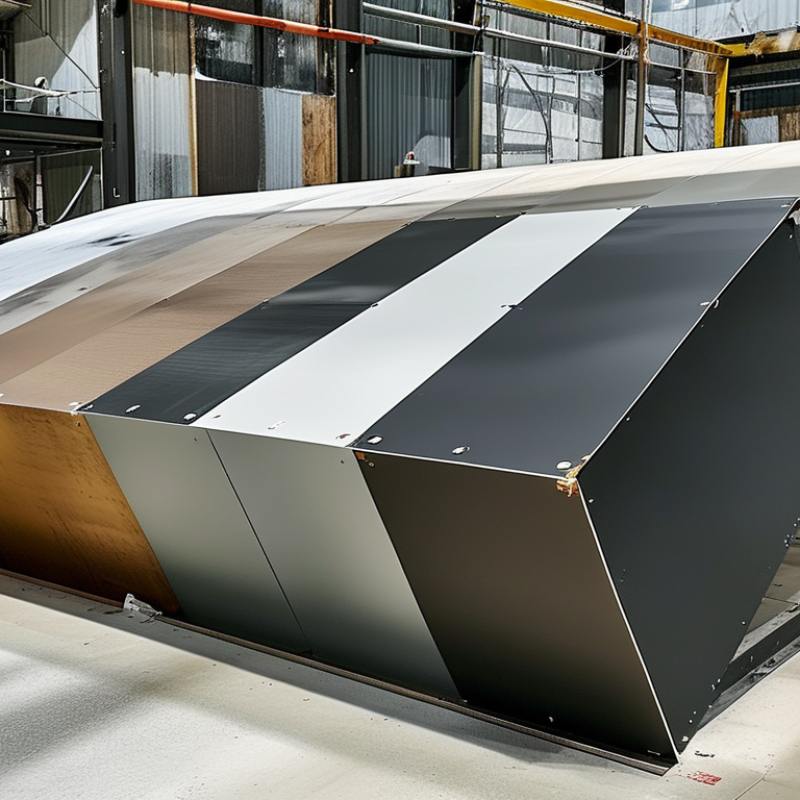
Project Requirements and Aluminum Panel Selection Criteria
Choosing aluminum panels should begin with the building’s actual demands, not a catalog image. Define wind pressure, panel span, impact risk, fire performance, moisture exposure, and cleaning access. A coastal façade needs stronger corrosion protection than an interior partition. A high-rise project also requires tested fixing systems, controlled tolerances, and clear movement allowances.
Panel construction matters. Solid aluminum offers impact resistance, while composite panels can reduce weight and simplify handling. However, the core must match the project’s fire requirements and local code. Ask for tested reaction-to-fire data, coating specifications, alloy grade, thickness, and warranty conditions. The International Aluminium Institute reports that recycled aluminum can require about 95% less energy than primary aluminum production. Therefore, recycled content can support carbon targets, but only when verified through credible product documentation.
Do not select by price alone. On site, a slightly thinner panel may create oil-canning, visible waviness, or difficult alignment around corners. A physical mock-up reveals problems that drawings often hide. Check color consistency under direct sun, sealant compatibility, edge treatment, and replacement access. I have seen specifications become too general. That is risky. Require measurable criteria, including flatness limits, coating performance, fire test scope, and delivery tolerances. The imperfect part is often coordination: structure, insulation, brackets, and panels may be designed separately. A short review with the installer can prevent expensive changes later.
| Project Requirement | Selection Criterion | Common Aluminum Option | Typical Technical Data | Recommended Panel Characteristics | Important Considerations |
|---|---|---|---|---|---|
| General architectural cladding | Balanced formability, corrosion resistance, appearance, and cost | 3003-H14 aluminum sheet or panel skin | Density: approximately 2.73 g/cm³; nominal tensile strength: approximately 150–200 MPa | 0.8–3.0 mm skin thickness; smooth or lightly textured finish | Suitable for many indoor and outdoor architectural applications when properly detailed and protected. |
| Coastal or humid environments | Resistance to moisture and chloride exposure | 5052-H32 aluminum | Density: approximately 2.68 g/cm³; nominal tensile strength: approximately 210–260 MPa | 1.0–3.0 mm thickness; durable coating; sealed panel joints | Use compatible fasteners and prevent water traps. Material selection does not eliminate the need for drainage and regular inspection. |
| High-strength structural components | Strength-to-weight ratio and resistance to mechanical loads | 6061-T6 aluminum | Density: approximately 2.70 g/cm³; nominal tensile strength: approximately 290 MPa or higher | Thickness determined by structural calculations; reinforced or formed sections where required | Typically less formable than 3003 or 5052. Welding can reduce strength in the heat-affected zone. |
| Lightweight interior partitions | Low dead load, easy handling, and clean appearance | Aluminum composite panel with a lightweight core | Common overall thickness: 3–6 mm; aluminum skins often approximately 0.2–0.5 mm each | 3 or 4 mm overall thickness; low-weight core; low-sheen finish | Verify fire-performance classification, smoke requirements, and local interior building regulations before specifying the core. |
| Exterior rainscreen facade | Weather resistance, flatness, joint movement, and ventilation | Coated aluminum composite or solid aluminum panel | Typical composite thickness: 4 mm; typical solid sheet thickness: 2–4 mm | UV-resistant coating; drained and ventilated cavity; engineered fixing system | Allow for thermal movement. Panel layouts, fasteners, and subframes should be checked for wind loads. |
| High-wind or impact-prone areas | Panel stiffness, fastener capacity, impact resistance, and deflection control | Thicker solid aluminum or reinforced composite panel | Common solid thickness range: 3–6 mm; actual requirements depend on span and support spacing | Increased thickness, folded returns, stiffeners, or reduced support spacing | Do not select thickness by appearance alone. Wind pressure, suction, impact conditions, and allowable deflection must be calculated. |
| Complex bends and formed panels | Formability, bend radius, and resistance to cracking during fabrication | 3003-H14 or 5052-H32, subject to the forming method | Formability varies with alloy, temper, thickness, grain direction, and inside bend radius | Use a suitable temper and confirm minimum bend radius with the fabricator | Avoid sharp bends unless the material and tooling are specifically qualified. Test samples are recommended for visible work. |
| Decorative visible surfaces | Color consistency, gloss level, texture, and scratch resistance | Factory-coated aluminum sheet or composite panel | Common finishes include anodized, powder-coated, and coil-coated surfaces | Specify color reference, gloss range, coating performance, and sample approval | Color can vary between production batches and between flat and formed areas. Protect finished surfaces during transport and installation. |
| Low-maintenance exterior applications | Resistance to ultraviolet exposure, staining, and weathering | Durable architectural coating or anodized aluminum | Performance depends on coating chemistry, film thickness, exposure, and cleaning practices | Select a coating rated for the project exposure category and expected service life | Provide a cleaning schedule and avoid incompatible chemicals, abrasive tools, and contact with uncured cement or mortar. |
| Fire-regulated buildings | Reaction-to-fire and fire-resistance performance of the complete assembly | Non-combustible or tested fire-rated panel assembly | Performance is determined by the complete panel, core, coating, joint, and attachment system | Use documented test or classification evidence applicable to the intended installation | Aluminum itself is non-combustible, but composite cores, coatings, adhesives, and adjacent materials may affect system performance. |
| Thermal and energy-sensitive projects | Thermal bridging, solar reflectance, and insulation continuity | Insulated rainscreen system with thermally improved attachments | Aluminum has high thermal conductivity, approximately 200–235 W/m·K depending on alloy | Use continuous insulation and thermal breaks where required by the building envelope design | Panel selection alone does not determine wall energy performance. Evaluate the complete facade build-up and condensation risk. |
| Budget-controlled projects | Total installed cost rather than material price alone | Standard alloy, standard thickness, and readily available finish | Cost is affected by alloy, thickness, panel size, finish, fabrication, waste, transport, and installation | Standardize panel dimensions and minimize custom folds or small quantities where practical | A lower material price may increase labor, waste, maintenance, or replacement costs. Compare complete life-cycle cost. |
| Sustainable material objectives | Recycled content, service life, recyclability, and environmental documentation | Aluminum with verified recycled content and a durable finish | Aluminum is highly recyclable; environmental performance depends on production route and project-specific documentation | Request recycled-content declarations, environmental product information, and end-of-life guidance | Confirm that coatings, cores, adhesives, and mixed-material assemblies are compatible with the intended recycling process. |
Related Posts
-
How to Choose the Best Aluminum Roof for Your Home in 2025
-
How to Install an Aluminum Roof and Maximize Its Longevity
-
10 Best Metal Panel Options for Your Next Project?
-
Top 10 Metal Workshop Supplies You Need Today?
-
Top 10 Benefits of Corrugated Metal Roofing for Your Next Construction Project
-
How to Choose Wood Veneer Wall Panels for Global Projects?