




How to Choose the Best Brushcutter Spare Parts in 2026
Choosing the right Brushcutter Spare Part in 2026 is not just about finding the lowest price. A mismatched blade, trimmer head, or drive component can cause poor cutting, extra vibration, or avoidable wear. The U.S. Bureau of Labor Statistics projects 5% employment growth for grounds maintenance workers from 2023 to 2033, reflecting continued demand for outdoor maintenance. Its Occupational Outlook Handbook does not measure spare-parts sales, but it offers useful context: reliable equipment matters to people who depend on it for regular work.
Start with the brushcutter’s exact make, model, and serial number. Then compare the part number, shaft dimensions, mounting direction, and stated compatibility against the manufacturer’s manual or parts diagram. A blade that looks right may still have the wrong bore size. Small details matter. For filters and clutch components, check service intervals and specifications rather than relying on appearance alone. Manufacturer documentation is the strongest reference for fit; independent seller listings can help, but descriptions are not always complete. That is an easy detail to miss.
This guide explains how to assess materials, compatibility, durability, safety, and value before buying. It also considers when an original part is worthwhile and when a verified compatible replacement may be suitable. No single choice fits every machine or workload. Even careful research has limits: product listings and model revisions can be confusing, so confirm uncertain details with the manufacturer or an authorized service dealer before ordering.
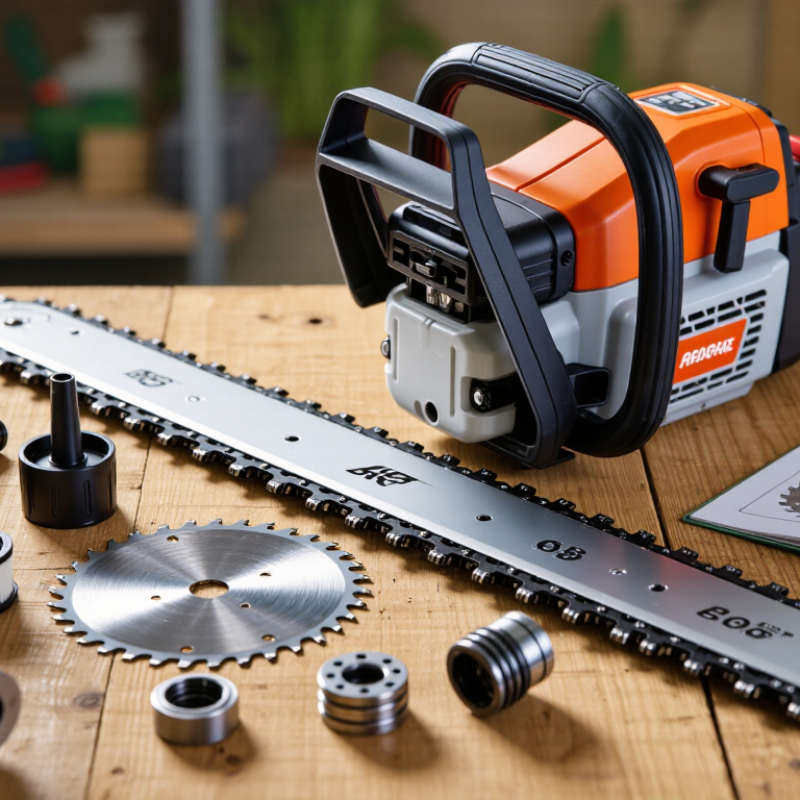
Identify Your Brushcutter’s Model, Displacement, and OEM Part Numbers
Before buying brushcutter spare parts, find the model code on the machine’s identification label. It may sit near the handle, engine housing, or fuel tank. Wipe away dust and photograph the full label, including any serial range. A similar-looking model can use a different clutch, filter, or ignition component. Small details matter.
Record the engine displacement in cubic centimeters, usually shown as cc. Displacement helps narrow the correct parts family, but it does not confirm compatibility by itself. Manufacturers can revise components within one model series. Check the operator’s manual or an illustrated parts diagram, and match the model code and serial range. Catalogs are not always tidy, so pause if the details conflict.
Look for the OEM part number on the old component or in the parts diagram. Compare every digit and letter; a single character can point to a different revision. If the number is missing, note the part’s measurements and shape, then ask a qualified parts supplier to verify the match. Matching by appearance is tempting, but two parts can look alike and still fit differently. Keep the label photo and part number together before placing an order.
Classify Spare Parts by System and Safety Role
A useful way to choose brushcutter spare parts is to sort them by system, not price alone. The cutting system includes the blade or line head, retaining hardware, and debris guard. Engine and fuel parts include the air filter, spark plug, fuel lines, and starter assembly. The drive system covers the shaft, clutch, and gearbox components. Match each part to the machine’s model and operating manual; similar-looking items may have different dimensions or fittings. A filter clogged with dry grass dust may seem minor, but it can cause rough running and extra strain. Small detail.
Also classify parts by safety role. Guards, handles, harness connections, and cutting attachments help protect the operator or control the tool. Check them for cracks, looseness, and unusual wear before fitting replacements. A blade that wobbles after installation may point to damaged retaining hardware, not a faulty blade alone. Use specified dimensions and fittings rather than choosing a heavier part because it looks tougher. Some parts belong to more than one system, and a simple checklist can miss wear that appears only under load. That is worth considering during inspection.
How to Choose the Best Brushcutter Spare Parts in 2026
Prioritize parts that contain or control cutting hazards, such as the cutting attachment, guard, and stop switch. Scores are a practical comparison of each system’s safety role, not failure-rate statistics; check the machine manual and confirm part compatibility before purchase.
Verify Fitment with Shaft, Thread, Arbor-Bore, and Gearbox Measurements
How to Choose the Best Brushcutter Spare Parts in 2026
A replacement part can look right and still fail to fit. Measure the shaft tube’s outside diameter, then check whether the drive uses a solid shaft or flexible cable. For the cutting head, record thread diameter, pitch, and direction; a left-hand thread can surprise buyers. Use a caliper and thread-pitch gauge, not a ruler. Small details matter.
For a blade, measure the arbor bore and blade thickness, then inspect the retaining washers. At the gearbox, verify the output thread, shaft interface, and rotation direction against the service manual. ISO 11806-1:2022 sets safety requirements for portable brushcutters, but it does not make cutting attachments interchangeable. Treat compatibility as a measured fit, not a visual guess. It is tempting to trust a matching product photo; that shortcut can fail. I would also recheck measurements after removing dirt and packed grass, since debris can hide the true seating surface.
Keep a note of every reading in millimetres, plus the machine’s model and gearbox markings. If a supplier lists only “fits most,” ask for the actual dimensions. A slightly loose arbor or mismatched thread can cause vibration and damage. Stop if the part does not seat cleanly.
Match Cutting Attachments to the Machine’s Rated Maximum RPM
Match the attachment’s stamped maximum RPM to the brushcutter’s rated maximum—not its usual working speed. The attachment rating must equal or exceed the machine rating. A lower-rated head or blade may fail under speed, heat, or impact. Check the operator’s manual and the part marking; don’t rely on appearance or shaft fit. ISO 11806-1:2022 provides safety requirements for portable brushcutters and grass trimmers, making it a useful technical reference when checking equipment compatibility.
As a calculated example, a 230 mm blade spinning at 10,000 RPM has a theoretical tip speed of about 120 metres per second, or 432 km/h. This uses blade circumference multiplied by revolutions per second; it is not a measured field result.
Small mismatch. Big consequence.
If the attachment has no legible RPM rating, pause and verify it with the supplier or machine documentation. I still find this step easy to rush when replacing a worn head. Record the machine’s rated maximum and the attachment’s limit before fitting; never assume a lower throttle setting makes an under-rated part suitable.
Screen Safety-Critical Parts Against ISO 11806-1:2022 and OEM Limits
A replacement part can look right on a workbench and still change how a brushcutter behaves. Use ISO 11806-1:2022 as a safety screen, not a substitute for the machine’s instructions. The standard sets safety requirements and test methods for engine-driven brushcutters and grass trimmers, including guards, handles, controls, and cutting attachments. Check the exact model and attachment configuration before fitting a safety-critical part.
Compare the part with the OEM limits for dimensions, material, and operating speed. For a blade, inspect its bore, thickness, balance, and permitted diameter; for a guard, check its coverage and mounting points. Small gaps matter. Do not assume a part is suitable because its bolt holes line up. ISO 11806-1 evaluates the machine as a system, so a component’s apparent fit does not prove that the assembled tool meets the standard. The ISO standard is the primary technical reference; the machine’s service documentation supplies model-specific limits.
Keep traceable records: supplier, part number, batch, and inspection results. Reject cracked plastic, distorted metal, loose fasteners, or unclear material specifications. A caliper helps, but it cannot verify heat treatment or fatigue strength. That’s an easy limit to forget. If a supplier gives no tolerance or test evidence, pause and ask for it rather than guessing. A careful visual check is useful, but it is not a certification test.


