




China Top 10 Heat Resistant Plastic Bucket Suppliers?
Choosing a Heat Resistant Plastic Bucket supplier in China requires more than comparing prices and product photos. Resin grade, wall thickness, handle design, molding consistency, and documented temperature limits all affect real-world performance. PlasticsEurope’s Plastics—The Fast Facts 2024 reports global plastics production of 413.8 million tonnes in 2023. That figure shows the scale of the materials industry, but it does not verify any supplier’s bucket quality. Details matter.
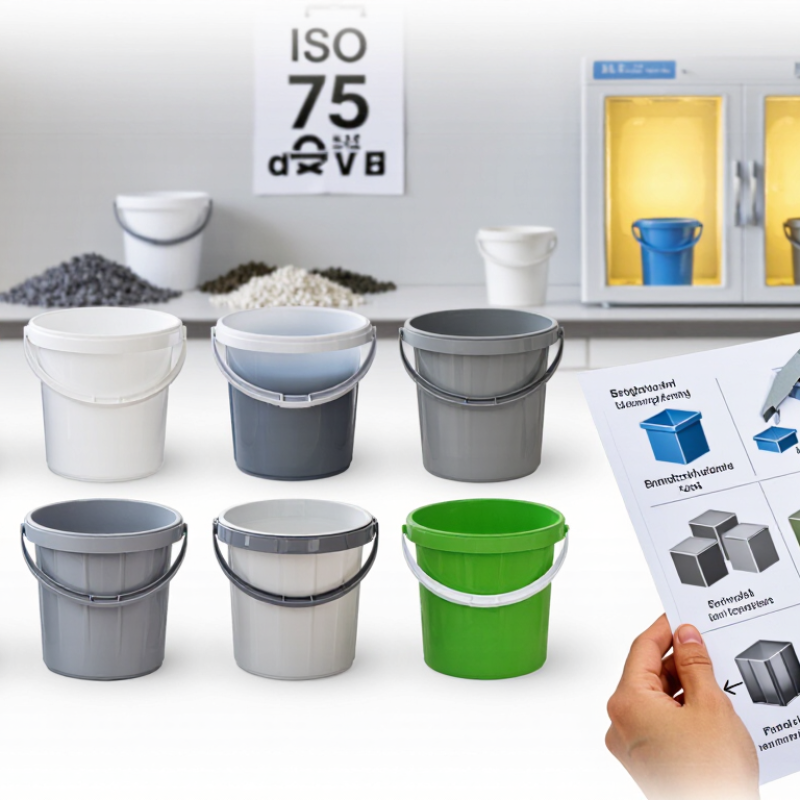
Heat resistance is not one simple number. A bucket may tolerate brief contact with warm contents yet deform during prolonged exposure, especially under load. ISO 75 measures a plastic’s temperature of deflection under specified conditions; it should not be mistaken for a guaranteed service-temperature rating. Buyers should request the resin specification, test method, temperature duration, and load conditions. Ask for proof. A polished catalog alone is not enough.
This guide introduces ten Chinese suppliers and the evidence buyers can use to assess them. We focus on product range, manufacturing information, quality documentation, and communication—not unverified rankings. Where a supplier does not publish clear test results, that uncertainty deserves attention. It is easy to overstate heat performance. Compare technical datasheets, request representative samples, and confirm whether stated limits apply to the finished bucket or only its raw material. The distinction can change a purchasing decision.
What Defines a Heat-Resistant Plastic Bucket?
A heat-resistant plastic bucket is not defined by a high melting point alone. It must retain its shape and strength at the temperature, load, and exposure time expected in use. Curbell Plastics’ thermoplastic property chart lists typical continuous-use temperatures of about 82°C for HDPE and 99°C for polypropylene. These are reference values, not bucket ratings; resin grade, wall thickness, and molding quality matter. A warm liquid may also soften a loaded handle or distort a thin rim. Small details count.
Engineers use standardized tests to compare materials. ASTM D648 measures heat-deflection temperature under load, while ASTM D1525 measures softening behavior. Neither test alone guarantees safe performance in a finished bucket. The real test is the whole product. Buyers should request the supplier’s temperature limits, test conditions, and evidence for the exact bucket design. A common weakness in specifications is saying “heat resistant” without naming a temperature or duration. That wording leaves too much open. Check the bucket after repeated heating and cooling, too; deformation can appear gradually, not just during one hot fill.
Materials and Manufacturing Processes Used in Heat-Resistant Buckets
China Top 10 Heat-Resistant Plastic Bucket Suppliers?
Heat resistance starts with the resin, not the bucket’s appearance. Polypropylene is commonly used where warm contents are expected, while high-density polyethylene suits many general-purpose buckets but may soften sooner. Exact performance depends on the grade, wall thickness, load, and exposure time. Small details matter. A bucket holding hot liquid can deform even when its empty shape looks sturdy.
Manufacturers often use injection molding to form the body and handle features in one controlled cycle. Consistent wall thickness helps reduce weak spots, while well-designed ribs add stiffness without excessive material. Cooling must be even; rushed cooling can cause warping or a base that rocks on a flat surface. Heat-resistant additives may help, but they cannot replace testing. I would not treat a thicker wall alone as proof of better heat performance.
Tips: Ask suppliers for the resin grade, recommended temperature range, and test conditions. Check whether samples retain their shape after repeated heating and cooling. Look closely at the rim, handle attachment, and base. These areas often reveal problems first. A practical trial with your actual contents is useful, though it may not represent every working condition.
Common Industrial and Commercial Applications
Heat-resistant plastic buckets are used where ordinary containers may soften, warp, or lose shape. In manufacturing, crews use them to move warm process water, cleaning solutions, and selected powders between workstations. A 20-liter bucket can be easier to carry than a metal pail, especially when workers need frequent, short transfers. The exact temperature limit depends on the plastic, wall thickness, and exposure time. Check the supplier’s data before filling a bucket with hot material.
Commercial kitchens and food-processing areas may use suitable buckets for warm washing, ingredient handling, or temporary storage. The container should be rated for its intended contact and cleaned according to the facility’s procedures. No guesswork here. A bucket that tolerates hot water may not suit oils, acidic cleaners, or repeated heating. Inspect the rim, handle attachment, and base for cracks or distortion, particularly after busy shifts.
Construction and maintenance teams also use heat-tolerant pails for warm water, sealants, and certain job-site materials. They are useful near equipment rooms, workshops, and service areas where hot conditions are common. Keep them away from direct flames and concentrated heat unless the manufacturer specifically permits that use. I have seen temperature claims treated as a simple yes-or-no answer; that can be misleading. Consider the contents, contact duration, and how the bucket will be carried when selecting a supplier’s product.
Heat-Resistant Plastic Buckets: Typical Material Temperature Limits
A comparison of indicative upper continuous-use temperatures for common bucket plastics.
Polypropylene generally tolerates higher continuous temperatures than HDPE, making it a common choice for warmer industrial and commercial applications. These are approximate material-level reference values, not certified bucket operating limits; actual performance depends on the specific grade, load, exposure time, and manufacturer’s specifications.
How to Evaluate Chinese Heat-Resistant Bucket Suppliers
When evaluating Chinese heat-resistant bucket suppliers, ask for the exact resin grade and its temperature limits under load. A high heat-deflection temperature is useful, but it is not a guaranteed continuous-use temperature. Request test results under ISO 75 or ASTM D648, then compare them with your actual contents, fill weight, and exposure time. Test a filled sample, too. Watch for a softened rim, a loose handle, or a base that warps after repeated heating and cooling. Numbers need context.
Check that the supplier can trace resin batches and provide consistent inspection records. The OECD’s 2022 Global Plastics Outlook reports that 353 million tonnes of plastic waste were generated worldwide in 2019, with only 9% recycled. That figure is not a bucket-quality score, but it highlights why material origin and recycled-content claims deserve documentation. Ask whether production batches use the same formulation, and request written limits for recycled material, if present. A certificate alone can still leave gaps. Compare samples from separate production runs, inspect wall thickness at several points, and ask how the supplier controls dimensional changes after molding. Small checks matter.
Profiles of 10 Chinese Heat-Resistant Plastic Bucket Suppliers
The following ten profiles describe common supplier capabilities in China, not verified company identities or a ranked endorsement. Supplier 1 focuses on injection-molded pails for hot-fill use, with thick walls and reinforced handles. Supplier 2 makes food-contact containers and should provide material documentation for each resin grade. Supplier 3 serves industrial kitchens, offering wide-mouth buckets that are easier to clean. Supplier 4 specializes in chemical-resistant containers; buyers should confirm heat and chemical performance separately.
Supplier 5 produces compact buckets for laboratories and small-batch processing. Supplier 6 handles custom shapes and colors, though tooling costs can affect small orders. Supplier 7 offers heavy-duty buckets with stronger rims for repeated handling. Supplier 8 supplies nested designs that reduce storage space during shipping. Supplier 9 focuses on lids and seals, an important detail when warm contents may expand. Supplier 10 provides export-oriented packaging and can coordinate samples, inspection records, and shipping documents. Details matter.
“Heat-resistant” is not one universal specification. Ask each supplier for the resin type, recommended temperature range, test method, and exposure time. Request a sample filled at the intended temperature, then inspect for softening, odor, leakage, or handle deformation after cooling. A claim on a product sheet is useful, but it is not a substitute for testing. Also confirm that the bucket’s lid, pigment, and handle match the intended use. Some suppliers may not have comparable test data; that gap deserves attention before placing a large order.
| Profile | Material specialization | Indicative continuous-use temperature | Potential bucket application | Key specification to verify |
|---|---|---|---|---|
| Profile 1 | High-density polyethylene (HDPE) | About 80°C (176°F) | General-purpose pails and containers; commonly selected for impact resistance and chemical resistance. | Resin grade, wall thickness, load, and exposure time; confirm the allowable temperature for the finished bucket. |
| Profile 2 | Polypropylene (PP) | About 100°C (212°F) | Reusable containers and applications requiring more heat tolerance than many commodity polyethylene grades. | Specify the exact PP grade and whether the bucket will hold hot contents or experience repeated heating. |
| Profile 3 | Acrylonitrile butadiene styrene (ABS) | About 80°C (176°F) | Rigid molded containers where toughness and surface finish are important. | Check chemical compatibility and the grade’s heat-deflection data under the intended load. |
| Profile 4 | Polycarbonate (PC) | About 120°C (248°F) | Applications needing a tough, heat-tolerant molded container; suitability depends on the contents and design. | Confirm food-contact or chemical requirements, impact conditions, and the specific resin grade. |
| Profile 5 | Polyamide 6 (PA6, nylon 6) | About 80–100°C (176–212°F) | Specialty molded parts or containers where strength and wear resistance are priorities. | Ask about moisture conditioning, dimensional stability, and performance at the actual operating temperature. |
| Profile 6 | Polybutylene terephthalate (PBT) | About 120°C (248°F) | Engineered molded components and specialty containers; less typical for low-cost general-purpose buckets. | Check the grade’s reinforcement, impact behavior, chemical compatibility, and molding design limits. |
| Profile 7 | Polyphenylene sulfide (PPS) | About 220°C (428°F) | High-temperature specialty applications; usually an engineered-material option rather than a standard pail material. | Verify the exact compound, load-bearing temperature, chemical exposure, and commercial feasibility. |
| Profile 8 | Polyetherimide (PEI) | About 170°C (338°F) | High-temperature engineered applications where a standard commodity plastic may be unsuitable. | Request grade-specific continuous-use and heat-deflection data, plus confirmation that the geometry can be molded. |
| Profile 9 | Polyether ether ketone (PEEK) | About 250°C (482°F) | Very high-temperature specialty applications; generally costly and uncommon for ordinary buckets. | Confirm resin grade, finished-part test data, manufacturing method, and whether the cost suits the project. |
| Profile 10 | Polytetrafluoroethylene (PTFE) | About 260°C (500°F) | Chemically demanding or high-temperature uses; conventional bucket shapes may require specialized fabrication. | Clarify fabrication method, rigidity, impact requirements, and the finished vessel’s operating limits. |
| Data note: These are anonymous, material-based comparison profiles—not verified records of ten specific Chinese suppliers. Temperature figures are approximate typical continuous-use values for material families, not certified hot-fill limits. Actual performance varies by resin grade, additives, design, load, exposure time, and manufacturing process. Request a technical data sheet and written finished-product temperature rating from any prospective supplier. | ||||


