



7 Best Wheel Diamond Cutting Machines for Global Buyers
For wheel manufacturers, repair shops, and precision grinding teams, choosing equipment is rarely a simple price comparison. A Wheel Diamond Cutting Machine must match the wheel’s material, diameter, profile, and required finish. It should also fit the buyer’s production volume and available floor space. A machine that looks capable in a catalog may not suit a small workshop. Details matter.
This guide compares seven machines for global buyers, focusing on practical selection points rather than headline specifications alone. Consider spindle speed, wheel size, dressing range, positioning accuracy, guarding, and coolant arrangements. Ask how the supplier supports installation, operator training, spare parts, and service across your region. Confirm power requirements and the machine’s suitability for your intended applications before ordering. A clear quotation should identify included tooling, setup needs, and any limits on supported wheel types. Small omissions can become costly delays.
There is no universal best choice. A high-output factory may value automation, while a specialist shop may need flexible setup and careful profile control. Think about that trade-off. The most polished specification sheet does not always explain daily operation, and published accuracy figures may depend on test conditions. Buyers should request supporting details and assess them against their own process. The machines highlighted here offer a starting point for comparison, not a substitute for checking samples, service arrangements, and fit with your production goals.
What Wheel Diamond Cutting Machines Do and How They Work
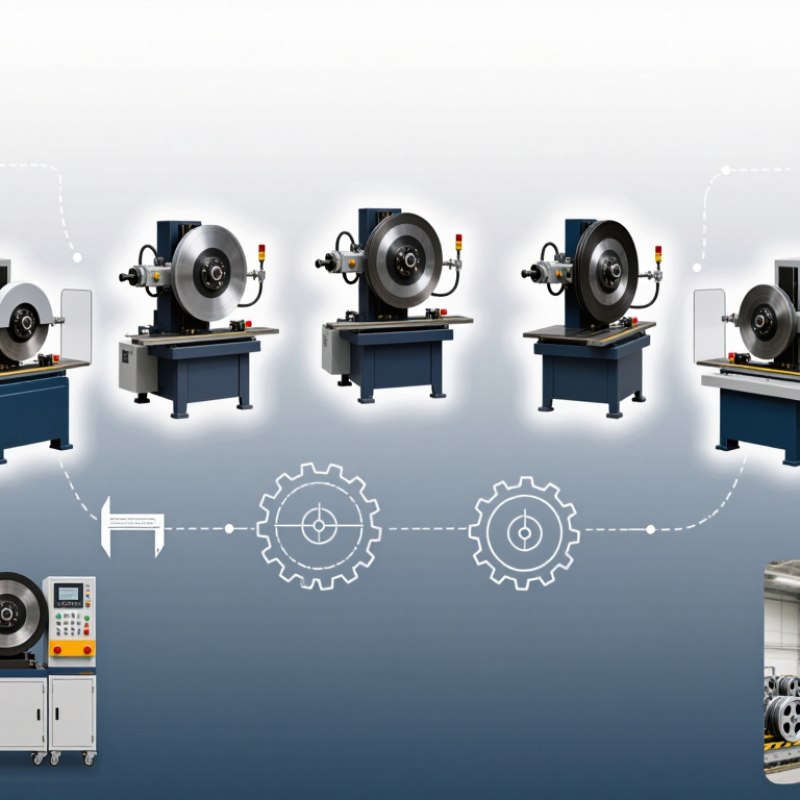
A wheel diamond cutting machine uses a rotating wheel whose rim contains diamond abrasive grains. These grains cut or grind hard materials such as ceramics, stone, glass, and cemented carbide. The machine’s spindle controls wheel speed, while a feed mechanism guides the workpiece into the cutting zone. Small details matter. A rigid fixture helps prevent vibration and angled cuts.
As the wheel turns, exposed diamond grains remove tiny fragments; the bond holds them in place as they wear. Coolant can carry away heat and debris, while wheel dressing restores cutting action when the surface becomes glazed. USGS Mineral Commodity Summaries 2025 tracks synthetic industrial-diamond production at a global scale measured in billions of carats, reflecting the material’s importance in manufacturing. That supply figure does not tell buyers how a wheel will perform: bond type, grit size, machine stiffness, and workpiece material all matter.
Heat changes everything. Too much pressure can chip brittle edges or shorten wheel life. Cutting data should therefore be treated as a starting point, not a promise. Even with a stable setup, wear and operator judgment affect repeatability. Check wheel condition, coolant flow, and the machine’s rated operating speed before cutting.
How Wheel Diamond-Cutting Machines Work
A diamond-cutting lathe rotates an alloy wheel while a cutting tool machines its face. At a fixed rotational speed, a larger wheel has a higher rim surface speed. The chart shows the calculated surface speed for common passenger-car wheel diameters at a reference speed of 60 rpm; it is not a recommended machine setting.
Surface speed is calculated as π × wheel diameter × rotational speed. Actual cutting conditions depend on the machine, wheel, tool, and setup.
Key Features to Compare Before Choosing a Machine
For alloy-wheel diamond cutting, compare the machine’s usable wheel diameter, face width, spindle-speed range, and axis travel with the jobs you actually receive. A large work envelope is useful only if the fixture clamps narrow and wide wheels securely. Check spindle runout and repeatability, not just the smallest quoted cutting increment.
ISO 230-7:2015 describes methods for measuring spindle rotation accuracy; ask for measured results and the test conditions. Small details matter. Coolant flow, chip control, and access for wheel dressing affect the finish and daily setup time.
Inspect the control interface, probing options, backup process, and availability of operator training. Ask the supplier to cut a sample using your wheel geometry, then inspect the surface under consistent lighting. A flawless demo can hide setup sensitivity. Test it warm, too.
The International Energy Agency’s Energy Efficiency 2023 report estimates that industry accounts for about 37% of global final energy use. That figure is not a machine-efficiency rating, but it makes idle power, coolant-pump demand, and cycle time worth checking. Compare these values across the same cutting task; brochure specifications alone can leave gaps.
Seven Wheel Diamond Cutting Machines for Global Buyers
Seven machine formats serve different cutting jobs: portable tile saws, bridge saws, CNC bridge saws, multi-blade slab saws, edge-cutting machines, profile cutters, and floor saws. The right choice depends on material, cut depth, daily volume, and required accuracy. A small tile workshop may value a compact saw and quick blade changes. A slab processor may need a rigid bridge, water delivery, and reliable positioning. These categories are practical comparisons, not a universal ranking; machine designs and names vary by supplier.
Demand context matters, too. Oxford Economics’ 2023 Global Construction Futures report projects worldwide construction output will rise by $4.2 trillion, reaching $13.9 trillion by 2037. That forecast signals broad construction activity, not guaranteed machine sales. Buyers should still check local stone types, voltage, service access, spare-part lead times, and operator training. A machine that cuts fast on paper can disappoint when its water system struggles with abrasive slurry. That detail is easy to overlook.
Tips: Ask for a test cut using your own material and target thickness. Compare edge quality, cycle time, blade wear, and water use. Request written power and installation requirements. One awkward question helps: who services the machine after delivery?
Matching Machine Types to Workshop Needs and Production Goals
Choosing a wheel diamond cutting machine starts with the work, not the catalogue. A small repair shop handling varied wheels may benefit from a manual or semi-automatic model. It offers hands-on control and avoids paying for automation that sits idle. A busy production line may need CNC control, repeatable settings, and faster changeovers. For complex face profiles, confirm the machine’s axis movement and tool access with sample parts.
Tips: Ask for a cutting trial using a wheel similar to yours. Check clamping stability, spindle runout, guarding, and how quickly operators can change tools. Request measured cycle times, not only estimates.
Production goals matter, but so does the workshop’s real capacity. Consider operator training, floor space, power supply, and routine maintenance before choosing a high-output machine. A faster cycle is less useful if setup takes too long. There is no perfect match for every shop; that part is often messier than a comparison chart suggests. Record current job times and wheel types, then compare them with a supplier’s documented test results. Review local service availability, too. A modest machine may be the sounder choice when production is uneven, though it can limit growth later.
7 Best Wheel Diamond Cutting Machines for Global Buyers - Matching Machine Types to Workshop Needs and Production Goals
| Machine Type | Typical Configuration | Best Workshop Fit | Indicative Wheel Range | Production Profile | Key Buying Checks |
|---|---|---|---|---|---|
| Entry-Level CNC Diamond-Cut Lathe | Single-spindle CNC lathe with a diamond cutting tool and standard wheel fixture | Small repair shops starting to offer diamond-cut alloy wheel refurbishment | Often configured for passenger-car wheels around 13–20 inches | Low volume; typically one wheel is machined at a time, with manual loading and setup | Check supported wheel width, clamping method, programming workflow, guarding, and operator training requirements |
| General-Purpose CNC Wheel Lathe | Single-spindle CNC machine designed for a broad range of common passenger-car rims | Independent wheel repair businesses handling varied customer jobs | Many configurations cover approximately 13–24 inches | Flexible job-shop production; suitable for mixed wheel designs and changing work orders | Confirm maximum diameter and width, wheel-centering accuracy, tool access, and availability of suitable cutting programs |
| High-Rigidity Production CNC Lathe | Rigid machine structure and spindle arrangement intended to limit vibration during cutting | Busy refurbishment workshops prioritizing consistent surface finish across repeat jobs | Commonly configured for passenger-car wheels; capacity varies by machine | Medium to higher volume, depending on setup time, operator workflow, and inspection process | Review machine rigidity, spindle specifications, thermal stability, chip handling, and the finish achievable on the wheel designs you process |
| Laser-Scanning CNC Wheel Lathe | Wheel profile is captured with a laser scanner and used to support machining-path generation | Shops handling diverse or less familiar rim profiles and aiming to reduce manual profiling work | Capacity depends on the lathe and scanning system; passenger-wheel configurations are common | Useful for varied work; scanning and program verification remain part of the job workflow | Check scan coverage, reflective-surface handling, software compatibility, profile editing, and whether an operator must verify each generated path |
| Probe-Assisted CNC Wheel Lathe | Uses a contact probe or measurement system to locate wheel features or check geometry | Workshops seeking more repeatable setup and measurement for recurring wheel designs | Set by the machine’s working envelope and wheel fixtures | Supports repeat jobs and setup consistency; does not remove the need for visual and dimensional inspection | Ask how probing is used, what features it can measure, and how measurement results are incorporated into the machining program |
| Automation-Ready CNC Wheel Lathe | Single-spindle CNC lathe designed to work with optional automatic loading or material-handling equipment | Higher-throughput shops with repeatable jobs, adequate floor space, and defined safety procedures | Determined by the lathe, wheel-handling equipment, and fixture design | Can reduce manual handling between cycles; actual output depends on loading time, programming, inspection, and job mix | Check automation compatibility, guarding and interlocks, changeover time, floor-space needs, and service support for the complete system |
| Large-Format or Specialty Wheel CNC Lathe | Machine and fixtures sized for wheels outside the usual passenger-car range or for specialist applications | Specialist workshops processing custom, oversized, or commercial-vehicle wheels where the wheel design is suitable for diamond cutting | May extend beyond 24 inches; confirm the exact supported diameter and width | Lower-volume specialist work is common; not every large or commercial wheel is suitable for diamond-cut finishing | Verify spindle load, fixture compatibility, wheel offset and profile limits, tool clearance, and the wheel maker’s repair guidance |
Selection note: Wheel ranges are indicative, not universal specifications. Before purchase, confirm maximum wheel diameter and width, clamping compatibility, supported profiles, safety features, training, and local service availability. Diamond cutting removes material, so repair limits and inspection procedures should follow applicable wheel-manufacturer guidance.
Safety, Maintenance, and International Purchasing Considerations
A wheel diamond cutting machine needs more than a sharp tool and a rigid frame. Check that guards cover rotating parts and that the emergency stop is easy to reach. Confirm dust extraction or coolant controls suit the material being cut. Keep hands clear during setup, and isolate power before changing a wheel or clearing a jam. Small details matter. The U.S. Bureau of Labor Statistics recorded 5,283 fatal work injuries in 2023; this figure covers all industries and causes, not cutting machines alone. It is a reminder to assess risks at the actual workstation, not just rely on a machine’s specification sheet.
Maintenance should be practical and documented. Inspect wheel condition, spindle runout, coolant lines, cables, and interlocks on a schedule. Record vibration, unusual heat, or a rough finish before they become failures. Some checks take longer than expected. That is worth planning for. Ask suppliers for service intervals, spare-part availability, operator instructions, and clear troubleshooting guidance.
International buyers should match the machine to local power supply, frequency, floor space, extraction needs, and wheel dimensions. Confirm the machine’s safety documentation and applicable conformity requirements for the destination market; requirements vary. UNCTAD’s Review of Maritime Transport 2024 reported 2.4% growth in seaborne trade during 2023 and highlighted disruption-related cost and delay risks. Request packing dimensions, shipment terms, lead times, and replacement-part shipping estimates in writing. A low purchase price can be misleading if service support is distant or consumables are difficult to source.


