

Best Material Handling Robots in 2026
Material Handling Robots are reshaping how goods move through warehouses, factories, and distribution centers. In 2026, the strongest options range from autonomous mobile robots to robotic palletizers and automated guided vehicles. Each handles a different part of the job. A mobile robot may carry totes between workstations, while a palletizer stacks cartons at the end of a production line. The right choice depends on the load, route, floor conditions, and pace of work. Small details matter: a narrow aisle, uneven flooring, or frequent product changes can affect performance. Not glamorous, but important.
This guide to the best Material Handling Robots in 2026 compares practical capabilities, including payload, navigation, integration, safety features, and service support. It also considers how a system fits existing workflows, rather than judging it by specifications alone. A fast robot can still create bottlenecks if workers must wait for it or adjust every task around its route. Published performance figures deserve scrutiny; real results vary with layout, traffic, and maintenance. That uncertainty is worth acknowledging. No robot is a universal answer, and even a well-matched system needs planning, training, and ongoing review. The aim here is to help readers identify suitable options, ask sharper questions, and weigh the trade-offs before investing.
What Material Handling Robots Do in Modern Operations
Best Material Handling Robots in 2026
What Material Handling Robots Do in Modern Operations
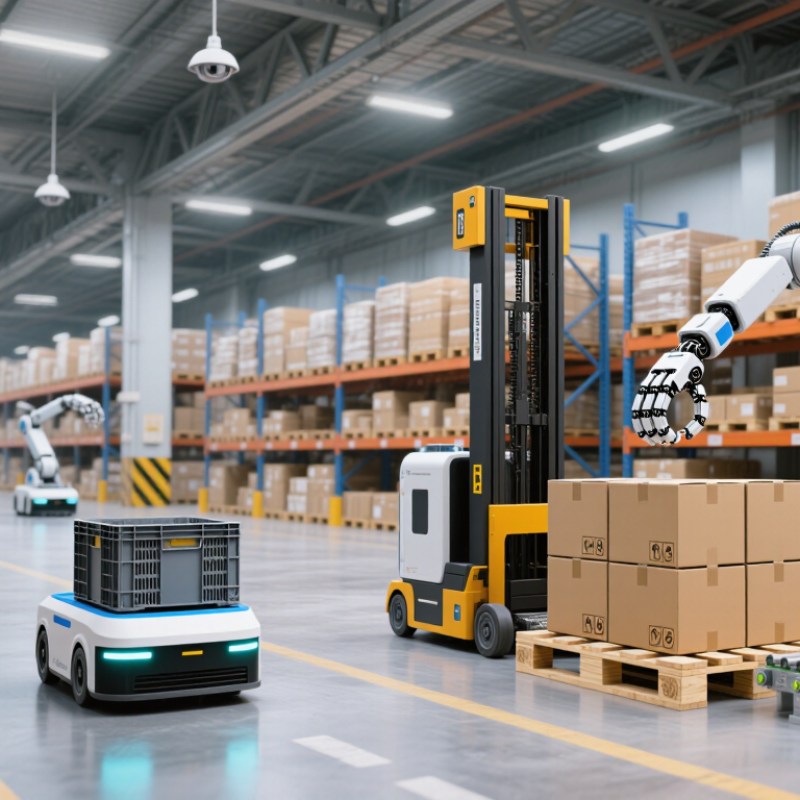
In modern operations, material handling robots move goods between storage, production, and shipping areas. Mobile robots can carry totes along marked routes or navigate around people and equipment. Robotic arms lift parts from a conveyor and place them into bins. Pallet-handling systems move heavy loads across warehouse floors. These tasks reduce repetitive lifting and keep materials flowing. They do not remove the need for careful planning.
Tips: Map busy routes before deployment. Check floor conditions, load weights, and handoff points. A narrow aisle can change a robot’s usefulness.
A robot works best when its task is clear and the surrounding process is predictable. Teams should assess how materials arrive, where queues form, and what happens when a route is blocked. Sensors and safety features matter, but so do charging schedules, maintenance access, and staff training. A smooth demonstration is not proof of reliable daily performance. Real operations have delays, misplaced items, and changing priorities.
Start with one practical workflow, such as moving full totes from a packing area to a staging zone. Track waiting time, interruptions, and manual work before and after installation. Results may be uneven at first; that is useful information, not a reason to ignore the data. Even a capable robot can create a bottleneck if its handoff area is poorly placed.
How Material Handling Robots Navigate, Lift, and Transfer Loads
Material handling robots navigate by combining mapped routes with real-time sensing. Cameras, depth sensors, or laser scanners help detect pallets, people, and temporary obstacles. A robot may slow near a blind corner, then reroute when a cart blocks its path. Good maps matter. Yet maps need regular updates when storage layouts change. Dust, glare, uneven floors, and reflective wrap can still affect detection, so clear operating zones and routine sensor checks remain important.
Lifting depends on more than rated capacity. The robot must identify the load, approach it squarely, and keep its weight balanced. Forks need enough clearance beneath a pallet; a robotic arm needs a secure grip and a verified center of gravity. Sensors can check load position before movement. Small errors add up. An off-center container may shift during a turn, even when its weight is within limits.
Transfer is where navigation and handling meet. Robots align with conveyors, racks, or handoff stations using markers, mapped coordinates, and proximity sensors. They can confirm that a load has been placed before leaving, reducing empty or incomplete transfers. Site observations matter here: a narrow aisle or poorly positioned pallet may create delays that software alone cannot solve. Testing with actual loads often reveals these practical gaps. A measured rollout helps teams adjust routes, speeds, and handoff points without assuming every workflow is predictable.
Material Handling Robot Payloads in 2026
Representative rated payload examples by robot type. Ratings are examples, not category averages; actual capacity depends on the model and operating conditions.
Payload capacity helps determine which robot can lift and transfer a load. Navigation systems and route performance vary by application and are not represented in this chart.
Which Robot Types Handle Different Warehouse and Factory Tasks
Material handling robots are not one interchangeable tool. Autonomous mobile robots (AMRs) navigate changing routes, moving totes between picking stations and packing areas. Automated guided vehicles (AGVs) suit repeatable trips along marked paths, such as carrying components between factory cells. The International Federation of Robotics reported 113,000 transport and logistics robots sold in 2023, a 35% rise from 2022, in World Robotics 2024. That growth signals demand, not a guarantee of fit.
For heavy loads, robotic arms can load machines, transfer parts, or stack cartons onto pallets. Palletizing robots work well where cases arrive in predictable patterns; mixed, irregular items may need vision-guided picking systems. Those systems can grasp individual objects, but reflective packaging and soft bags still challenge reliable handling. Not every aisle. Floor space, load weight, traffic, and handoff points matter as much as robot speed.
The 2024 MHI Annual Industry Report found that 55% of surveyed supply chain professionals planned to increase technology and innovation investment. Yet a robot can simply move a bottleneck. Map the task first: measure travel distance, queue time, and peak-hour volume. Then test a small route or work cell. I would not assume the fastest machine creates the best workflow; sometimes a poorly placed charging point spoils the plan.
How to Evaluate Material Handling Robots for 2026
Best Material Handling Robots in 2026
How to Evaluate Material Handling Robots for 2026
A useful evaluation starts with the actual task, not a headline payload rating. Record the weight, dimensions, grip points, and condition of each item. A sealed carton and a flexible bag may need different handling tools. Include the gripper’s weight when checking payload capacity.
Test robots against real shifts and traffic patterns. Measure pickup accuracy, cycle time, and recovery after a misplaced load. A clean demo is not enough. Run trials with busy aisles, uneven pallet positions, and the pauses that happen during normal work. Compare results across repeated runs, not one fast cycle.
Check how the robot fits existing conveyors, storage systems, and warehouse software. Ask how operators clear faults and how quickly common parts can be serviced. Small details matter. A sensor blocked by a hanging label can interrupt a routine route. Review safety features and maintenance requirements for the intended workplace, and confirm that staff can understand the controls. Estimate total operating costs, including integration, training, energy, and downtime. One trade-off is easy to miss: a flexible system may need more setup than a simpler, fixed route.
Leading Material Handling Robots and Their Key Capabilities in 2026
Material handling robots in 2026 are judged by more than speed. They must move reliably through changing workloads, tight aisles, and mixed human-robot spaces. The International Federation of Robotics reported 4.28 million industrial robots operating worldwide in 2023, with 541,000 installations that year. This shows the scale of industrial automation, though the figures cover many applications beyond material handling.
Fixed robotic arms can palletize cartons, depalletize mixed loads, and tend machines with repeatable movements. Mobile robots carry totes between workstations, while autonomous vehicles can move pallets across warehouse floors. Cameras help identify varied package sizes and positions. Force sensors support careful gripping when products are fragile or awkward. Fleet software coordinates routes and reduces traffic jams near loading zones. Small details matter. A skewed carton or blocked aisle can disrupt a smooth cycle.
The capability list is impressive, but deployment is not plug-and-play. Dust, reflective wrapping, uneven floors, and changing product mixes can expose weak points. A robot may move boxes quickly yet leave workers waiting for replenishment or exception handling. Teams should test real loads, measure missed picks and downtime, and plan safe access for maintenance. That part is often underestimated. Industry benchmarks are useful, but local shift data should guide the final decision.
Best Material Handling Robots in 2026 - Leading Material Handling Robots and Their Key Capabilities in 2026
Capability descriptions are representative of common system types; actual payloads, speeds, and features vary by configuration, tooling, safety setup, and operating environment.
| Robot type | Typical material handling tasks | Payload class | Mobility and operation | Key capabilities | Best suited for |
|---|---|---|---|---|---|
| Autonomous mobile robot (AMR) | Moving totes, cartons, and components between work areas | Light to heavy, depending on the platform and load-handling attachment | Navigates using onboard sensing and facility maps; can reroute around obstacles | Flexible routes, fleet coordination, and integration with warehouse or production systems | Facilities with changing routes or frequent material movement |
| Automated guided vehicle (AGV) | Repetitive transport of pallets, carts, or production materials | Varies from small carts to heavy industrial loads | Follows defined routes using guidance infrastructure or configured navigation | Consistent, repeatable transport; can connect production and storage zones | High-volume workflows with stable routes and predictable traffic |
| Robotic palletizer | Stacking cases, bags, or packages onto pallets | Typically selected to match the product and end-of-arm tooling | Usually fixed in a guarded work cell | Programmable stacking patterns, repeatable placement, and integration with conveyors | Packaging lines with recurring pallet patterns or multiple product formats |
| Collaborative robot (cobot) for machine tending | Loading and unloading machines, bins, and workstations | Generally light to moderate; verify payload at the required reach | Fixed or mounted near a workstation; collaborative operation requires a risk assessment | Flexible programming, compact installation, and adaptable grippers | Small-batch production and repetitive workstation handling |
| Articulated industrial robot | Palletizing, depalletizing, case handling, and heavy component transfer | Broad range, from lighter handling to high-payload applications | Fixed installation, commonly inside a safeguarded cell | Multiple axes provide reach and orientation flexibility; supports varied tooling | High-throughput production and heavier or more complex handling tasks |
| Delta picking robot | Picking, sorting, and placing small items from a conveyor | Typically lightweight products and tooling | Mounted above a conveyor or work surface | Fast pick-and-place motion; vision can support identification and location of items | Food, packaging, and consumer-goods lines handling small products |
| Robotic case erector and packer | Forming cartons and placing products into cases | Depends on carton size, product weight, and packing configuration | Stationary packaging-line equipment | Coordinates carton handling, product placement, and downstream case sealing | Packaging operations seeking consistent case formation and loading |
| Robotic depalletizer | Removing cases, bags, or containers from incoming pallets | Selected according to individual item weight and layer configuration | Fixed cell or integrated unloading station | Can use programmed layer patterns, vision, and suitable gripping tools to handle loads | Receiving and production areas with recurring palletized inbound goods |


