


10 Best Fountain Maker Suppliers for Global Buyers?
Choosing among the 10 Best Fountain Maker Suppliers for Global Buyers requires more than comparing catalog prices. A reliable Fountain Maker must combine hydraulic engineering, durable materials, precise fabrication, and responsive after-sales support. Grand View Research identifies increasing demand for decorative water features in commercial, hospitality, and residential projects. Fortune Business Insights also reports continued growth in the global fountains market, supported by tourism, urban landscaping, and premium real-estate development. However, market figures vary widely because reports classify indoor, outdoor, musical, and drinking fountains differently. That limitation deserves attention.
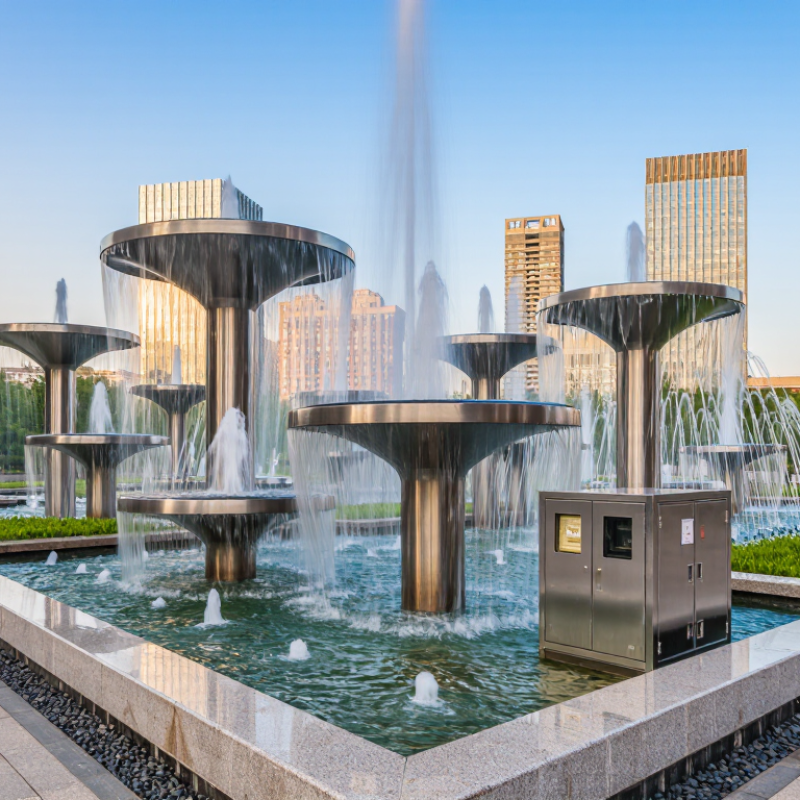
Performance matters on site. A hotel fountain may run twelve hours daily, while a residential feature operates intermittently. Buyers should examine pump efficiency, nozzle consistency, stainless-steel grades, waterproof control cabinets, maintenance access, and replacement-part availability. Water treatment is equally important. Poor filtration can turn clear water cloudy within days. Energy use can also alter the project’s lifetime cost substantially.
WET founder Mark Fuller, whose company created major choreographed fountain installations, has said, “We make water dance.” The phrase is brief, but it captures an important principle: successful fountains combine engineering with emotional impact. Supplier claims still require verification. Ask for project references, testing records, warranty terms, and realistic delivery schedules. A beautiful render is not proof of reliable performance.
This guide compares leading suppliers through a practical buyer’s lens. It considers manufacturing experience, customization, international logistics, technical documentation, and service capability. Some rankings remain subjective. Regional strengths can be difficult to compare fairly. Even so, careful screening can reduce costly surprises before water reaches the first nozzle.
What Defines a Reliable Fountain Maker Supplier?
10 Best Fountain Maker Suppliers for Global Buyers?
What Defines a Reliable Fountain Maker Supplier?
A reliable fountain maker supplier proves capability through details, not polished promises. During factory visits, I look for organized production areas, labeled materials, and documented quality checks. Ask to inspect stainless steel grades, welding points, pump assemblies, and waterproof connections. A serious supplier explains why each component suits the project. Test it yourself.
Technical expertise appears in drawings, calculations, and practical adjustments. The supplier should confirm basin dimensions, pump capacity, nozzle height, filtration, and electrical requirements before quoting. Clear drawings reduce installation mistakes. Request material samples and finish options before production begins. For outdoor projects, discuss drainage, wind exposure, freezing conditions, and maintenance access. These details often separate a durable fountain from an attractive repair problem.
Trust grows through traceable records and honest communication. Ask for previous project references, inspection reports, delivery schedules, and installation guidance. A dependable team reports delays early, even when the news is uncomfortable. Warranty terms should identify covered parts, response times, and service limits. After-sales support must include practical troubleshooting, spare-part availability, and remote assistance. No supplier is flawless. Still, vague answers deserve caution. A missed detail can happen, but hiding it suggests deeper risk. Reliable suppliers welcome technical questions, document changes, and accept reasonable inspection before shipment.
10 Best Fountain Maker Suppliers for Global Buyers? - What Defines a Reliable Fountain Maker Supplier?
| Rank | Anonymous Supplier Profile | Primary Fountain Capability | Typical MOQ | Estimated Lead Time | Common Materials | Customization Strength | Reliability Evidence to Request | Warranty Benchmark | Evaluation Score |
|---|---|---|---|---|---|---|---|---|---|
| 1 | Profile A — Large-Scale Architectural Fountain Specialist | Hotel, resort, plaza, and municipal water features | 1 project | 8–16 weeks | Stainless steel, stone, concrete, brass | Excellent; engineering-led design and site integration | Project references, hydraulic calculations, inspection reports | 12–24 months | 95/100 |
| 2 | Profile B — Commercial Landscape Fountain Manufacturer | Outdoor fountains for commercial landscaping | 5–10 units | 6–12 weeks | 316 stainless steel, fiberglass, stone composite | Very good; adjustable dimensions and spray patterns | Material certificates, pump specifications, factory audit | 12–18 months | 92/100 |
| 3 | Profile C — Stainless Steel Fountain Fabricator | Durable indoor and outdoor stainless-steel fountains | 10–20 units | 5–10 weeks | 304/316 stainless steel, tempered glass | Excellent; strong control over form, finish, and welding | Welding samples, surface-finish standards, leak-test records | 12 months | 90/100 |
| 4 | Profile D — Interactive Digital Fountain Integrator | Music-synchronized, programmable, and LED fountains | 1 integrated system | 10–20 weeks | Stainless steel, electrical enclosures, LED modules | Excellent; controls, lighting, and software integration | Control-system demonstration, electrical drawings, IP testing | 12–24 months | 89/100 |
| 5 | Profile E — Custom Stone Fountain Producer | Carved stone, cast stone, and decorative centerpiece fountains | 1–3 units | 8–18 weeks | Granite, marble, cast stone, concrete | Excellent; made-to-order shapes and surface treatments | Stone samples, freeze-thaw data, packaging and crate plan | 12 months | 87/100 |
| 6 | Profile F — Modular Indoor Fountain Supplier | Office, shopping center, hospitality, and residential fountains | 10–50 units | 4–8 weeks | Acrylic, glass, stainless steel, resin | Very good; configurable sizes and recirculation systems | Noise-level test, electrical safety documents, maintenance guide | 12 months | 85/100 |
| 7 | Profile G — Floating and Lake Fountain Specialist | Large ponds, lakes, parks, and aerating fountains | 1 system | 6–14 weeks | Marine-grade stainless steel, HDPE, aluminum | Good; nozzle selection and float configuration | Buoyancy calculations, motor efficiency data, corrosion testing | 12–24 months | 84/100 |
| 8 | Profile H — Sustainable Water Feature Manufacturer | Low-water-use, recirculating, and energy-efficient fountains | 5–20 units | 6–12 weeks | Recycled composite, stainless steel, treated concrete | Very good; water-saving controls and efficient pumps | Water-consumption data, pump efficiency curves, lifecycle information | 12 months | 82/100 |
| 9 | Profile I — OEM and Private-Label Fountain Factory | Retail, distributor, and project-based private-label production | 50–100 units | 5–10 weeks | Resin, fiberglass, stainless steel, ceramic | Good; packaging, finish, and product adjustments | Pre-production samples, quality-control plan, carton testing | 12 months | 80/100 |
| 10 | Profile J — Small-Batch Decorative Fountain Workshop | Boutique, garden, residential, and decorative fountains | 1–10 units | 4–10 weeks | Ceramic, resin, cast stone, copper | Excellent for small orders and artistic details | Sample approval, dimensional inspection, packing photographs | 6–12 months | 78/100 |