Best Fluted Coupe Glasses Manufacturer in China?
Choosing a Chinese supplier for Fluted Coupe Glasses takes more than comparing catalog photos. Buyers need to assess bowl proportions, flute consistency, rim finishing, glass clarity, and packaging. A coupe that looks elegant under showroom lights may feel unbalanced in the hand. Small details matter.
Trade data can help frame the search. UN Comtrade and the International Trade Centre’s Trade Map track relevant glassware trade under HS 7013, covering table and kitchen glassware. These sources help buyers examine trade flows, but they do not rank individual factories or verify product quality. Request current samples, production specifications, and inspection records before drawing conclusions. Numbers are useful. They are not a factory audit.
Glass artist Dale Chihuly’s words, “I never met a color I didn’t like,” offer a reminder that glass is both material and visual experience. For coupe buyers, that experience also depends on weight, balance, and how the rim feels against the lip. A supplier should explain its forming process and show how it controls variation between batches. Ask about those details plainly. Perfect uniformity may sound reassuring, yet real production has tolerances; the important question is whether they are measured and disclosed. This guide compares manufacturers through those practical checks, while recognizing that one attractive sample cannot tell the whole story.
What Defines a Fluted Coupe Glass?
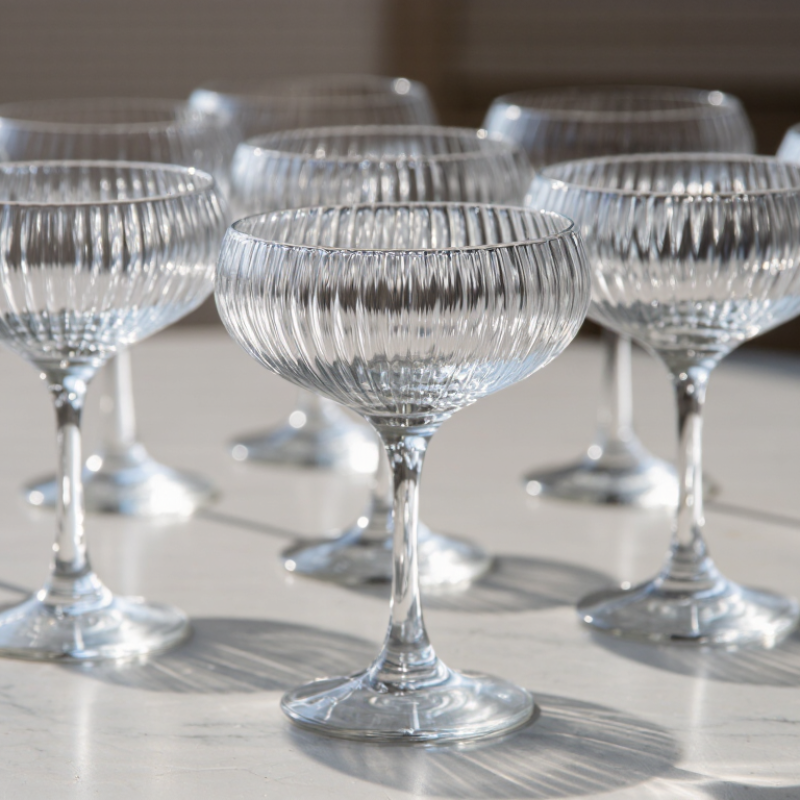
A fluted coupe glass has a shallow, rounded bowl, a stem, and narrow grooves that run down the bowl’s exterior. Those ridges distinguish it from a smooth coupe. They catch light in fine bands, making a clear drink look subtly textured without changing its shape or capacity.
The coupe’s wide opening leaves more of the drink exposed to air, while its short, curved bowl is easy to recognize on a table. A stem helps keep warm hands away from a chilled drink. Fluting also affects the feel: light grooves may offer a steadier hold, but deep ridges can feel awkward. Small details matter.
When assessing one, look closely at the rim, stem joint, and spacing of the grooves. The rim should feel even, with no sharp edges; the bowl should sit level when placed on a flat surface. In production, consistent forming helps each glass look balanced, though slight variations can occur. Not always a defect. The key is whether the shape remains comfortable, stable, and easy to clean. A fluted coupe is defined by more than decoration: its bowl, stem, and ribbed surface work together.
How Are Fluted Coupe Glasses Made in China?
How Are Fluted Coupe Glasses Made in China?
Production usually begins with a measured batch of silica sand, soda ash, and limestone. The mixture melts in a furnace, then workers or automated equipment shape each glass in a mold. Factory methods vary. Some lines press molten glass into ribbed molds, while others use blowing techniques to form the bowl and its flutes.
The mold creates the raised vertical pattern that catches light along the coupe’s curved bowl. Careful temperature control helps the glass fill the narrow grooves without leaving weak spots. After forming, glasses pass through an annealing lehr, where gradual cooling reduces internal stress. The rims may then be fire-polished or ground, depending on the design and production process.
Quality checks can include measuring height, bowl capacity, and rim thickness, as well as looking for bubbles, cracks, or uneven fluting. Some factories also test samples for thermal shock and stability.
Details matter.
Still, machine-made pieces can show slight differences in flute depth or clarity; a perfect match across every glass is not always realistic. Buyers should request samples and confirm inspection standards before placing a large order.
Which Quality Standards Should Manufacturers Meet?
A reliable fluted coupe glass manufacturer should show how quality is checked, not just describe it. Ask for a documented quality system, such as ISO 9001 certification, and confirm its scope covers the factory making your glasses. That matters. For food-contact glassware, request test reports for lead and cadmium release, such as testing under ISO 7086 where applicable. Requirements can vary by destination market, so reports should match your sales region and product type.
Inspect samples under bright, angled light. Fluting can make small bubbles, uneven ribs, and surface marks harder to spot. Check that rims feel smooth, bases sit flat, and glass thickness stays consistent across several pieces. Looks can mislead. Ask how the factory controls annealing and checks for internal stress, especially if the glasses will face frequent washing or temperature changes. A polished sample is useful, but it proves little about routine production.
Request batch inspection records, clear defect limits, and traceability from production to shipment. Independent testing from an ISO/IEC 17025-accredited laboratory can add confidence, provided the tested sample matches the supplied design and materials. I would not rely on one perfect sample alone; repeat checks are less exciting, but more revealing. Review packaging too: a sound glass can still arrive chipped if dividers leave room for movement.
How Can Chinese Fluted Coupe Glass Manufacturers Be Compared?
When comparing Chinese fluted coupe glass manufacturers, look beyond attractive product photos. Ask for samples from the intended production process, then check flute depth, rim smoothness, and glass clarity under natural light. Small differences matter. A coupe that feels balanced when empty may become awkward when filled, so test its foot stability and hold a measured serving. Confirm the stated capacity and dimensions rather than relying on visual estimates.
Tips: Request a written specification sheet and sample approval record. Ask how the factory checks rim defects, dimensions, and packing strength. Compare cartons, too: dividers should keep bowls from knocking together during shipping. Clear answers are useful evidence, though no checklist can replace inspecting a real sample.
Compare the approved sample with a later production sample before placing a large order. Ask about production capacity, inspection frequency, replacement procedures, and realistic lead times. Review any quality documents that are relevant to the product, and verify what each document covers. One point is easy to miss: deeper fluting can look striking but may be harder to clean. I would not choose on appearance alone; even careful comparisons leave some uncertainty until the glasses are handled and tested.
What Factors Help Identify the Best Manufacturer?
A strong fluted coupe-glass manufacturer should prove consistency, not just present an attractive sample. Ask for production records covering bowl diameter, stem alignment, capacity, and rim thickness. Request measurements from several cartons, not one hand-selected glass. Small variations can affect stacking and the feel at the table. I would not trust a polished showroom sample alone.
Check how the factory controls forming and annealing. Poor annealing can leave internal stress, which may lead to breakage during handling or washing. Ask for documented inspection methods, defect limits, and corrective-action records. ISO 2859-1 describes sampling procedures for attribute inspection; a supplier should explain its chosen sampling plan rather than merely claim “strict quality control.” Specific answers matter.
Material and sourcing claims also deserve careful review. FEVE’s 2020 industry report put Europe’s glass-packaging recycling rate at 80.1%. That figure concerns packaging, not coupe glasses, so it cannot prove a stemware product contains recycled glass. Ask for product-specific material documentation and test reports instead. Useful evidence includes repeat-order consistency, protective packaging trials, and clear inspection photos. Not just promises. A dependable manufacturer should be willing to show both strong results and occasional production limits.