



What Is the Best Flat Screen TV to Buy in 2026?
Choosing the best Flat Screen Tv in 2026 is less about buying the biggest screen and more about matching performance to your room. Omdia’s TV Sets Market Tracker follows global shipments by technology and screen size, reflecting how quickly the market changes. Yet a sales trend cannot tell you whether a television will handle glare from your south-facing window or keep dark scenes detailed after sunset. That takes careful testing.
Look for independent measurements, not just bold claims on a box. RTINGS’ television test methodology evaluates brightness, contrast, viewing angles, and gaming features across tested models. HDTVTest reviewer Vincent Teoh’s reviews offer a useful reminder, paraphrased here: “Judge picture quality in your own viewing conditions, not by specifications alone.” Treat that as practical guidance, not a guarantee that one model suits everyone. A bright Mini LED set may work well in a sunny living room; an OLED may be more appealing for evening films. Room layout matters. So does price.
This guide compares display types, sizes, refresh rates, smart-TV platforms, and real-world value. It will also flag trade-offs that polished product pages often gloss over, including blooming, reflections, and limited viewing angles. One thing is easy to miss: the best choice may not be the newest flagship. Check independent reviews and return terms before buying. After all, a perfect specification sheet cannot fix a screen that feels too large from your sofa.
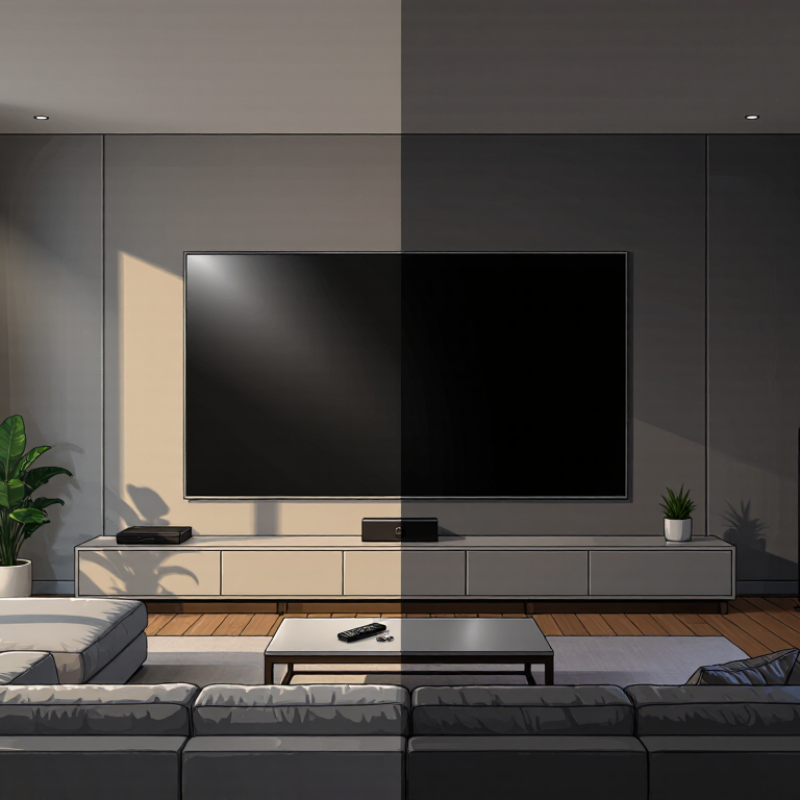
How to Define the Best Flat-Screen TV for Your Needs in 2026
The best flat-screen television in 2026 depends on how and where you watch. Measure the wall and your usual viewing distance before choosing a screen size. A huge display may look thrilling in a store but feel overwhelming beside a compact sofa. Check reflections during your normal viewing hours. That matters.
Match the screen to your room’s light and your habits. OLED panels can show deep blacks, while many LCD models can deliver strong brightness; performance varies by model. If you watch sports or play fast-moving games, check motion handling and supported refresh rates. For films, compare how well dark scenes retain detail. Use familiar content when you can, not just vivid showroom demos. Picture modes can change the result.
Sound, connections, and software also shape everyday satisfaction. Count the devices you plan to connect, such as a game console or streaming box, and check that the television has enough suitable ports. Listen to dialogue at your usual volume; thin built-in speakers may struggle in a lively room. I would not choose by one impressive specification alone. Some details are easy to overlook until the television is installed. Read independent testing, compare return terms, and consider what you actually watch most. A perfect choice is unlikely, and that is worth admitting.
Which Display Technology Fits Your Viewing Habits?
The best flat-screen TV in 2026 depends less on a headline feature than on your room and viewing habits. OLED screens control each pixel separately, creating deep blacks and crisp detail in dark scenes. They suit evening films and dim rooms particularly well. In a bright living room, however, reflections and glare can distract. Mini-LED screens use many small backlights, often delivering strong brightness and contrast for daytime viewing. A standard LED screen may cost less and still look clear for news, sports, and casual shows. No display wins every room.
Think about what you watch, and when. Fast sports can benefit from a high refresh rate, while movies look best with accurate contrast and smooth motion. If people sit far to the sides, check viewing angles in person; color and brightness can shift across some screens. Measure your space, too. A large screen may feel impressive in a shop but overpower a small room. That judgment is easy to get wrong.
Tips: Stand where you usually watch and compare bright and dark scenes. Check reflections with your room lights on. Read the TV’s picture settings carefully, since a poor setup can dull even a capable display.
What Is the Best Flat Screen TV to Buy in 2026? Which Display Technology Fits Your Viewing Habits?
| Display Technology | Best For | Picture Strengths | Potential Trade-Offs | Room and Viewing Notes | Overall Fit |
|---|---|---|---|---|---|
| OLED | Movie fans, evening viewing, and viewers who value cinematic contrast | Each pixel emits its own light and can switch off individually, producing deep blacks, precise contrast, and wide viewing angles. | Bright highlights may be less intense than on the brightest LCD models. Static images shown for long periods can pose a risk of uneven wear over time. | Especially effective in dim or moderately lit rooms. Wide viewing angles can help when people watch from different seats. | Excellent for contrast-focused viewing and films. |
| QD-OLED | Viewers seeking OLED contrast with vivid color, including for films and games | Combines self-emissive OLED pixels with quantum-dot color conversion. It can deliver deep blacks, strong color volume, and wide viewing angles. | Like other OLED displays, it may not be the ideal choice for a very bright room, and prolonged static content should be considered. | Works well in controlled lighting. Performance in direct sunlight depends on the specific screen and room reflections. | Excellent for immersive, color-rich viewing. |
| Mini-LED LCD | Bright rooms, daytime sports, and viewers who watch varied content | Uses many small backlight LEDs and local dimming zones to produce high brightness and stronger contrast than basic LCD backlighting. | Local dimming can create halos around bright objects on dark backgrounds. Contrast and dimming precision vary by model. | A strong option where daylight or room lighting makes a very bright picture useful. Check reflections and viewing-angle performance. | Best all-round fit for many bright-room setups. |
| QLED LCD | Viewers who want bright, colorful LCD performance at a range of prices | Uses a quantum-dot layer to enhance color. Many models are bright and are available with different backlight and dimming designs. | QLED describes a color-enhancement layer, not a specific backlight system. Black levels and contrast depend greatly on the LCD panel and dimming method. | Can suit bright rooms, but compare reflection handling, contrast, and viewing angles across individual models. | A flexible choice; performance depends on the full display design. |
| Standard LED-LCD | Budget-conscious buyers and casual viewing | Often offers a lower purchase price and can provide a clear picture for everyday television, streaming, and general use. | Usually has less precise contrast control than OLED or well-equipped local-dimming LCD displays. Picture quality varies considerably. | Suitable for a range of rooms. Compare brightness, contrast, and viewing angles rather than relying on the technology label alone. | Practical when price is the main priority. |
| Best Choice by Habit | Choose based on the content you watch most and the room where you watch it | For dark-room films, start with OLED or QD-OLED. For bright daytime viewing, consider Mini-LED LCD. For tighter budgets, compare standard LED-LCD options. | No display type is best for every household. Screen size, reflection handling, processing, refresh rate, and local dimming implementation also matter. | Before buying, assess seating distance, daylight, viewing angles, gaming needs, and whether the screen will display static content for long periods. | The best flat screen is the one that matches your viewing habits and room. |
How to Choose the Right Screen Size and Resolution
Choosing a flat-screen TV starts with the sofa, not the sales label. Measure the distance from your usual seat to the screen. SMPTE’s viewing guidance uses a 30-degree horizontal viewing angle, a useful reference for ordinary TV rooms. At about eight feet, that points to a screen near 58 inches diagonally. A 55- to 60-inch set is a reasonable range, not a rule. Check the actual wall, too. A cabinet, window, or narrow walkway can make a larger screen awkward.
Resolution matters most when screen size and seating distance make individual pixels easier to see. ITU-R Recommendation BT.2020 defines 4K UHD as 3,840 by 2,160 pixels. That extra detail can be noticeable on a large screen viewed from nearby, especially with high-quality 4K material. At a greater distance, the difference may be subtle. Source quality matters. A low-resolution broadcast will not gain real detail just because the TV has more pixels. For a typical living room, compare 4K models first; paying more for 8K may bring little visible benefit at your seating distance. I would measure twice, then sit in the intended spot and check subtitles and fine details. A showroom can mislead. Its lighting and seating rarely match home.
Which Smart Features and Connections Matter Most?
A smart television should make everyday viewing easier, not turn a simple movie night into a software puzzle. Check that its operating system supports the streaming services you actually use and receives regular security and software updates. A large app library means little if your favorite service is missing. Voice search can help when menus are crowded, but it should be easy to use the remote instead. Small detail. Look for clear privacy settings, too, especially if the TV includes a microphone or camera. You may not use every smart feature, and that is worth admitting before you pay extra for them.
Connections matter just as much. Count the HDMI ports before buying, including the ones needed for a game console, receiver, or streaming device. If you want modern gaming features or a soundbar connection, check for HDMI 2.1 and eARC support; port capabilities can vary on the same TV. Ethernet is useful when Wi-Fi struggles across a busy home, while USB can power or play content from compatible devices. That adds up. A practical check is to picture your actual setup: the console near the cabinet, the soundbar below the screen, and one port left for later. I would not assume every port supports every feature. Verify the specifications for the exact model.
How to Compare TVs and Make a Final Choice
Choosing the best flat-screen TV in 2026 means matching the screen to your room and viewing habits, not chasing the highest specification. Nielsen’s July 2024 The Gauge report found streaming accounted for 41.4% of US television use, compared with 20.3% for broadcast and 26.7% for cable. That makes reliable streaming access important, but live sports and scheduled programs may demand different strengths. Compare brightness in a sunlit room, reflections near windows, and how clear fast movement looks. Numbers help. Real viewing matters more.
Tips: Measure your sofa-to-screen distance before shopping. Check whether the stand fits your cabinet, and count the HDMI ports needed for game consoles or sound equipment. Test dialogue at a normal volume; thin screens can sound weak. Small detail, big difference.
For a fair comparison, use the same scene and settings on each television. Look for clean shadow detail, natural skin tones, and readable subtitles from your usual seat. A higher refresh rate can help with fast action, but it may not improve everyday shows. Check independent test results and the manufacturer’s stated support period, too. I would treat store demonstrations cautiously: bright showroom lighting can hide reflections and exaggerate vivid colors. No single model wins for every home, and I still find room lighting easy to underestimate.


