

What Are the Best Double Glass Solar Panels in China?

Choosing the best Double Glass Solar Panels in China depends on more than advertised wattage. Buyers should look at module efficiency, temperature performance, glass construction, degradation rates, warranty terms, and independent certification. These details affect how panels perform on a real roof or solar farm. There is no single winner for every project.

A residential rooftop may need panels that fit limited space and handle local weather. A large installation may place greater value on predictable output, supply capacity, and long-term service. Check whether product specifications clearly identify glass thickness, cell technology, and testing standards. A long warranty can be useful, but only when its terms are clear and the supplier can support the claim. The details matter.

This guide compares Chinese manufacturers and product lines using practical selection criteria, rather than relying on promotional rankings alone. It considers performance data, product durability, certifications, warranty coverage, and evidence of manufacturing experience. Published specifications cannot show every aspect of factory consistency or after-sales support. That limitation deserves attention. Buyers should verify current datasheets, certification records, and project references directly with manufacturers before making a decision. The strongest choice is the one that fits the installation, budget, and service needs—not simply the panel with the boldest headline.
What Are the Best Double Glass Solar Panels in China?

Understanding the Design of Double Glass Solar Panels

Double-glass solar panels use glass on both sides of the cell layer. The front glass admits sunlight, while the rear glass protects the cells and supports the panel structure. Between them, encapsulant cushions the cells and helps limit moisture exposure. Details matter. In China, buyers may encounter framed and frameless designs, with different weights and installation needs.

The glass layers can improve durability in some environments, but they do not make a panel indestructible. Check glass thickness, edge sealing, mechanical-load ratings, and verified test documents. A heavier module may need stronger mounting hardware. Some double-glass panels are designed for bifacial power generation, yet rear-side output depends on reflected light, ground color, and panel clearance. Pale gravel can help; a shaded, low-clearance installation may offer little gain. Design claims deserve a closer look.

Tips: Compare complete datasheets, not just efficiency figures. Confirm the module’s dimensions and weight suit your roof or project. Ask how performance figures were measured, and verify that certificates match the exact model. I would not assume glass-on-glass construction alone guarantees a longer service life.

How Double Glass Panels Perform in Different Conditions

Double-glass solar panels can suit China’s varied climates, but their performance depends on more than construction. In hot inland areas, high cell temperatures can reduce power output, even when sunlight is strong. Glass on both sides does not prevent this heat loss. Leave adequate airflow beneath the modules; a tight, poorly ventilated installation may run hotter than expected.

Coastal humidity and frequent rain test a panel’s resistance to moisture. A glass-glass structure can offer a durable barrier, though the frame, edge seal, and installation quality still matter. In snowy northern regions, smooth glass may help snow slide off when the panel is steeply mounted. But a heavy layer can remain in place. Hail resistance also depends on tested impact ratings, not appearance alone. Under cloudy skies, output falls with reduced sunlight. Bifacial models may collect some reflected light from the rear, but dark roofs or closely spaced rows limit that benefit.

Tips: Check local temperature, snow, and wind conditions before choosing a mounting angle. Ask for independent test data and inspect the panel’s rated load limits. Small detail, big difference. I would also leave room for cleaning and airflow; planning this is easy to overlook.

Leading Chinese Manufacturers of Double Glass Solar Panels

China’s leading double-glass solar-panel manufacturers stand out through consistent cell quality, traceable materials, and reliable production—not capacity claims alone. The China Photovoltaic Industry Association reported that China produced about 499 GW of modules in 2023, showing the scale of its manufacturing base. Buyers should still compare factory-level evidence: laminated-glass thickness, cell-to-module power tolerance, and independent damp-heat and mechanical-load test results.

Ask for batch records. Small details matter.

Double-glass construction places solar cells between front and rear glass, helping limit moisture exposure and supporting bifacial designs. The 2024 International Technology Roadmap for Photovoltaic report estimated bifacial modules accounted for roughly 80% of global module production in 2023. That trend is relevant, but bifacial output depends on site conditions, mounting height, and ground reflectivity; glass alone does not guarantee higher yield.

There is a trade-off. Heavier panels can raise handling and support requirements, while edge-seal quality remains crucial. A useful supplier comparison therefore includes warranty terms, certification scope, glass specifications, and measured performance data from projects in similar climates.

One overlooked point: published test results may not represent every production batch.

Key Criteria for Comparing Double Glass Panels in China

When comparing double-glass solar panels in China, start with the project location, not a headline efficiency figure. Coastal sites may face humid, salty air, while northern installations can encounter snow and strong winds. Ask for test data on damp heat, mechanical loading, and potential-induced degradation. Look for reports tied to the exact module design, including its glass thickness and edge seal. Details matter.

Check power output and temperature behavior under comparable test conditions. For bifacial modules, compare bifaciality and expected rear-side gain against the actual mounting height, ground surface, and row spacing. A bright concrete roof and a low, dark rooftop do not offer the same rear irradiance. Small differences add up. Confirm whether connectors, mounting clamps, and inverter limits suit the module’s size and electrical characteristics.

Warranty terms deserve close reading. Separate product coverage from power-performance guarantees, and ask how claims are handled in practice. Also compare packaging, delivery routes, and replacement availability; a fragile pallet delayed inland can complicate a tight installation schedule. Request independent certification and a sample inspection, including a look at glass edges and junction-box sealing. No scorecard captures every site. I would still leave room for uncertainty: lab results cannot fully predict years of dust, shade, or imperfect installation.

Selecting a Panel for Different Project Requirements

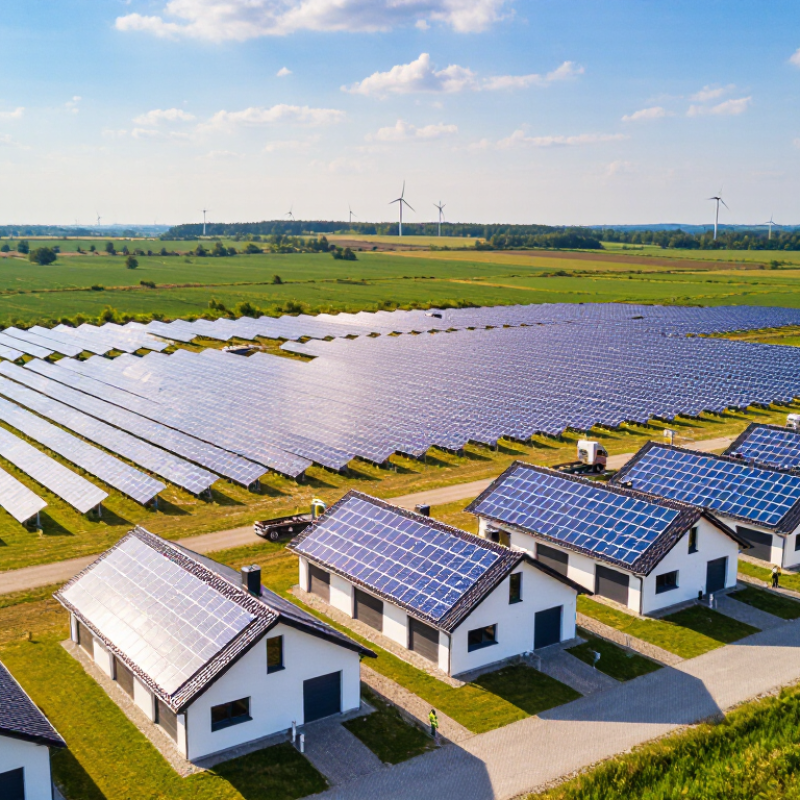
For a rooftop project in China, start with structural limits. Double-glass modules can be heavier than glass-backsheet alternatives, so check the roof’s load capacity and mounting design before comparing price. In humid or coastal locations, ask for documented moisture resistance, mechanical-load test results, and clear warranty terms. For ground-mounted projects, compare bifacial output only after checking rear-side clearance, row spacing, and ground reflectivity. A bright concrete surface and a dark, low-clearance site will not produce the same rear-side gain. Fit matters more.

Use performance data, not headline efficiency alone. IEA PVPS reported that global cumulative photovoltaic capacity exceeded 1.6 terawatts by the end of 2023, showing how quickly project conditions and supply options are changing. For long-term yield estimates, a 2013 review by NREL researchers Jordan and Kurtz found a median PV degradation rate of about 0.5% per year across nearly 2,000 reported rates. That figure is a benchmark, not a promise for every module. Compare tested degradation data, temperature coefficients, dimensions, and verified power tolerances against your site’s climate and design.

Tips: Request the module’s full test report, not just a sales sheet. Check dimensions and weight against the racking plan. If rear-side gain drives the business case, model it with local albedo data; estimates can be overly optimistic.

What Are the Best Double Glass Solar Panels in China? - Selecting a Panel for Different Project Requirements
Project Requirement Suitable Double-Glass Panel Profile Useful Selection Metrics Why It May Fit Key Trade-Offs and Checks
Commercial or industrial rooftop with limited space N-type monocrystalline bifacial module, such as TOPCon or heterojunction (HJT), in a glass-glass construction Indicative module efficiency: about 22%–24%; compare rated power and dimensions for the exact module format Higher conversion efficiency can help increase installed capacity where roof area is constrained. Double-glass construction can also provide a durable rear surface. Confirm roof load capacity, mounting compatibility, fire requirements, and access for maintenance. Bifacial gain may be modest when the rear side is close to an opaque roof.
Large ground-mounted utility project Bifacial glass-glass n-type module paired with a suitable fixed-tilt or tracker layout Compare front-side efficiency, rated power, module dimensions, temperature coefficient, and bifaciality factor. Many n-type designs have a bifaciality factor in the approximate 75%–95% range, depending on cell technology and product design. Ground-mounted arrays can expose the rear side to reflected and scattered light. A higher bifaciality factor can be useful when the site and system design provide meaningful rear-side irradiance. Model rear-side yield using ground albedo, row spacing, mounting height, and shading. Bifaciality is not the same as guaranteed energy gain; actual gain is site- and design-dependent.
High-albedo site, such as a light-colored ground surface Bifacial glass-glass module with a transparent rear side and a well-designed elevated mounting structure Assess bifaciality, rear-side shading, ground coverage ratio, mounting height, and the surface reflectance used in the yield model Reflective surfaces can increase the light reaching the rear of the module, making bifacial generation more useful than in low-reflectance settings. Use realistic seasonal reflectance assumptions and account for soiling, vegetation, snow cover, and uneven ground. Do not select a module on bifaciality alone.
Coastal or humid environment Glass-glass module with documented environmental qualification and materials appropriate to the site Check applicable IEC 61215 and IEC 61730 certification, salt-mist test documentation where relevant, connector and frame specifications, and warranty terms Sealed glass-glass construction avoids a polymer backsheet and may suit projects seeking a robust module package, subject to full system design and installation quality. Glass-glass construction does not by itself guarantee corrosion resistance. Verify mounting hardware, grounding, connectors, cable management, and the project’s corrosion-protection requirements.
Cold region or site with snow and hail exposure Glass-glass module with mechanical-load and impact-test documentation matching the project conditions Review certified static load ratings, hail-test details, glass thickness, module dimensions, and installation instructions Glass-glass modules can be considered for demanding outdoor conditions when the specific product has suitable test evidence and the mounting system is correctly engineered. Do not infer snow-load or hail performance from the double-glass design alone. Confirm local design loads, support points, clamp zones, and applicable certification details.
Vertical, agrivoltaic, or bifacial-specific installation Bifacial glass-glass module with a rear-side layout designed to remain exposed to useful light Compare bifaciality, orientation, row spacing, rear-side obstruction, and modeled annual energy yield Both module faces may receive light in vertical or elevated layouts, potentially improving the value of a bifacial design. Check shading patterns, wind loads, access, land-use needs, and seasonal generation profile. A bifacial module may not outperform a simpler option if its rear side is obstructed.
Project prioritizing lower balance-of-system cost Module format selected to suit the inverter, string design, transport limits, and installation equipment Compare watts per module, module area, current and voltage ratings, string length, weight, and handling requirements The best choice is the one that works efficiently with the complete system; module wattage alone does not determine installed cost or project yield. Check inverter input limits, cable and connector compatibility, structural loads, transport dimensions, and installation labor before final selection.
General specification and supplier evaluation Any shortlisted double-glass module supported by verifiable technical documents and traceable quality controls Request the current datasheet, certificates, serial-number traceability, warranty documents, and independent test reports where appropriate Comparable documents make it easier to assess performance, safety, durability, and suitability across unbranded product options. Check the exact model and production version; confirm that certificates and warranties apply to the offered module, rather than relying on generic claims.
How to read the figures: Efficiency and bifaciality ranges shown are indicative technology-level ranges, not specifications or guarantees for every module available in China. Verify exact values, dimensions, weight, electrical ratings, certifications, and warranties in the datasheet for the specific model. Energy yield depends on the project location, system design, installation, and operating conditions.