2026 Best PU Stone Wall Panel Types for Global Buyers?
Choosing the right PU Stone Wall Panel in 2026 requires more than comparing colors and prices. Global buyers now examine appearance, safety, durability, installation, and supply reliability. A convincing stone texture may look impressive under showroom lighting. It can appear different in a small apartment or commercial lobby. Therefore, buyers should request physical samples before approving large orders.
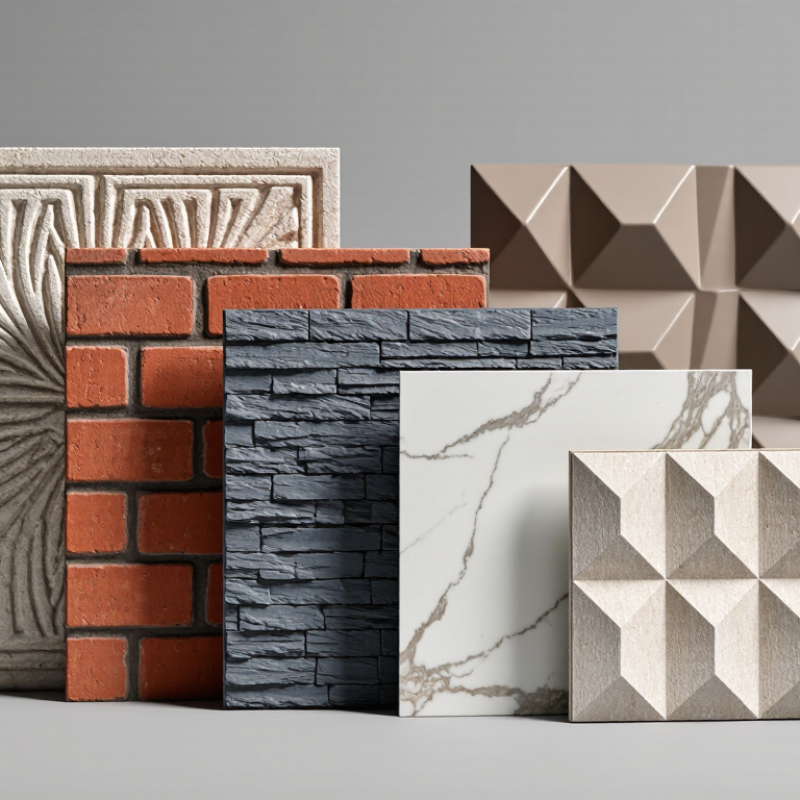
This guide reviews practical PU Stone Wall Panel types for residential, hospitality, retail, and office projects. It considers carved stone, brick, slate, marble, and modern geometric designs. Each type creates a different visual effect and installation experience. Lightweight panels can reduce handling costs and simplify wall upgrades. However, lower weight does not automatically mean better performance. Buyers should check panel density, surface coating, moisture resistance, dimensional stability, and fire-related documentation. Requirements may differ across countries and building applications.
Supplier experience also matters. Reliable manufacturers should explain production methods, quality controls, packaging standards, and replacement procedures clearly. Ask for recent test reports and confirm whether they match the exact product model. Do not rely on attractive catalog images alone. They are not enough.
Some purchasing decisions remain difficult. A realistic texture may increase production cost, while a cheaper surface may look repetitive after installation. Shipping damage is another risk, especially with poorly protected corners. This article offers a practical comparison, not a universal answer. The most suitable panel depends on climate, project scale, local regulations, maintenance expectations, and the buyer’s tolerance for compromise.
PU Stone Wall Panel Types by Texture, Relief Depth, and Core Density
2026 Best PU Stone Wall Panel Types for Global Buyers?
Texture shapes the first buying decision. Natural split-stone textures suit hotel lobbies and exterior feature walls. Slate-like surfaces create sharper shadows. Sandstone textures appear softer under warm lighting. Texture matters.
The Polyurethane Market report by MarketsandMarkets projects industry growth from about USD 78.1 billion in 2023 to USD 101.1 billion by 2028. This wider market signal supports stronger material research. However, it does not prove every decorative panel performs equally.
Buyers should request abrasion, water absorption, and fire-test documentation for the exact product.
Relief depth changes both appearance and installation risk. Panels with 5–12 mm relief usually create restrained wall movement. Deeper profiles, around 20–35 mm, produce stronger stone shadows but collect more dust. They may also need tighter joint planning.
Core density deserves equal attention. Many PU decorative panels fall near 180–300 kg/m³, although suppliers use different measurement methods. Higher density can improve impact resistance, but it may increase handling weight. A lighter core can simplify cutting and transport. It may feel less rigid.
Ask for density tolerance, dimensional stability, and test temperature. ASTM-based testing is useful, but the test scope must be readable.
A catalogue photo cannot replace a physical sample. I would compare three textures under daylight and 3000K lighting. Small details often change the final decision.
Lightweight PU Panels: Up to 80% Lighter Than Natural Stone Veneer
2026 Best PU Stone Wall Panel Types for Global Buyers
Lightweight PU stone panels can weigh up to 80% less than natural stone veneer. This difference matters during shipping, handling, and installation. A 2.4-meter panel can often be moved by one worker, reducing labor pressure on busy sites. It also creates fewer demands on walls, ceilings, and supporting frames.
The appearance has become surprisingly detailed. Textured surfaces can show chipped edges, layered sediment, and uneven color shifts. Good panels should avoid repetitive patterns across neighboring pieces. Installers should measure the wall carefully and plan corner cuts before applying adhesive. Small errors remain visible on large feature walls.
Still, “up to 80% lighter” is not a universal result. Panel density, thickness, backing materials, and the chosen stone style affect the final weight. Buyers should request technical data, installation instructions, and sample pieces before ordering globally. Check moisture resistance, fire performance, UV stability, and local building requirements. A lightweight panel is easier to handle, but it is not automatically suitable for every climate or wall surface. That detail deserves more attention.
Fire-Performance Grades: ASTM E84 Class A and EN 13501-1 Ratings
2026 Best PU Stone Wall Panel Types for Global Buyers?
Fire performance should guide every PU stone wall panel purchase, not just appearance or price.
ASTM E84 Class A indicates a flame spread index of 0–25 and a smoke-developed index of 0–450. These values come from a specific test assembly, not from the panel alone. The substrate, adhesive, joints, thickness, and installation method can change the result. Small details matter.
EN 13501-1 EN 13501-1 uses a different classification system. Buyers may see A1, A2, B, C, or lower Euroclasses, followed by smoke and flaming-droplet ratings.
Example For example, B-s1,d0 suggests limited flame contribution, low smoke production, and no flaming droplets.
ASTM Class A and EN ratings are not direct equivalents. A certificate showing one does not automatically prove the other. Check the exact product construction.
Reliable sourcing requires more than a polished test report.
Request the laboratory name, test date, specimen thickness, mounting method, and report number. Confirm whether the result covers the intended wall substrate and adhesive. Documents should match the production specification.
Be cautious when a seller provides only a logo or a cropped certificate. That shortcut can create expensive delays during project approval.
Fire safety is often discussed too late. This remains a common procurement mistake.
Exterior PU Panels: UV Resistance, Water Absorption, and Freeze–Thaw Tests
Exterior PU stone panels should be judged by tested performance, not surface appearance alone. UV resistance matters because sunlight can fade pigments and embrittle coatings. ASTM G154 uses UVA-340 lamps to simulate critical ultraviolet exposure. However, it does not define one universal pass or fail level. Buyers should request exposure hours, color-change data, gloss loss, and surface-cracking records.
Water absorption deserves equal attention. The PIMA Technical Bulletin on rigid polyisocyanurate insulation reports water absorption below 2% by volume for qualified products under specified testing. Decorative PU panels may perform differently because of skins, joints, and textured surfaces. ASTM D570 can measure absorption, but test duration and specimen preparation must be stated. A low laboratory value means little if rain enters through unsealed edges.
Tips: Ask for UV, water, and freeze–thaw reports from the same production batch. For cold regions, require repeated cycling with documented temperatures, conditioning, and failure criteria. ASTM C666 is widely used for concrete freeze–thaw evaluation, but PU panels need a suitable project-specific method. Inspectors should check delamination, warping, cracking, and adhesive failure after cycling. A perfect lab score can still disappoint on a windy wall. That is the uncomfortable part. Installation quality often decides real durability.
Global Buying Standards: CE, UKCA, ICC-ES, and ISO 9001 Supplier Checks
2026 Best PU Stone Wall Panel Types for Global Buyers?
For global buyers, compliance checks should begin before comparing colors or surface textures. A convincing catalog is not proof of safe, consistent production. Ask for the exact CE documentation, including the applicable regulation, product scope, and test laboratory. CE marking may apply differently across product categories, so generic certificates deserve caution.
UKCA evidence should match the destination and current British requirements. For projects in the United States, an ICC-ES evaluation report can clarify accepted materials, installation limits, and tested performance. It is not a universal approval. Check the report number, expiration status, product description, and whether the panel assembly matches your specification.
ISO 9001 indicates a quality management system, not automatic product compliance. Request the certificate scope, audit body, and manufacturing address. Then compare batch records with physical samples. Look for uniform density, secure backing, accurate dimensions, and stable color under normal handling. Ask how the supplier controls fire performance, moisture resistance, adhesive compatibility, and replacement batches.
Small details matter.
In my experience, unanswered technical questions often signal weak after-sales control. Still, paperwork can be incomplete without meaning the factory is unreliable. A video audit, retained sample, and independent pre-shipment inspection provide better evidence. Buyers should record every revision, because a changed resin formula can make an old test report less useful.
2026 Best PU Stone Wall Panel Types for Global Buyers
Global buying standards screening for interior decorative panels, exterior decorative panels, and fire- or code-critical applications.
Scoring: 0 = not a universal requirement, 1 = conditional or market-specific check, 2 = normally important for the stated application. CE and UKCA depend on the applicable product legislation and harmonized or designated standards; ICC-ES is relevant when a North American code evaluation is needed; ISO 9001 checks the supplier’s quality management system rather than certifying the wall panel itself.
Final conformity requirements depend on the destination country, installation location, fire performance, structural role, and declared intended use.