




2026 Best A4 Label Printers for Global Buyers?
Choosing the 2026 best A4 Label printer requires more than comparing advertised print speeds. Global buyers must examine media compatibility, regional voltage, software support, service access, and total ownership cost. An attractive specification can hide expensive consumables or limited driver support. That matters when labels must remain sharp on cartons, shelves, sample boxes, or shipping documents.
Industry research supports this broader view. Smithers’ report, The Future of Digital Print for Packaging to 2028, highlights continuing demand for shorter runs, versioned packaging, and flexible digital production. These trends favor printers that handle changing artwork without lengthy setup. IDC’s Worldwide Quarterly Hardcopy Peripherals Tracker also shows why reliability and workflow integration remain important in professional printing environments. Print volume alone is not enough. Keypoint Intelligence research on production and industrial inkjet further emphasizes substrate control, color consistency, and predictable operating costs.
This guide compares A4 Label printers through a practical purchasing lens. It considers print quality, paper-feed stability, software usability, maintenance, and international availability. It also separates office-focused devices from heavier commercial models. A printer may perform beautifully during a ten-minute test, then struggle during a full afternoon of repeated label sheets. No shortlist is perfect. Regional pricing changes quickly, and manufacturer support varies widely between countries. Buyers should verify local warranty terms, certification requirements, and compatible supplies before ordering. The strongest choice is not always the fastest machine. It is the model that fits the buyer’s workload, staff skills, label materials, and long-term service expectations. That practical fit matters most.
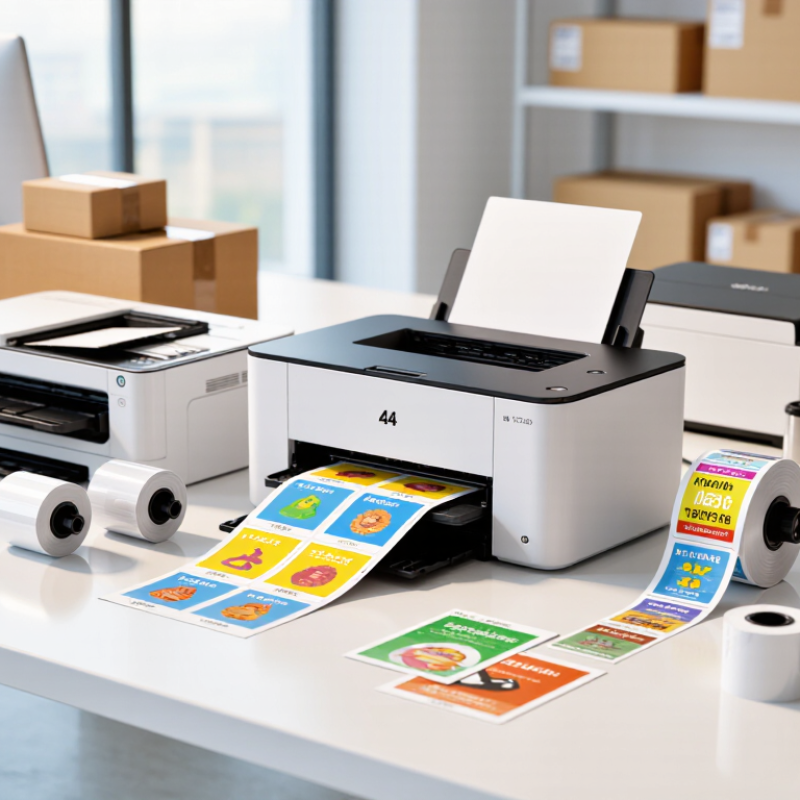
A4 Label Printers: Definition, Uses, and Key Printing Technologies
2026 Best A4 Label Printers for Global Buyers?
An A4 label printer produces labels on standard 210 × 297 mm sheets. It suits warehouses, laboratories, offices, and small-batch packaging work. Users can print several label sizes on one sheet, then apply them by hand. This flexibility helps when product codes or shipping details change often. It is less efficient for very large roll-label orders.
The main technologies are direct thermal, thermal transfer, inkjet, and laser printing. Direct thermal printing needs no ribbon, but heat and sunlight can fade the image. Thermal transfer uses a ribbon and usually offers stronger durability. Inkjet systems create vivid colors on coated media, while laser systems provide sharp text and fast sheet output. In daily use, adhesive stock matters as much as printer speed. Test corner lifting, barcode readability, and drying time before purchasing.
Smithers’ The Future of Digital Print for Packaging to 2028 estimates digital packaging print will grow from about 22.0 billion dollars in 2023 to 36.9 billion dollars by 2028. FINAT Radar 2024 also reported an approximately 2.5% decline in European self-adhesive label demand during 2023. These figures suggest buyers need flexible equipment, not simply higher speed. A practical trial should include recycled paper, synthetic sheets, small fonts, and dense barcodes. My view is imperfect: advertised resolution rarely predicts real warehouse performance. Humidity, adhesive quality, and operator handling can change the result. Test the complete workflow.
How to Compare A4 Label Printers for International Purchasing
2026 Best A4 Label Printers for Global Buyers?
How to Compare A4 Label Printers for International Purchasing
International purchasing needs more than a speed comparison. Start with the label size range, print method, resolution, and monthly workload. A4 label printers should handle your actual media, not only the sample shown by a supplier. Check whether they support thermal, coated, synthetic, or recycled labels. Small differences become expensive during production.
Print speed matters, but consistency matters more. Request test samples using your artwork, barcode density, and smallest text. Inspect edges, contrast, adhesive alignment, and feeding accuracy.
A 300 dpi model may suit detailed product labels. A lower resolution model may work for simple shipping information. Confirm driver languages, network options, and compatibility with your warehouse software.
Global buyers should also compare voltage input, plug configuration, warranty response, spare parts, and technical documentation. Ask for clear packaging dimensions and shipping weight before ordering. Import costs can change the final price considerably.
Calculate ink or ribbon use, replacement rollers, maintenance time, and expected downtime. The cheapest unit is not always economical.
Do not trust every specification equally. Some figures describe ideal laboratory conditions. Real output may differ with humid storage or uneven label stock. I would test at least two media suppliers before approval. That step is easy to skip. It is also where many purchasing plans become less certain. Keep the test records, operator feedback, and failure rates beside the quotation.
Essential Features for Labels, Materials, Sizes, and Print Quality
2026 Best A4 Label Printers for Global Buyers?
A reliable A4 label printer must handle more than standard paper. It should support self-adhesive sheets, synthetic media, matte stock, and coated materials. Check the approved media thickness before purchasing. Some printers accept 60–300 gsm, while others struggle with heavier sheets. This matters for shipping labels, product stickers, barcode sheets, and small-batch packaging.
Smithers projects the digital print packaging market will grow from about $22.5 billion in 2023 to $36.9 billion by 2028. That growth reflects demand for shorter, customized print runs.
Size accuracy is equally important. Look for adjustable margins, borderless printing, and templates for common A4 label layouts. A small alignment error can waste an entire sheet. Print quality should include at least 1,200 dpi for sharp text and clean barcodes. Color management also deserves attention, especially for labels using photographs or brand colors. ISO/IEC 15416 testing can help verify barcode quality, but real media tests remain necessary. Specifications can look excellent on paper and still disappoint.
Test five label materials before ordering. Measure the first and last labels on each sheet. Use pigment ink for better water resistance, when compatible. Review operating costs, not only purchase price. FINAT market reports show that label demand remains closely linked to retail, logistics, and product customization. However, no printer fits every workflow. The difficult part is admitting that speed, color accuracy, and media flexibility often require trade-offs.
Global Compatibility: Power, Connectivity, Software, and Certifications
The 2026 Best A4 Label Printers for Global Buyers should handle more than paper size. Power compatibility is a practical starting point. Look for 100–240V input and 50/60Hz support. A replaceable power cord reduces shipping complications. Check the plug type separately. It may not match every destination.
Certifications require careful verification. Depending on the market, buyers may need CE, FCC, UKCA, RoHS, or other local documentation. Certification should cover the complete printer configuration, not only its adapter. Ask for test reports, declaration documents, and model numbers. Do not rely on a logo printed in a brochure. Documents can become outdated.
Connectivity affects daily reliability. USB is useful for one workstation, while Ethernet suits shared office networks. Wi-Fi and Bluetooth help mobile teams, but wireless performance depends on building materials and network security.
Software should support major operating systems and common label formats. Multilingual interfaces are helpful for international teams. Driver quality matters more than a long feature list.
A printer may connect successfully yet still misalign labels through poor software settings. I would test actual templates, barcodes, and remote updates before ordering.
Small failures become expensive across borders. Thermal performance, sensor calibration, and replacement parts also deserve attention. Specifications look clean on paper. Real workflows are messier.
2026 Buying Guide: Costs, Suppliers, Maintenance, and Total Value
For global buyers, A4 label printer value starts with workflow, not headline speed. Smithers’ 2024 forecast valued the global printed labels market at roughly $48 billion in 2023. It expects the market to exceed $50 billion by 2028. This growth supports short-run printing, but it does not justify buying maximum resolution. Measure monthly sheets, label widths, adhesive types, and export voltage before requesting quotations. Small details matter.
A realistic budget includes the printer, cutter, software, spare printheads, freight, duties, and technician time. Keypoint Intelligence research consistently identifies supplies and service as major lifecycle cost drivers. Ask suppliers for three-year consumables estimates, parts availability, response times, and test prints on your actual label stock. Use landed cost, not factory price. A low quotation can become expensive after shipping and customs.
Maintenance should be practical. Clean the paper path weekly, inspect rollers monthly, and record jams by material type. Follow the maintenance schedule, even during busy seasons. My first cost spreadsheet missed rejected labels and operator training. That mistake changed the purchase decision. Suppliers should provide written maintenance procedures, local support options, and clear warranty conditions. Compare uptime evidence, not promises. Total value comes from stable output, predictable service, and fewer interrupted production days.
2026 Best A4 Label Printers for Global Buyers
Three-year total cost comparison by printer class, including purchase price, consumables, and routine maintenance.
Planning benchmarks are shown in USD and represent typical global buyer ranges for A4-capable label-printing equipment in 2026. Actual costs vary by region, print volume, media type, shipping, taxes, and service coverage. For frequent monochrome production, business-class laser equipment generally offers the lowest three-year ownership cost, while color and commercial systems require a higher initial investment and ongoing consumables budget.


