Who Are the Top Metal Manufacturing Companies in China?
China’s metal manufacturing sector includes vast steelmakers, precision machining groups, aluminum producers, and specialist component suppliers. Their capabilities differ sharply. One company may supply rolled coils at industrial scale, while another specializes in laser-cut enclosures or tightly toleranced machined parts. The word “top” therefore needs a clear measure. Scale alone does not prove reliability. Buyers should also examine product range, quality systems, export experience, production capacity, and how clearly a supplier documents its capabilities. Look beyond the headline. A polished catalog cannot replace verifiable specifications and consistent inspection records.
Manufacturing pioneer Taiichi Ohno is often quoted as saying, “Having no problems is the biggest problem of all.” His reminder fits this sector: dependable manufacturers identify process weaknesses rather than hide them. A useful comparison asks how companies manage material traceability, dimensional checks, delivery schedules, and corrective action when a batch falls short. These details can matter as much as a factory’s size. Still, public information is uneven, and company claims are not always easy to compare. This guide introduces notable Chinese metal manufacturers and the strengths that may distinguish them, while treating rankings as a starting point—not a guarantee of fit. A careful shortlist takes more work. That is worth admitting. The right partner depends on the product, required tolerances, order volume, and support needed after delivery.
How China’s Steel Sector Is Measured: 1,019 Mt of Crude Steel in 2023
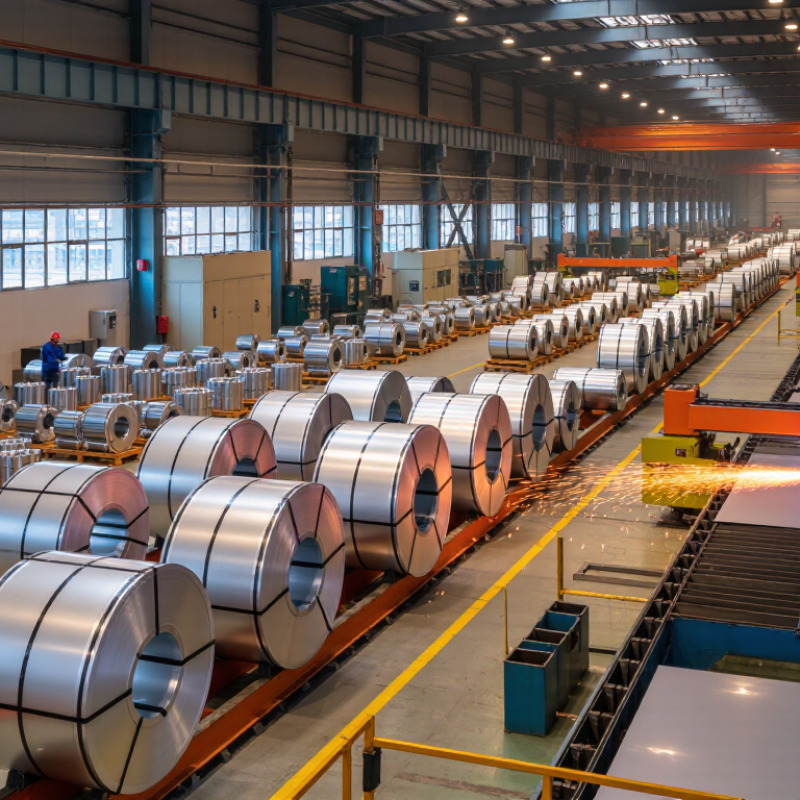
In 2023, China produced 1,019 million metric tonnes of crude steel, roughly 54% of the world total. The figure measures steel at an early production stage, before much of it is rolled into coils, plate, or construction sections. It is not a count of finished products, nor a direct measure of how much steel reached customers. A furnace tap is only one part of the chain.
That distinction matters when assessing China’s metal manufacturing sector. Crude-steel output helps show the scale of primary production, but it cannot rank manufacturers by itself. A large tonnage may reflect broad capacity, while product quality, processing depth, and delivery reliability require separate evidence. Look for data on finished-steel output and product categories, too. Energy use and emissions intensity can also change how the same tonnage should be interpreted. The headline number is powerful, but incomplete. Even the word “produced” can hide differences in reporting and product mix. A careful comparison needs consistent definitions and more than one metric.
Worldsteel’s Ranking Method: Annual Crude-Steel Output
For a credible answer to “Who are the top metal manufacturing companies in China?”, define “top” by annual crude-steel output. Worldsteel’s ranking measures steel actually produced during the year, rather than installed capacity, revenue, or product quality. Its World Steel in Figures 2025 report records 2024 global crude-steel production at 1,882.6 million tonnes; China produced 1,005.1 million tonnes. That scale makes China central to any output-based comparison.
The ranking is useful, but its boundaries matter. Company groups may report subsidiaries and production differently, so compare the same calendar year and published ranking basis. Crude-steel output is measured before downstream rolling and fabrication. It does not tell buyers whether a producer can meet a specific grade, tolerance, delivery schedule, or certification requirement. A large total is not a complete purchasing signal. That distinction is easy to miss.
Tips: Check the reporting year, units, and group scope before comparing figures. Then verify product specifications and supply capability separately. Worldsteel’s figures are strong industry context, not a substitute for supplier-level checks. One uncertainty remains: public reporting can make group comparisons less tidy than the ranking table suggests.
China Baowu Leads with 130.77 Mt of Crude Steel in 2023
China’s leading steel producer recorded 130.77 million metric tons of crude steel in 2023. That figure reflects enormous industrial capacity. A remarkable scale. Behind it are furnaces, casting lines, and rolling mills operating across complex production networks. Crude steel is an early-stage measure, not a count of finished products ready for construction or manufacturing.
This volume matters because steel supports infrastructure, machinery, transport, and everyday goods. It also signals the demands placed on raw materials, energy, logistics, and quality control. A steady flow of molten metal must be converted into slabs and other intermediate forms before further processing. Small disruptions can ripple through that chain.
Still, output alone does not reveal efficiency, product quality, or environmental performance. Comparisons can be imperfect when reporting methods and company boundaries differ. The 130.77-million-ton figure is impressive, but it needs context. A closer assessment would also examine emissions per ton, the range of grades produced, and how reliably those materials meet customer specifications. Raw tonnage tells part of the story, not all of it.
Ansteel and Shagang Produced 55.89 Mt and 41.45 Mt
In 2023, two major Chinese steel producers recorded outputs of 55.89 million tonnes and 41.45 million tonnes. The figures are listed in the World Steel Association’s World Steel in Figures 2024. Together, that is 97.34 million tonnes. A formidable scale. The larger producer made about 35 percent more steel than the second, showing how widely output can differ even among leading manufacturers.
The same report put China’s crude steel production at 1,019.1 million tonnes in 2023. On that basis, the two producers’ combined output represented roughly 9.6 percent of the national total. This comparison needs care: company output and national totals should use consistent definitions and reporting periods. Tonnage alone also says little about product mix, energy use, or delivery reliability. A busy mill is not automatically an efficient one. Still, the figures offer a useful measure of industrial scale, especially when considering the material flows behind construction, machinery, and transport. The numbers are precise; what they reveal about day-to-day performance is less complete.
Who Are the Top Metal Manufacturing Companies in China? — Production Snapshot
Steel production figures from the supplied headline; company names are omitted.
| Anonymous entry |
Reported steel production (Mt) |
Difference from lower figure (Mt) |
| Higher reported figure |
55.89 |
14.44 |
| Lower reported figure |
41.45 |
0.00 |
Mt means million tonnes. The production year is not specified in the supplied headline.
Jianlong and Shougang Produced 36.99 Mt and 33.82 Mt
Two Chinese steel producers reported 36.99 million and 33.82 million tonnes of crude steel, respectively. The World Steel Association’s World Steel in Figures 2024 lists these 2023 output figures among the world’s leading steelmakers. The gap is 3.17 million tonnes—enough steel to make production scale a meaningful comparison, though not a complete measure of performance.
Crude-steel tonnage tracks output, not product quality, delivery reliability, or emissions intensity. A rolling mill’s hot slabs, furnace schedules, and transport links all shape what customers actually receive. The figures are useful, but they do not show how efficiently each tonne was made. That distinction matters.
Tips: Compare annual output with energy use, product mix, and on-time delivery. The World Steel Association’s figures provide a consistent starting point; company-level sustainability reports can add operational detail. Still, reported data may vary in scope, and rankings alone can oversimplify a complex industry.