

How to Choose Wood Veneer Wall Panels for Global Projects?
Selecting wood veneer wall panels for a global project requires more than matching colors to a mood board. Each panel must perform across different climates, building codes, supply chains, and installation practices. A warm walnut surface may look perfect in a showroom, yet behave differently in a humid hotel lobby or a dry airport terminal.
Experience matters here. I have seen projects delayed because the veneer species was approved before checking local availability, panel dimensions, or adhesive compatibility. Small details become expensive problems. Early testing helps.
Frank Lloyd Wright once said, “Wood is universally beautiful to man. It is the most humanly intimate of all materials.” His observation remains relevant, but beauty cannot replace technical judgment. The right wood veneer wall panels should balance grain direction, core stability, acoustic needs, fire performance, surface durability, and responsible sourcing. Certifications and chain-of-custody documents also deserve careful review. They are useful evidence, not automatic proof of quality.
Global projects need practical questions. Will the panels tolerate seasonal movement? Can local installers follow the manufacturer’s fixing method? Are replacement panels available after handover? Does the finish resist fingerprints near elevators and reception desks?
Some decisions will remain imperfect. Natural veneer varies. That is part of its character, but it can challenge strict visual consistency. A reliable specification should state acceptable variation clearly. It should also include mock-ups, moisture checks, sample approvals, and maintenance instructions. This guide explores those decisions, helping project teams choose wood veneer wall panels with greater confidence, clearer evidence, and fewer costly surprises.
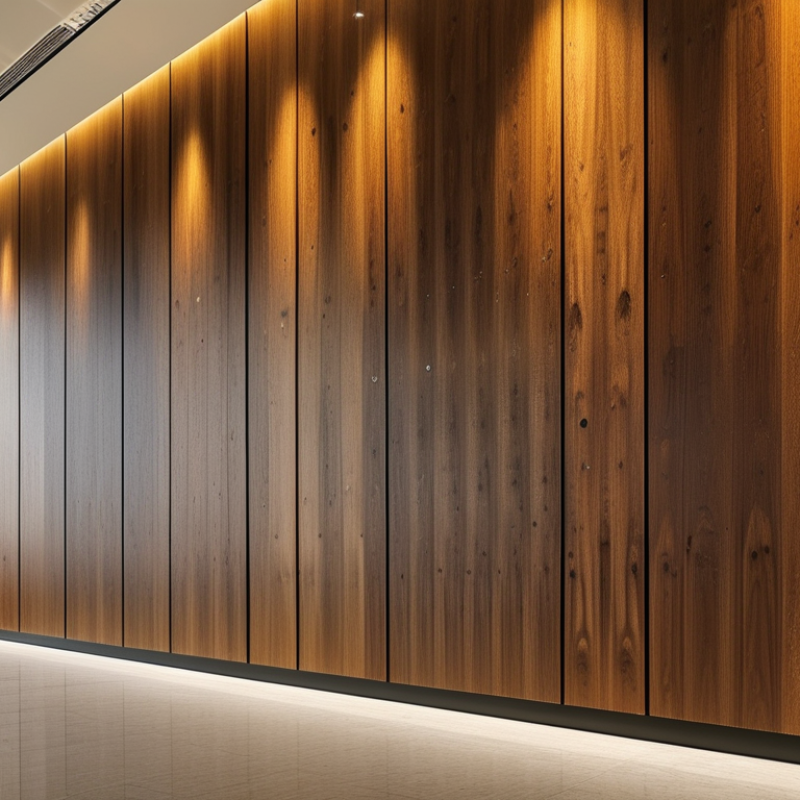
Define Project Requirements and Environmental Conditions
Every international wall project should begin with a clear performance brief. Identify the room’s purpose, traffic level, cleaning routine, and expected service life. A hotel corridor needs tougher surfaces than a private meeting room. A humid coastal lobby may require different construction from a dry airport interior.
Measure environmental conditions before selecting the veneer panel. Record temperature changes, relative humidity, sunlight exposure, and nearby water sources. Timber reacts to moisture. Poorly controlled humidity can cause swelling, gaps, or surface cracking. Real projects often reveal this issue after installation, when repairs become expensive.
Check local fire, acoustic, emissions, and interior safety requirements. Requirements can differ between countries, cities, and building types. Request test reports that match the final panel assembly, not only the raw veneer. Confirm the substrate, adhesive, coating, thickness, and fixing method. These details affect performance.
Color consistency also deserves attention. Natural veneer contains variation in grain, tone, and figure. Approve physical samples under the project’s actual lighting. Digital images can mislead. They often look cleaner than reality.
Allow for installation conditions, too. Is the site ventilated and dry? Can panels acclimatize before fitting? I have seen schedules push installation too early. That decision seemed efficient, but it created avoidable movement later. A written inspection plan, moisture readings, and spare panels provide practical control without pretending timber is perfectly predictable.
Compare Wood Species, Grain Patterns, and Veneer Finishes
Choosing wood veneer wall panels for global projects requires more than matching a catalog image. Wood species strongly affects color, hardness, stability, and cost. Oak offers visible pores and a dependable, warm appearance. Walnut creates deeper brown tones with a more refined feel. Ash looks lighter and more open-grained, while maple provides a cleaner, quieter surface. Regional climate matters too. A veneer that performs well in a dry office may react differently near a humid coastline.
Grain patterns also shape the room’s character. Plain-sliced veneer creates cathedral figures and natural movement. Quarter-sliced veneer produces straighter, calmer lines, often suited to corporate interiors. Rift-cut veneer gives a consistent, linear effect with fewer dramatic changes. Matching panels can improve continuity, but it increases material use and installation time. I have learned that perfect alignment is not always realistic. Small variations can make the wall feel more authentic.
Tips: Request physical samples, not only digital images. View them under the project’s actual lighting. Compare matte, satin, and gloss finishes because each changes color perception and reflects fingerprints differently. Matte finishes hide minor marks, while higher sheen can emphasize grain depth. Confirm the core material, formaldehyde emissions, fire performance, and moisture resistance with documented test data. Keep records. Also inspect several veneer sheets together; one sample rarely represents the full batch.
Evaluate Panel Construction, Performance, and Fire Ratings
Choosing wood veneer wall panels for a global project requires more than comparing color and grain. Panel construction affects stability, appearance, and installation reliability. In project reviews, I examine the core, veneer thickness, backing, edge treatment, and fixing method. A stable substrate helps reduce warping near entrances, kitchens, or humid coastal areas.
Performance testing should match the building’s actual conditions. Check resistance to impact, moisture, abrasion, and cleaning chemicals. Acoustic performance may also matter in offices, hotels, and transport facilities. Ask for test reports, product tolerances, maintenance instructions, and installation details. Small gaps can become visible across a long corridor. I have seen elegant samples lose their appeal when repeated panels show inconsistent grain direction.
Fire performance deserves careful attention. A panel’s rating applies to a tested assembly, not always to the panel alone. Review the substrate, adhesive, joints, cavity, and mounting system together. Confirm the required classification with the project’s local code consultant and approval authority. Requirements can differ between countries and building types. Do not rely on a general certificate without checking its scope, test method, and validity.
Documentation often reveals practical weaknesses. Are replacement panels available? Can installers understand the details without guesswork? Are certification documents translated accurately? These questions seem ordinary. They prevent expensive rework. A safer choice may have a less dramatic veneer, but dependable construction usually matters more than a perfect showroom sample.
Verify Global Standards, Certifications, and Sustainability
Choosing wood veneer wall panels for global projects requires more than matching color and grain. Standards, certifications, and sustainability documents should be checked before approving samples. A warm oak veneer may look identical across suppliers, yet its adhesive, backing, and formaldehyde emissions can differ significantly.
Ask for current certification records, not brochure claims. Forest certification should identify the certified material, supply chain, and certificate scope. FSC or PEFC documentation can support responsible sourcing, but only when the chain of custody covers the supplied panels. Check validity dates carefully. For indoor air quality, review formaldehyde test results under recognized methods such as EN 717-1 or ASTM procedures. Low-VOC claims should include laboratory evidence and defined limits.
Fire performance also varies by installation. Request the exact tested assembly, including substrate, adhesive, joints, and coating. European classifications, ASTM ratings, and local building codes are not automatically interchangeable. An independent laboratory report is more useful than a single rating printed on a product sheet. Sustainability deserves the same scrutiny. Look for an Environmental Product Declaration, recycled-content data, wood species information, and manufacturing energy details. Confirm whether transport impacts are included.
On international fit-outs, I have found that incomplete documents cause more delay than production issues. I once accepted a “green” panel before checking its backing material. That decision needed correction. Real projects are rarely perfect. Moisture exposure, cleaning chemicals, and future repairs should also be discussed with the supplier. Ask difficult questions early. Certainty is helpful, but verified evidence matters more.
How to Choose Wood Veneer Wall Panels for Global Projects?
Formaldehyde limits vary by market and substrate. Before specifying veneer wall panels, verify the applicable regional standard, test method, product certificate, chain-of-custody documentation, and environmental declarations.
Chart note: EU E1 is shown as an approximate equivalent of 0.10 ppm based on the EN 717-1 limit of 0.124 mg/m³. EU and U.S. test methods are not directly identical, so project compliance should be confirmed using the required local standard.
Sustainability checks: Request valid FSC or PEFC chain-of-custody evidence where responsible sourcing is required, along with an EPD, low-emitting material documentation, and applicable indoor-air-quality test reports.
Reference standards: EN 717-1; U.S. EPA TSCA Title VI, 40 CFR Part 770.
Plan Sourcing, Installation, Maintenance, and Replacement
Global projects need a procurement plan, not just a sample board. Start with species, veneer cut, panel core, fire rating, and allowable VOC limits. Confirm these requirements against the destination’s code before ordering. The 2023 UNEP Global Status Report says buildings produced 37% of global energy-related emissions in 2022. Material choices matter, too. The World Green Building Council’s Bringing Embodied Carbon Upfront report attributes about 11% of global emissions to materials and construction. Request chain-of-custody evidence, EPDs, moisture data, and current lead times. Keep one approved sample with the purchase record. Color variation is natural, but unmanaged variation looks like a defect.
Ship panels flat, protected, and clearly labeled by elevation. Store them indoors, above the floor, away from wet trades. Let panels acclimatize according to manufacturer instructions and local humidity. Record substrate moisture and wall flatness before fixing. Allow movement joints at large runs and around openings. Mechanical fixing can simplify future replacement, while adhesive-only systems may save time today. That trade-off deserves review. A small mock-up should test joints, lighting, fire performance, and cleaning methods. Site teams often discover late that a “standard” detail does not fit local tools or tolerances.
Use a soft cloth and approved cleaner; avoid excess water and abrasive pads. Set inspections for edges, joints, fading, and impact damage. Keep spare panels from each production batch, with lot numbers and finish references. Replacement is easier when panels are coded by room and elevation. It is not always perfect: stored veneers can age differently from installed ones. Recheck color under project lighting before approving repairs. Maintain digital records of source, installation date, finish, and cleaning history.
Related Posts
-
10 Best Wall Panels to Transform Your Space in 2023
-

How to Choose the Best Sheet Metal Roof Panels for Your Home in 2025
-
Top 5 Benefits of Using Stainless Steel Wall Panels for Modern Interiors
-
China Top 10 Stainless Steel Sheet Suppliers for Global Buyers?
-
How to Choose the Best Aluminum Roof Panels for Your Home?
-

Top 10 Metal Roof Panels for Global Buyers in 2026?