

China Top Sesame Grey Granite Suppliers and Prices?
Choosing a Sesame Grey Granite supplier in China takes more than comparing a price per square meter. Buyers need to understand the stone’s appearance, available finishes, production capacity, and shipping terms. A sample may show soft grey grains with scattered darker flecks, while a larger slab can look noticeably different. Check the actual batch. Small differences matter.
Prices vary with slab thickness, surface finish, order quantity, and packaging requirements. Crate dimensions and delivery destination also affect the landed cost. A low quotation may exclude polishing, inspection, or transport charges, so request an itemized offer before making comparisons. Ask for recent photos or videos of the selected slabs, not only polished showroom images. Where practical, review a physical sample under the lighting expected at the project site.
Reliable suppliers should explain their quality checks and provide clear specifications, including tolerances and accepted payment and delivery terms. Confirm whether the quoted material is suitable for your intended use; granite performance can depend on finish, installation, and exposure. No supplier can remove every variation in natural stone. That is worth remembering. This guide explores China’s Sesame Grey Granite supply options, the factors behind quoted prices, and practical questions that help buyers make a more informed decision. It also notes where estimates need confirmation, because a published price is rarely the final project cost.
What Sesame Grey Granite Is and How It Is Classified
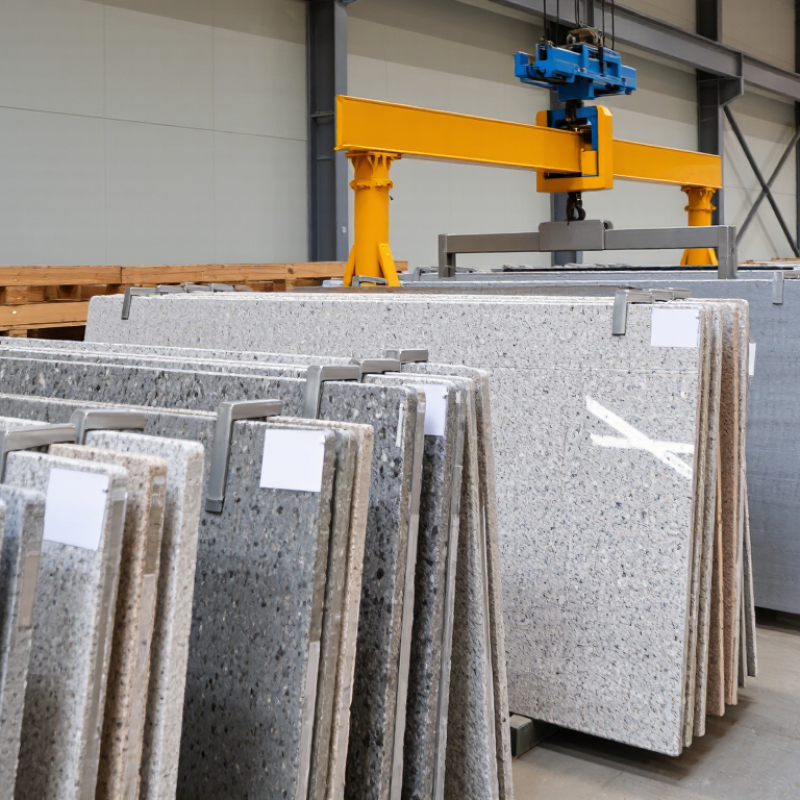
Sesame Grey Granite is a commercial name for a natural stone with a grey ground and small, seed-like flecks. Those flecks may appear black, white, or warm beige, depending on the quarry block. The stone’s appearance comes from visible mineral grains, commonly including quartz and feldspar. It is generally classified as an igneous stone, formed when molten rock cooled underground. Names can blur. “Sesame Grey” is not a universal geological grade, so color and grain size can vary between suppliers and shipments.
Buyers and fabricators often classify it by tone, grain, and intended finish. A finer, evenly speckled slab can suit a kitchen counter, while a coarser pattern may look stronger on exterior paving. Polished surfaces deepen the grey and reflect light; flamed or brushed finishes feel more textured underfoot. Ask to inspect several slabs from the same batch, not just a small sample. Check for visible cracks, resin repairs, and shade changes near the edges. Even careful grading has limits: natural stone is not perfectly uniform, and a sample cannot show every variation in a full slab. Classification helps compare material, but the actual stone deserves the final look.
Key Appearance, Properties, and Common Applications
Sesame Grey granite has a cool gray background scattered with small black and pale mineral grains. From a distance, the pattern looks fairly even; up close, individual flecks create a coarse, natural texture. Color can shift between batches, so inspect full slabs under neutral light before choosing. Small samples can be misleading.
The stone is hard and generally suited to regular use, including kitchen counters, stair treads, floors, and exterior paving. Polished surfaces bring out the grain and are easy to wipe, while flamed finishes feel rougher underfoot. The trade-off is real: textured finishes may hold dirt in their pits. Sealing can reduce staining, but it does not make the surface stain-proof. Clean spills promptly, especially oil or acidic liquids.
For wall cladding and outdoor steps, confirm thickness, edge details, and slip requirements with the fabricator. Ask suppliers for recent slab photos, finish samples, and clear details on grading and processing. Prices vary with thickness, finish, availability, and shipping distance, so compare equivalent specifications rather than headline rates. Even careful selection has limits; natural variation is part of the material.
China Sesame Grey Granite: Indicative Price Ranges
Illustrative FOB planning estimates in USD per m² for common product formats. Actual quotes vary with grade, thickness, finish, order size, and processing requirements.
Appearance and properties: Sesame Grey is typically a grey granite with fine-to-medium dark mineral speckles. Granite is generally hard and wear-resistant, but the exact density, water absorption, and strength depend on the quarry block and should be confirmed with product test reports.
Common applications: floor and wall tiles, paving, stairs, countertops, and other architectural or landscape work. Ask suppliers for samples, finish details, and a project-specific quotation.
China’s Main Supply Regions and Supplier Types
China’s sesame grey granite supply depends on both quarry origin and processing location. Fujian, particularly Shuitou, is a major stone-processing and trading hub. However, a Fujian address does not prove the granite was quarried there. Stone from other regions may be cut, polished, and packed in Fujian before export. Shandong and Guangdong also have stone-processing clusters, with availability varying by material and season. Ask suppliers to identify the quarry source and confirm that samples match the production batch.
Supplier types include quarry operators, processing factories, and trading companies. Quarry operators may offer better visibility into raw blocks, while factories can usually discuss slab thickness, surface finish, and cut-to-size work in detail. Trading companies may coordinate mixed orders or shipping, but the product’s origin and factory involvement should be clear. Prices depend on grade, thickness, finish, order volume, and packing requirements. A polished sample can look uniform under showroom lights; outdoor slabs may reveal more variation. That difference is easy to overlook.
How Sesame Grey Granite Prices Are Determined
Sesame Grey granite prices depend on usable yield, thickness, finish, grading, and delivery—not color alone. The USGS 2025 Mineral Commodity Summaries reports granite accounted for about 26% of U.S. dimension-stone production in 2024. This is market context, not a retail price index. In practice, a block with consistent grey tones and fine dark flecks may produce more matching slabs. Visible fissures or uneven patterns can increase cutting waste.
Compare quotations on the same basis. A price per square metre may cover only the stone, while a landed quote can include crating, freight, and handling. For example, 20 mm polished slabs and 30 mm flamed slabs are not direct price comparisons. Ask suppliers to state thickness tolerance, finish, grade, packing method, and whether the quote is factory-gate or delivered. Request photographs of the actual batch; small color differences can become obvious across a kitchen island. Even careful grading cannot make every slab identical.
Tips: Keep a sample from the approved batch. Confirm how breakage and replacement pieces are handled before ordering. A low quote can look attractive, but unclear specifications often create the more expensive surprise.
China Top Sesame Grey Granite Suppliers and Prices? - How Sesame Grey Granite Prices Are Determined
Indicative planning ranges for Sesame Grey Granite processed in China. Prices are shown in USD per square metre on an ex-works basis; they are not live supplier quotations. Exact prices depend on the quarry block, selected lot, specifications, order quantity, and processing requirements. Packing, inland transport, export charges, and ocean freight may be additional.
| Product or Price Factor | Typical Specification or Change | Indicative Price / Effect | How It Influences the Price |
|---|---|---|---|
| Polished slab | Approximately 18–20 mm thick; standard slab sizes | US$20–38/m² | A common interior and general-purpose option. Slab size, colour consistency, finish quality, and usable yield affect the final rate. |
| Polished slab | Approximately 28–30 mm thick; standard slab sizes | US$30–55/m² | Uses more stone and weighs more than a 20 mm slab. Thickness tolerance and block yield can also affect cost. |
| Calibrated tile | Common formats such as 300 × 600 mm or 600 × 600 mm; around 18–20 mm thick | US$24–45/m² | Tile cutting, calibration, edge quality, sorting, and the proportion of non-standard pieces influence the price. |
| Cut-to-size pieces | Project-specific dimensions; polished or honed finish | US$35–75/m² | More measuring, cutting, edge finishing, inspection, and protective packing are typically required. Complex shapes may cost more. |
| Custom profiles or fabricated components | Countertops, stair treads, risers, or pieces with shaped edges | US$50–100+/m² equivalent | Pricing depends on the piece dimensions, edge profile, cut-outs, finishing details, and fabrication labour; some suppliers price these items by piece or linear metre instead. |
| Main Factors That Determine Sesame Grey Granite Prices | |||
| Stone selection and colour consistency | Standard commercial selection versus tighter colour and pattern matching | More selective grading generally costs more | Natural variation in grain, shade, and mineral distribution means that carefully matched lots can require additional sorting and reduce usable yield. |
| Thickness and dimensional tolerance | Thicker material or stricter thickness and flatness tolerances | Usually increases material or processing cost | Thicker slabs consume more stone; tighter tolerances require more precise cutting, calibration, and quality checks. |
| Surface finish | Polished, honed, flamed, or other specified finish | Varies by finish and processing requirements | Different finishes require different equipment and processing steps. A requested finish should be confirmed on a sample because appearance can vary by stone lot. |
| Order quantity and cutting plan | Small trial order versus a larger order using standard sizes | Small or highly customized orders may have a higher unit price | Setup, sorting, and packing costs are spread across fewer square metres in small orders. Efficient nesting of cut pieces can improve material yield. |
| Packaging and delivery terms | Crates, export packing, inland transport, port handling, and freight | Additional costs beyond the ex-works ranges above | Shipment volume, weight, destination, route, and agreed delivery terms affect the landed cost. Request these as separate quotation lines for comparison. |
How to Compare Suppliers and Request a Reliable Quote
Compare sesame grey granite suppliers using the same written specification. Request the quarry location, slab or tile dimensions, thickness tolerance, finish, available quantity, and packing details. Ask for recent test results tied to the offered stone, not a generic sample. If it is classified as granite, ASTM C615/C615M gives useful benchmarks, including minimum bulk specific gravity of 2.56 and maximum water absorption of 0.40%. Check that the laboratory report identifies the test method and sample.
Look beyond the price per square metre. Request separate figures for stone, crating, inland transport, export handling, and freight, with the quote’s validity period and delivery basis stated. The USGS Mineral Commodity Summaries 2024 tracks dimension stone as a distinct commodity, but national production and trade data cannot confirm a particular supplier’s stock or grade. Verify those details with dated photos, bundle labels, and a small sample where practical. Ask how shade variation and replacement pieces are handled. Small details matter.
One weakness in many comparisons: buyers compare polished samples, then receive a different finish or batch. That can happen. Record agreed color range, finish, and inspection terms in the purchase documents, and confirm them before production.


